
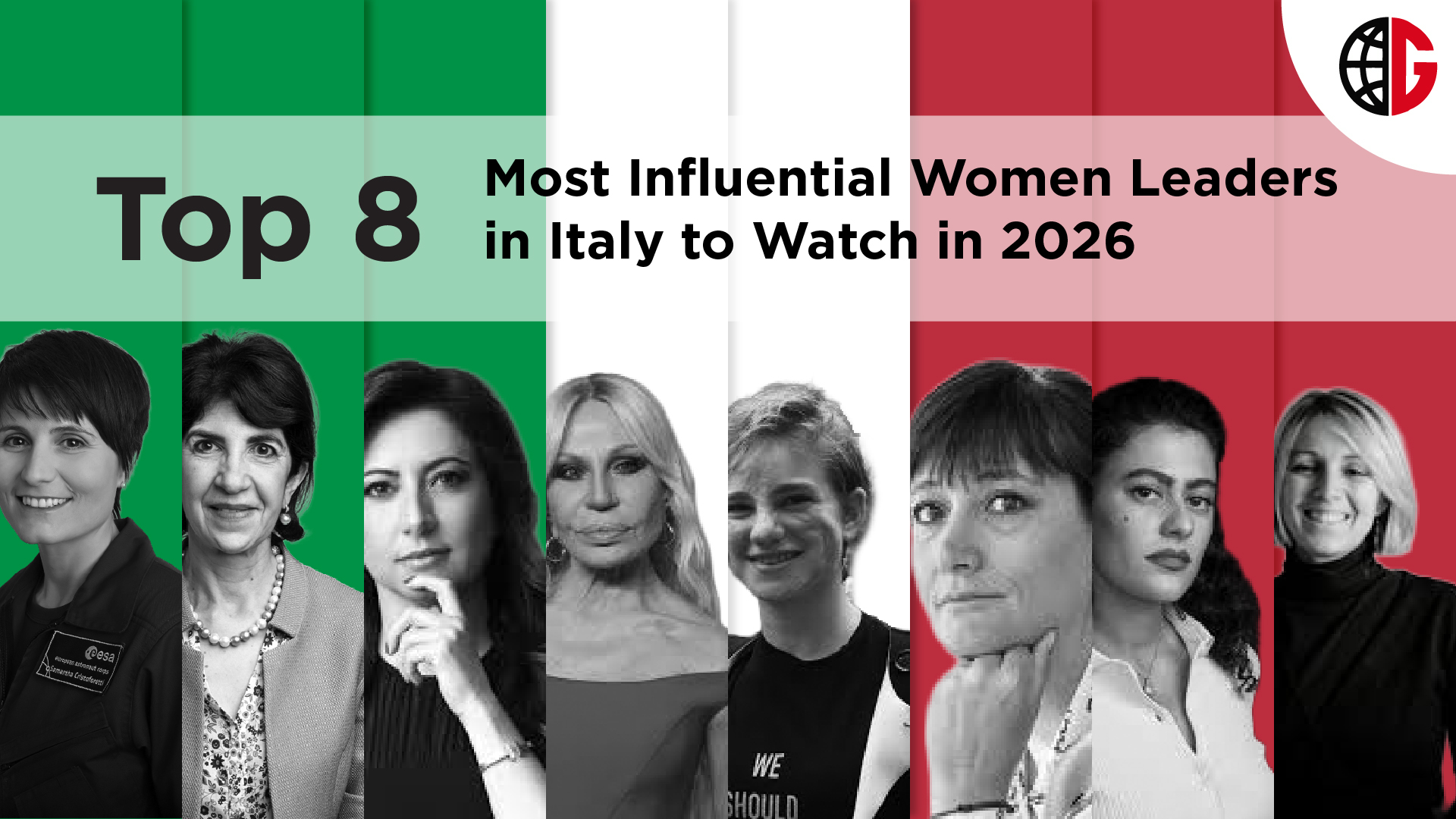
Italy’s leadership landscape is undergoing a profound transformation. As 2026 unfolds, eight remarkable women are not merely occupying positions of power—they are fundamentally reshaping how leadership is defined across science, business, fashion, sports, and social advocacy. From the International Space Station to boardrooms, from Paralympic podiums to sustainable construction sites, these Italian women are demonstrating that influence extends far beyond traditional executive roles.
This shift matters now more than ever. As global organizations grapple with leadership diversity, innovation challenges, and the urgent need for sustainable practices, Italy’s most influential women are providing blueprints for impact that transcends national borders. Their achievements offer valuable lessons for business leaders and professionals navigating an increasingly complex and interconnected world.
Samantha Cristoforetti: Commanding the Future from Space

When Samantha Cristoforetti assumed command of the International Space Station during her Minerva Mission in 2022, she didn’t just make history as the first European female commander—she redefined what leadership looks like in humanity’s most extreme operational environment. As both an Italian astronaut and Air Force pilot, Cristoforetti brings military precision and scientific rigor to her work beyond Earth’s atmosphere.
Her journey from the Italian Air Force to commanding an international crew aboard the ISS represents more than personal achievement. It demonstrates how technical expertise, cross-cultural collaboration skills, and decisive leadership combine in high-stakes environments where mistakes carry catastrophic consequences. For organizations building leadership pipelines, Cristoforetti’s trajectory illustrates that breakthrough roles require decades of preparation, continuous learning, and the ability to perform under extraordinary pressure.
Cristoforetti has become a prominent role model for women in STEM fields, proving that the final frontier belongs to anyone with the determination, skill, and vision to reach it. Her influence extends beyond space exploration—she represents the tangible possibilities that emerge when barriers fall and talent finds opportunity.
Fabiola Gianotti: Unlocking the Universe’s Secrets
At the helm of CERN, the European Organization for Nuclear Research, Fabiola Gianotti occupies one of the most prestigious positions in global science. As the first female Director-General of this institution—and reappointed for a second term—Gianotti manages thousands of scientists, engineers, and support staff working on experiments that probe the fundamental nature of reality.
CERN operates the Large Hadron Collider, the world’s largest and most powerful particle accelerator, which contributed to the discovery of the Higgs boson. Under Gianotti’s leadership, the organization continues pushing the boundaries of particle physics while managing complex international collaborations spanning dozens of countries. Her role requires not only scientific brilliance but also diplomatic skill, strategic vision, and the ability to secure funding for multi-billion-dollar research programs.
Gianotti’s leadership matters profoundly for the scientific community and beyond. She demonstrates that women can excel at managing massive, technically complex organizations while advancing human knowledge. For business leaders, her approach to international collaboration and long-term strategic planning in an environment of scientific uncertainty offers valuable lessons in navigating ambiguity while maintaining focus on transformative goals.
Cristina Scocchia: Brewing Innovation and Sustainability

As CEO and member of the Board of Directors of Illycaffè, Cristina Scocchia leads one of Italy’s most iconic brands at a critical moment for the coffee industry. With decades of experience in consumer goods and beauty industries, Scocchia brings a unique perspective to a company navigating changing consumer preferences, sustainability imperatives, and global market dynamics.
Scocchia’s leadership philosophy centers on innovation and sustainability—two concepts that have moved from corporate buzzwords to essential strategic priorities. Under her guidance, Illycaffè is exploring how a heritage brand can maintain its identity while adapting to contemporary demands for environmental responsibility, supply chain transparency, and ethical sourcing.
Her experience across multiple consumer sectors provides insights that extend beyond coffee. Scocchia understands that today’s consumers, particularly younger demographics, make purchasing decisions based on values as much as product quality. For business leaders, her strategic vision demonstrates how traditional companies can evolve without abandoning the core attributes that built their reputation. The challenge she navigates daily—balancing heritage with innovation, profitability with sustainability—represents the central tension facing established brands across industries.
Donatella Versace: Fashion as Cultural Expression

Donatella Versace stands as one of the most recognizable names in global fashion, leading the Versace brand with a distinctive vision that blends Italian luxury with bold, contemporary aesthetics. Her influence extends far beyond seasonal collections—she has shaped how fashion intersects with celebrity culture, music, and social movements.
What distinguishes Versace’s leadership is her commitment to using fashion as a platform for championing self-expression and equality. In an industry often criticized for narrow beauty standards and lack of diversity, she has worked to expand representation and challenge conventional norms. Her runway shows and campaigns increasingly reflect diverse body types, ethnicities, and gender expressions.
For business leaders, Versace’s stewardship of a major luxury brand offers lessons in maintaining brand identity while responding to cultural shifts. She demonstrates that heritage brands can remain relevant by engaging authentically with contemporary conversations about identity, representation, and social values. Her leadership shows that luxury and inclusivity are not contradictory—in fact, brands that fail to evolve risk losing connection with increasingly diverse, globally connected consumers who expect the companies they support to reflect their values.
Beatrice “Bebe” Vio: Redefining Possible Through Sport

Paralympic wheelchair fencing champion Beatrice “Bebe” Vio embodies leadership through athletic excellence and advocacy. As the first athlete to compete with four prosthetic limbs, Vio has achieved what many considered impossible, claiming championship titles and inspiring people worldwide with her determination and spirit.
Vio’s impact extends far beyond the fencing strip. Through her charity Art4sport, she provides support for children with amputations to participate in sports, removing financial and logistical barriers that often prevent disabled youth from accessing athletic opportunities. Her advocacy for body positivity challenges narrow definitions of ability and beauty, promoting a more inclusive understanding of human potential.
For business leaders, Vio’s story illustrates the power of resilience, adaptability, and maintaining positive mindset in the face of extraordinary challenges. She demonstrates that limitations often exist more in perception than reality, and that reframing obstacles as opportunities unlocks new possibilities. Her leadership in the Paralympic movement and disability advocacy shows that influence comes not just from achieving personal success but from using that success to create opportunities for others facing similar challenges.
Ilaria Bonacossa: Redefining Success With Art
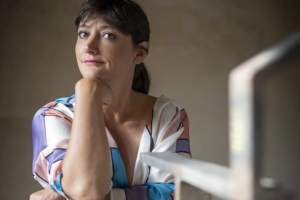
When it comes to Italy’s art scene, Ilaria Bonacossa is schoolin’ life. Bonascossa is a curator, art critic and the director of Artissima, Italy’s most important contemporary art fair, and Italy’s Artist Pension Trust. She has been the curator at the Fondazione Sandretto Re Rebaudengo, the Artistic Director of the Museo Villa Corce and continues to be the curator of Antinori Art Projects’ permanent installations. Having studied her MA in the US, she regularly collaborates with New York’s Whitney Museum and is a member of the Technical Committee for acquisitions at FRAC Provence-Alpes Côte d’Azur, the Leone d’Oro of the 52nd Venice Art Biennale and the Inamori Foundation Prize in Kyoto. Her CV is outstanding – now, try reciting it without taking a breath. She wields her prolific professional experience to support young galleries and emerging talent in the high-pressure art world, where judgements are ever faster, prices ever higher and social circles ever exclusive. Bonocossa has published several books and directed numerous films, too.
Diletta Bellotti: Green Warrior Fighting for Justice
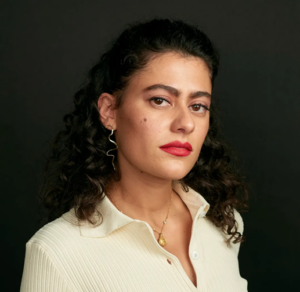
Diletta Bellotti has emerged as a powerful voice in environmental and labor justice movements through her work as a human rights advocate and “green warrior.” She founded a non-violent protest movement addressing labor exploitation in agriculture, shining light on conditions facing farmworkers while connecting these issues to broader questions about sustainable food systems.
Bellotti’s campaigns for sustainable farming methods position her within the growing global movement demanding agricultural transformation. Her involvement with Extinction Rebellion connects her work to international climate activism, demonstrating how local issues of labor rights and agricultural practices link to planetary-scale environmental challenges.
Her leadership style emphasizes non-violent action, coalition building, and persistent advocacy—approaches that have historically driven significant social change. For business leaders, particularly those managing supply chains dependent on agricultural products, Bellotti represents the growing scrutiny companies face regarding labor practices and environmental impact. Her activism signals that stakeholders increasingly expect businesses to demonstrate genuine commitment to both human rights and environmental sustainability throughout their operations. Ignoring these concerns no longer represents a viable strategy as activists like Bellotti mobilize public opinion and pressure institutions to change.
Tiziana Monterisi: Building the Future Sustainably

As CEO and Co-founder of Ricehouse srl, Tiziana Monterisi has pioneered an innovative approach to sustainable construction by repurposing materials from rice cultivation. Her company transforms what would otherwise be agricultural waste into building materials, addressing environmental challenges in both agriculture and construction—two sectors with significant carbon footprints.
Monterisi’s work exemplifies circular economy principles, where waste from one process becomes feedstock for another. This approach reduces environmental impact while creating economic value, demonstrating that sustainability and profitability can align. Her commitment to ethical and technologically advanced approaches to design and living spaces positions Ricehouse at the intersection of environmental innovation and practical application.
For business leaders, Monterisi’s model offers valuable insights into sector-specific innovation. She identified a problem—agricultural waste and construction industry environmental impact—and created a solution that addresses both while building a viable business. Her success demonstrates that sustainability-focused enterprises can compete effectively when they solve real problems with practical, scalable solutions. Leaders across industries can learn from her approach to identifying opportunities where environmental solutions create business value, advancing both planetary health and economic objectives.
The Emerging Leadership Paradigm
The achievements of these eight Italian women reveal critical trends shaping modern leadership. Influence now stems from combining expertise with clear values and effective communication—whether commanding a space station, directing an art fair, or advocating for reform. Sustainability and social responsibility have become central to leadership credibility, with leaders like Monterisi, Scocchia, Bellotti, and Bonacossa integrating these priorities into core strategy.
Leadership pathways have diversified beyond traditional corporate hierarchies. Cultural institutions, athletic achievement, scientific research, and social activism now provide equally powerful platforms for impact. Authenticity matters profoundly—these leaders bring their whole selves to their work, creating deeper stakeholder connections. Finally, ecosystem thinking defines modern leadership, with these women building systems that enable broader participation rather than focusing solely on individual success.
What This Means for Organizations
Italy’s influential women leaders offer crucial lessons for business and organizational strategy. Building diverse leadership pipelines demands genuine commitment to creating pathways for women to lead with all their complexity and perspectives. Modern influence operates across multiple dimensions—executives must navigate quarterly earnings alongside climate impact, curators must balance artistic integrity with commercial viability, and entrepreneurs must build business success while advancing social causes.
These leaders demonstrate that effective leadership in 2026 integrates rather than compartmentalizes professional excellence and social consciousness. Their global impact proves that vision, capability, and values matter more than national origin or traditional career paths. Organizations that identify, support, and partner with diverse leaders position themselves to navigate an increasingly complex future. Supporting emerging talent consistently appears across these approaches—from Bonacossa’s opportunities for young artists to Vio’s charity removing barriers for disabled children.
Looking Forward
As 2026 progresses, these eight women will continue evolving their influence and creating new leadership models. Cristoforetti may inspire the next generation of astronauts, while Gianotti’s CERN work could unlock fundamental physics breakthroughs. Scocchia’s sustainability initiatives might set new industry standards, and Versace’s inclusive fashion vision could further expand representation in luxury brands. Bonacossa’s curation decisions will shape which emerging artists gain visibility, while Vio’s advocacy continues breaking barriers for disabled athletes.
The question for business leaders isn’t whether women can lead effectively across diverse domains—these Italian leaders have definitively answered that. The challenge lies in how quickly institutions can adapt to support and learn from their approaches. The future belongs to leaders who integrate technical excellence with social consciousness, who understand that influence comes from authenticity as much as achievement, and who recognize that pressing challenges demand leaders willing to work across traditional boundaries.
Italy’s most influential women in 2026 demonstrate that modern leadership requires courage, vision, and unwavering commitment to positive change. Their examples reveal that influence comes not from controlling resources or occupying traditional power positions, but from combining expertise with values, building ecosystems that enable others, and challenging established norms that limit human potential. As organizations worldwide seek more effective, ethical, and innovative leadership cultures, these eight women provide practical models worth studying and emulating.
Read more: Personal Branding in 2026: The New Competitive Arena for Business Leaders