
Public relations and corporate communications are entering 2026 at a decisive moment of professional redefinition, particularly within Saudi Arabia. This shift goes beyond the adoption of new tools or platforms. It reflects a fundamental change in how public relations defines its value, measures success, and positions itself within institutional decision-making. In an era shaped by accelerated digital transformation, evolving audience expectations, and fragmented media ecosystems, public relations is no longer a support function focused on visibility. It has become a strategic discipline concerned with designing, protecting, and sustaining reputation systems.
Reputation architecture refers to the strategic design of how institutions build, manage, and protect trust over time. It goes beyond media visibility to integrate communication into leadership behavior, policy explanation, crisis preparedness, and stakeholder engagement. Unlike traditional media relations, which focus on securing coverage, reputation architecture aligns what organizations say with what they do—ensuring consistency, accountability, and long-term credibility.
In Saudi Arabia, this transformation is unfolding within the broader national framework of Vision 2030. As public and private institutions undergo economic, structural, and cultural reform, communication has emerged as a strategic lever rather than a tactical afterthought. Transparency, accountability, and performance-driven narratives are now central to institutional credibility. As the Kingdom increases its global engagement, public relations plays a critical role in aligning national ambition with consistent, credible storytelling.
At the core of this evolution is the shift from media relations to reputation architecture. In 2026, success in public relations is no longer defined by coverage volume or campaign frequency. Instead, it is measured by the ability to build systems that manage trust, anticipate risk, and align communication with institutional behavior. This approach requires long-term thinking, cross-functional integration, and governance models that ensure alignment between what organizations communicate and what they deliver.
This shift marks a clear departure from traditional media relations. While media relations prioritize message dissemination and short-term visibility, reputation architecture focuses on long-term trust, behavioral consistency, and institutional accountability. Media relations ask, “How are we perceived today?” Reputation architecture asks, “What do we consistently represent over time?”
As a result, reputation architecture firmly elevates public relations from an executional role to a strategic advisory function. Communication leaders are increasingly expected to participate in executive discussions, policy formulation, and risk assessment—ensuring that reputational considerations are embedded into decision-making before, not after, actions are taken.
Artificial intelligence has emerged as a critical enabler of this transformation. Industry data indicates that more than 91% of PR professionals globally now use AI tools in their daily workflows, with 73% relying on AI for idea generation and content development and 68% for writing, editing, and content optimization. Within Saudi Arabia, AI adoption is particularly advanced. Studies show that up to 93% of users in the Kingdom employ AI tools for text-based and knowledge-driven tasks, creating an environment where AI-augmented communication models are rapidly becoming the norm.
However, the integration of AI has not reduced the strategic importance of human judgment. While automation has increased efficiency and scale, it has also elevated professional expectations. In 2026, the value of public relations lies in interpretation rather than execution. Strategic judgment, ethical decision-making, reputational risk assessment, and cultural sensitivity remain inherently human responsibilities. In a Saudi context characterized by large-scale national initiatives and heightened public visibility, judgment-led communication is essential to safeguarding institutional trust.
This shift has also transformed how public relations performance is measured. Traditional indicators such as impressions and media mentions no longer provide sufficient insight into communication effectiveness. Nearly 50% of PR professionals worldwide identify measuring return on investment as the profession’s most significant challenge, driving the adoption of data-driven evaluation frameworks that link communication activity to reputation strength, stakeholder confidence, and behavioral outcomes.
In Saudi Arabia, where initiatives are closely tied to measurable impact and national priorities, outcome-based measurement has become a core requirement rather than an optional enhancement.
Within this model, reputation is treated as an organizational asset—one that requires continuous monitoring, cross-functional alignment, and long-term investment, rather than episodic campaigns or reactive messaging.
In Saudi Arabia, reputation architecture becomes most visible during moments of institutional scrutiny. Regulatory reforms, nationalization initiatives, and large-scale public programs require more than reactive statements. Public relations operates as a coordination function—aligning leadership messaging, policy communication, media engagement, and public response management to sustain institutional credibility during periods of change.
Reputation architecture also redefines the role of public relations in brand and institutional identity. Research indicates that more than 50% of communication professionals now consider message credibility to be the most influential factor shaping brand perception, surpassing reach and exposure. In an environment marked by public skepticism and information saturation, public relations functions as a guardian of meaning. It ensures alignment between institutional values, leadership behavior, and public narrative, particularly during periods of change or scrutiny.
The professional skill set required to support this role has evolved accordingly. While storytelling remains essential, it is increasingly data-driven and insight-led. Surveys show that 59% of PR professionals identify storytelling and content creation—particularly data-informed storytelling—as the most critical skill in 2026. Creativity alone is no longer sufficient. Strategic communication now demands analytical literacy, media intelligence, reputation management expertise, and the ability to translate complex information into credible, culturally grounded narratives.
Regional market indicators reinforce this trajectory. The GCC public relations and PR technology market is projected to grow at a compound annual growth rate of approximately 10.8% through the end of the decade, driven by investment in analytics, media monitoring, and digital communication infrastructure. As the region’s largest economy and most ambitious transformation agenda, Saudi Arabia is expected to account for a significant share of this growth, underscoring the strategic importance of professionalized, technology-enabled public relations.
In this context, public relations in 2026 represents more than an operational evolution. It reflects a philosophical shift—from visibility to value, from exposure to impact, and from one-way messaging to sustained, trust-based dialogue. As Saudi institutions navigate rapid transformation and increasing global engagement, public relations stands at the center of reputation architecture, uniquely positioned to translate data into meaning, meaning into trust, and trust into long-term institutional resilience.
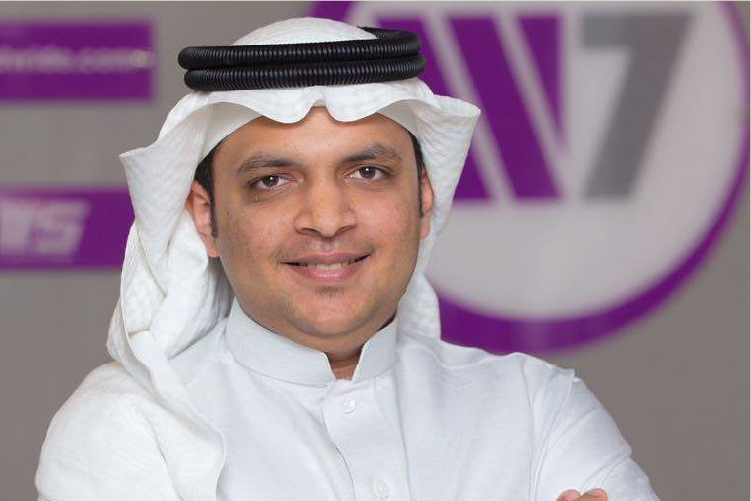
Abdullah Inayat
Abdullah Inayat is Co-founder and Director of W7Worldwide Strategic Communications Agency, an independent public relations and strategic communications consultancy with a strong presence in Saudi Arabia and across the Gulf. With more than a decade of experience, I have led high-impact communication campaigns across multiple sectors, including corporate, technology, healthcare, financial services, and government. I played a key role in leading the first Saudi National Day media campaign in 2017 and have provided strategic advisory and communications consultancy to prominent global and regional brands such as 3M, Kaspersky, Red Bull, and Bupa Arabia. I am known for building strong media relations networks and designing tailored communication strategies, and I regularly contribute insights and thought leadership to local, regional, and international media, supporting the advancement of the public relations and communications industry. I believe that effective communication is the cornerstone of building trust and strengthening institutional reputation in the modern era, and I am continuously committed to professional development and keeping pace with the rapid transformations shaping this vital field.
Read more : The end of the Hero CEO Era