
By Sara Kremsar
In most business environments, success is defined by short-term results. Companies celebrate revenue growth, rising market share, operational efficiency, and quarterly performance improvements. These indicators dominate leadership dashboards and strategic discussions because they offer clear evidence that the organization is moving in the right direction.
Yet there is a deeper question that is rarely asked.
Will the business still exist and remain relevant ten, twenty, or thirty years from now?
Short-term performance and long-term existence are often treated as if they represent the same thing. In reality, they reflect two very different dimensions of organizational success. A company may perform exceptionally well in the present moment while slowly weakening the foundations that ensure its long-term sustainability.
This gap between immediate performance and long-term viability is one of the most overlooked challenges in modern business systems.
Modern organizations operate in environments that reward speed, efficiency, and measurable results. Investors expect rapid growth, management frameworks prioritize optimization and cost control, and performance reviews are tied to annual or quarterly targets. None of this is inherently wrong. Strong operational discipline and performance management are essential for organizations that want to succeed.
However, problems arise when organizations begin optimizing exclusively for short-term metrics. When every decision is driven primarily by immediate performance indicators, companies can gradually lose the flexibility and resilience required to navigate long-term change.
Processes become highly optimized but difficult to modify. Organizational structures become efficient but rigid. Strategic decisions increasingly prioritize immediate returns rather than long-term adaptability.
Over time, these patterns can create what might be described as a short-term success trap. Organizations become extremely good at achieving results in the present while unintentionally reducing their ability to adapt in the future.
History shows that many companies do not fail because they were weak. Quite the opposite. Many organizations collapse precisely because they were extremely successful for a long period of time.
As I often say in my work with founders and leadership teams:
“Most business systems do not fail because they move too slowly, but because they lose clarity while moving fast.”
~ Sara Kremsar, Founder of OPTIMOD
Success often reinforces existing structures, processes, and strategic assumptions. When something works, organizations naturally replicate and scale it. Over time, the company becomes deeply aligned around a particular way of operating.
But markets change. Technologies evolve. Customer expectations shift. New competitors emerge.
Organizations that have optimized themselves around past success models sometimes struggle to evolve quickly enough. What once represented their greatest strength gradually becomes a structural limitation.
This phenomenon can be seen across industries. Companies that once dominated their markets suddenly find themselves struggling to adapt to new realities. The underlying issue is rarely a lack of competence or intelligence. More often, it is the result of organizational systems that were designed for stability rather than long-term adaptability.
One of the most important distinctions leaders need to understand is the difference between organizational performance and organizational existence.
Performance measures how well a company achieves its goals in a specific period of time. It focuses on financial results, productivity, growth, and operational effectiveness.
Existence, on the other hand, reflects something broader. It represents the organization’s ability to remain functional, relevant, and legitimate over time despite changing conditions.
A company may report excellent financial performance today while simultaneously eroding the internal capabilities that enable long-term survival. When organizations prioritize efficiency above all else, they may unintentionally reduce flexibility. When growth becomes the dominant objective, stability can suffer. When processes become overly standardized, innovation may decline.
These dynamics often remain invisible until external conditions shift and the organization suddenly finds itself struggling to respond.
At OPTIMOD Enterprise, this challenge lies at the center of our work. Many organizations approach operational improvement primarily from the perspective of efficiency and performance optimization. While these goals are important, they represent only one part of a much larger picture.
Businesses are not static entities. They are complex systems that continuously interact with evolving environments. Their long-term success depends not only on how efficiently they operate today, but also on how well they can adapt tomorrow.
Designing business systems with a long-term perspective requires balancing multiple dimensions simultaneously. Organizations must maintain operational effectiveness while preserving the capacity for learning, adaptation, and transformation.
This means building structures that are stable enough to deliver consistent results but flexible enough to evolve when necessary. It requires leadership teams to look beyond immediate performance indicators and consider how today’s decisions shape tomorrow’s possibilities.
Organizations that remain relevant over long periods of time tend to develop several critical capabilities.
They cultivate organizational adaptability, enabling them to modify structures, processes, and strategies as conditions change. They develop resilience, allowing them to absorb shocks and disruptions without losing their core functionality. They maintain strong strategic awareness by continuously monitoring changes in technology, markets, regulation, and society. And they foster organizational learning, ensuring that both successes and failures contribute to future improvement.
These capabilities cannot be implemented through a single initiative or short-term transformation program. They must be embedded into the way organizations design their systems, leadership structures, and decision-making processes.
If organizations want to build companies that truly last, they must expand how they define success.
Success should not only be measured by quarterly results or short-term growth. It should also reflect the organization’s ability to maintain relevance and create value over extended periods of time.
This requires leaders to adopt a dual perspective. On one hand, organizations must achieve strong performance in the present. On the other, they must continuously invest in the capabilities that ensure long-term viability.
Companies that ignore the second dimension often discover the consequences only when it is too late.
Ultimately, the most impressive organizations are not those that achieve success once. They are the ones that remain relevant across decades of change.
Building such organizations requires leaders to think beyond immediate outcomes and begin designing systems that support both performance and longevity.
At OPTIMOD, we work with organizations that want to move beyond short-term optimization and build operational structures capable of evolving with the future. Because in an increasingly complex and unpredictable world, the real competitive advantage may not be speed, scale, or efficiency alone.
It may be the ability to design business systems that continue to function, adapt, and create value long after the first success has been achieved.
About Author:
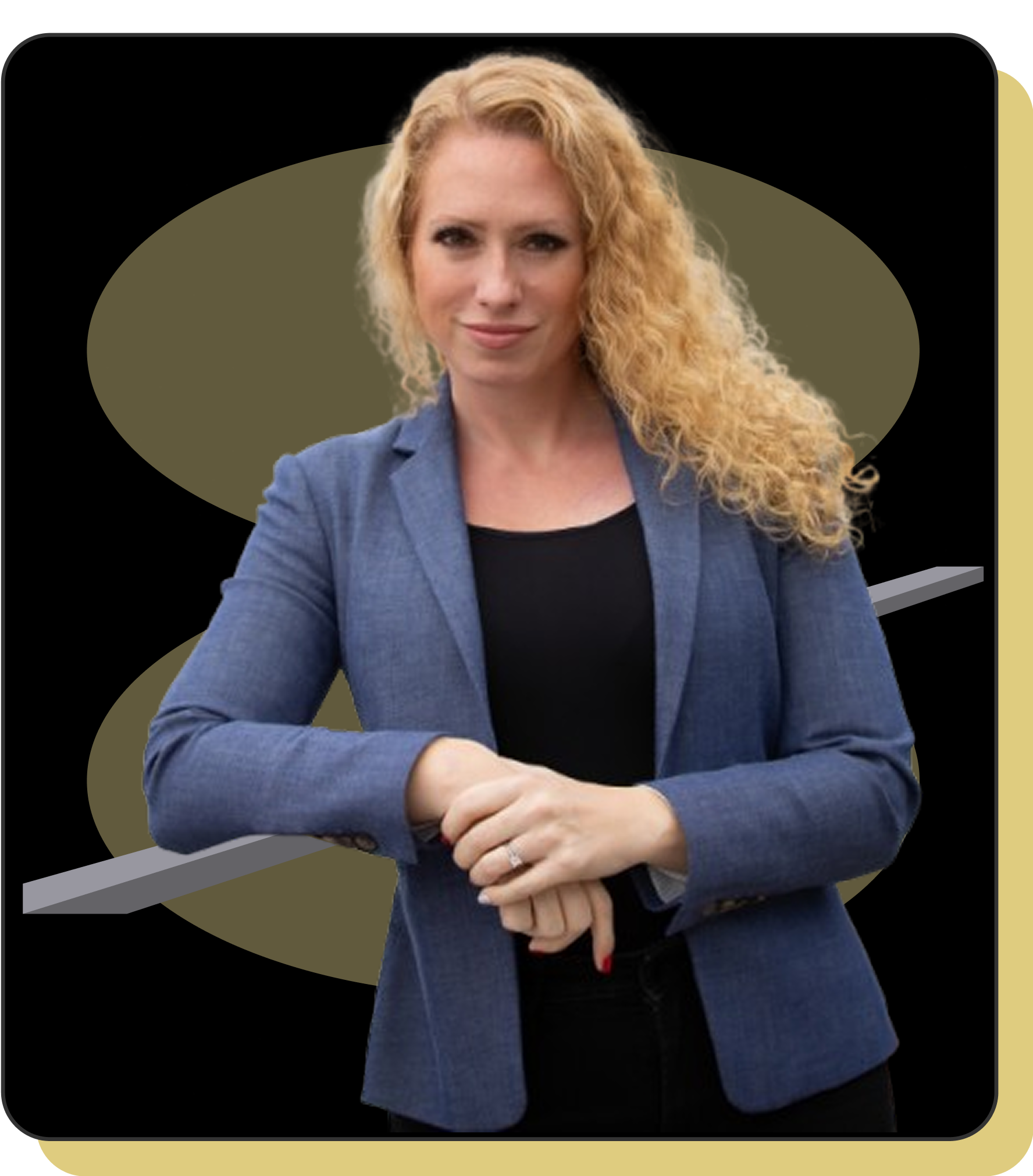
Sara Kremsar, M.Sc., is the founder of OPTIMOD, a company that helps fast-growing organizations build clarity, structure, and alignment in their development. She holds a master’s degree in Business Systems Engineering from the Faculty of Organizational Sciences, where she specialized in organizational structures, business processes, and system optimization.
Since 2016, she has collaborated with companies across multiple sectors to improve operational efficiency, strengthen leadership, and support sustainable growth through well-designed processes and strategic alignment. In 2017, she founded OPTIMOD to connect research, education, and real-world entrepreneurship.
Through initiatives such as the Improving Entrepreneurial Journey Initiative (IEJI) and the Founders’ Off-the-Grid Retreat, OPTIMOD fosters collaboration between entrepreneurs, experts, and researchers. Sara’s work focuses on building resilient, human-centered organizations where structured systems enable long-term success.
Read more similar exclusive interviews at Amy Kenigsberg: Persistence, Perspective, and the Power of “What’s in It for Me” Communication