
There is a moment I keep returning to. Not because it was dramatic — it wasn’t. There were no cameras, no audience, no one to witness it. I was alone in a room, somewhere in the middle of a career that was going reasonably well by every external measure, and I had this very quiet, very inconvenient realization:
I had been working extraordinarily hard to build a life that looked successful. But I hadn’t spent nearly enough time asking whether it felt true.
That discomfort — private, persistent, and ultimately irreplaceable — is where this piece begins. Not with achievement. Not with a motivational framework. With a small, honest reckoning in a room that nobody else was in.
Because that is where real transformation always begins. Not in the applause. In the silence just before you decide who you actually want to be.
PART ONE
The Starting Line Was Never Level
People ask me about my journey with a particular kind of reverence that I find slightly uncomfortable. They want the arc — the humble beginning, the struggle, the turning point, the arrival. And I understand the impulse. We all need stories that tell us the distance is crossable.
But I want to resist the clean version. Because the clean version — the one where disadvantage is neatly converted into character, and setbacks arrive precisely when the narrative needs them — is not how it actually feels when you are living it.
When you are living it, you just feel behind. You feel the gap between where you are and where you think you should be. You carry it into meetings, negotiations, and the quiet of Sunday evenings when the week hasn’t gone the way you hoped. The gap doesn’t feel like a story. It feels like weight.
“The gap doesn’t feel like a story. It feels like weight. The question is not whether you carry it — everyone does. The question is what you decide to do with it.”
The question is not whether you carry it. Everyone does. The people who appear to have started ahead are carrying invisible loads of a different kind — expectations they didn’t choose, identities they can’t escape, success they didn’t earn and therefore don’t quite trust. Advantage has its own kind of prison.
What I know — from 37 years in boardrooms, data halls, and negotiating tables across three continents, and from the deeper, quieter work of trying to become someone I could respect — is this:
Your starting point is the least interesting thing about you.
Where you start determines almost nothing. What you do with the gap between where you are and where you want to be — that is the only story worth following.
PART TWO
The Young Man Who Went to Dubai
My career began long before data centres were glamorous. Trained as a mechanical engineer and holding an MBA in Marketing, I entered the workforce with a practical, problem-solving disposition — and a strong, probably stubborn, refusal to wait for the world to find me.
Early in my career, I took postings that most people around me didn’t want. Dubai. The deep, harsh, unfamiliar deserts of Yemen. Iran. Saudi Arabia. South Africa. These weren’t lifestyle choices. They were the opportunities available to someone without the networks or surnames that opened better doors. I took them because they were open, and because I had already understood — maybe instinctively, before I could articulate it — that geography is one of the fastest ways to expand the circumference of what you think is possible.
The GCC was not a posting for me. It was a classroom. And the lesson it taught me — that the world is larger, stranger, and more navigable than we are told — is one I have never stopped drawing upon.
Back in India, my trajectory accelerated. K. Raheja Corporation. Reliance Industries. Syntel. Bridge Data Centres — where I served as Country Head. And then NTT, as Executive Vice President across APAC, until April 30, 2026 — the last day I would ever work for someone else.
Thirty-seven years of employment. With ups and downs. But I stayed unbroken, and that wasn’t easy at all. And on the morning of May 1, 2026, after 37 years, I woke up as something else entirely.
“Not retired. Not between jobs. Finally, fully, on my own terms.”
Founder Director of Megha Tantra Advisors. Executive Director of MetaDecrypt UAE. Author. Mentor. Advisor across data centres, liquid cooling, AI infrastructure, and digital energy. All of it under my own name, on my own terms, accountable to no one’s calendar but my own.
From the outside, I am told, it looked brave.
From the inside, it felt like something long overdue and very, very hard-earned.
PART THREE
The Thing About Adversity
I have a philosophy about adversity that I have tested against many years of evidence, and I keep coming back to it:
Don’t fight adversity. Flip it.
Most people, when they encounter a serious disadvantage — a setback, a gap in their credentials, a market that doesn’t want what they’re selling, a door that keeps refusing to open — do one of two things. They either shrink inward and wait for conditions to improve, or they fight the adversity directly, spending enormous energy trying to eliminate the thing blocking them.
Both responses are understandable. Neither is particularly effective.
The third path — the one that actually works — requires something counterintuitive. It requires you to look at the disadvantage squarely and ask: What does this give me that the people standing ahead of me don’t have?
Every meaningful adversity contains, buried somewhere inside it, the seed of a differentiated strength. The person who didn’t go to the right school had to develop sharper instincts. The one who was passed over early had to learn patience without bitterness — one of the rarest skills in any organisation. The one who was told the market wasn’t ready for their idea had to develop conviction that didn’t depend on external validation.
I have seen this pattern repeat itself across hundreds of people I have mentored, worked alongside, and observed closely over nearly four decades. The ones who became genuinely formidable were almost never the ones who had the smoothest beginnings. They were the ones who found, inside their particular difficulty, something they could build upon — and then built on it relentlessly.
“Don’t fistfight with adversity. Flip the weakness. Build a differentiated USP out of it that the comfortable cannot replicate.”
PART FOUR
The Peace March Nobody Asked Me to Organise
On November 26, 2008, Mumbai was attacked. The city held its breath. And then, the way cities do, it went back to work.
I organised a peace march in my locality. Nobody asked me to. There was no committee, no budget, no official mandate. There was just a refusal — and I remember feeling this very physically, not as a thought but as something in my chest — to let grief become passivity.
The march was small. It didn’t make headlines. But it mattered to the people who walked, and it mattered to me in ways I am still understanding. Because it clarified something I had known intuitively but hadn’t yet put into words:
The invincible person is not the one who never falls. It is the one whose falls are never final.
Invincibility — real invincibility, the kind that sustains a career across four decades, the kind that allows you to walk away from employment at 57 and feel excitement rather than terror — is not the absence of difficulty. It is the cultivated, practised, deliberate refusal to let difficulty be the last word.
You show up anyway. You organise the march anyway. You make the call, take the posting, write the book, start the company — anyway. Not because you are fearless, but because you have decided that the alternative — waiting for conditions to become comfortable before you begin — is a far more frightening thing to live with.
PART FIVE
The Corporate Monk — And What That Actually Means
People sometimes assume that The Corporate Monk is a brand. A positioning. A way of standing out in a crowded market of consultants and speakers.
It is not a brand. It is a question I have been trying to answer my entire adult life.
The question is this: Can you be fully present in the world of commerce — ambitious, sharp, commercially effective, willing to compete and win — while remaining grounded in something that doesn’t depend on whether you win or lose? Can you build a career with genuine rigour while simultaneously cultivating an inner life that gives that career meaning?
I don’t have a clean answer. What I have is 37 years of trying. Four books written in the gaps between everything else — on flights, in hotel rooms, on Sunday mornings before the week started — because the ideas needed to exist outside my head. Talks delivered to audiences of ten and audiences of thousands, trying to say something honest about the paradox of a life that is simultaneously driven and peaceful.
The Corporate Monk is not someone who has resolved the tension between ambition and stillness. It is someone who has decided the tension is worth living within — because both sides of it are true.
“35 years in corporate. A life in spirituality. Not one before the other. Both at once — because both are true.”
After Megha Tantra Advisors was founded — its name drawn from ancient Sanskrit, meaning Cloud Technology — I was asked what distinguished it from any other advisory firm. My answer was simple: the founder is present in every engagement. Not as an overseer. As the practitioner.
That is the Corporate Monk’s approach to business. Full presence. No delegation of what matters. Accountability that doesn’t stop at the invoice.
PART SIX
Proactive Beats Perfect. Every Time.
One thing I tell every young professional I sit with — and I mean really sit with, not the 45-minute coffee meeting that ends with an exchange of business cards — is this:
Don’t let records and trends from the past shrink your vision of what is possible.
The past is not a prison sentence. It is a data set. It is useful, instructive, and completely optional as a predictor of your future. The people who break categories — who build companies from conversations, who arrive late to a table and then reshape the entire agenda — share one thing in common: they moved early. Before the conditions were perfect. Before the market officially recognised the opportunity. Before the crowd arrived.
They were proactive when being proactive still looked premature.
That instinct — to see something before it is widely visible, to move before you are fully ready, to build before you have everything you need — is not innate genius. It is a habit. Built through the accumulated practice of acting on what you see, even when what you see is incomplete, even when the timing feels uncertain, even when the people around you haven’t caught up yet.
The only score that matters is not what you started with. It is what you spotted early, moved on intelligently, and built with your own hands while everyone else was still waiting for permission.
PART SEVEN
To the Person Reading This
I know who you are, broadly. Not specifically — we have probably never met. But I know the feeling that might have brought you to this article.
You are looking at where you started — at the disadvantages that were not of your choosing, at the gaps between you and the people who seem to have had it easier — and you are wondering whether the distance is crossable. Whether it is too late. Whether the story can still turn out differently.
I want to tell you something that I mean with complete sincerity, without the performance of sincerity that sometimes accompanies it:
You are not behind. You are at the beginning of a story that has not yet been written.
The comfortable start is, in many ways, the harder story — because comfort makes it easy to confuse stillness with arrival. The difficult start forces you, earlier than you would choose, to develop the one thing that no amount of advantage can manufacture: the genuine knowledge that you can handle what comes next.
You have already handled what came. Whatever brought you here, to this sentence, you have survived it. That is not nothing. That is, in fact, everything. Survival — examined rather than merely endured, turned over in your hands, understood — is the raw material of every kind of strength worth having.
“You have already handled what came. Survival — examined, not merely endured — is the raw material of every kind of strength worth having.”
So here is the thing about becoming invincible:
It doesn’t look like a transformation. It looks like a thousand small decisions. The decision to show up when it would be easier not to. To stay curious when certainty is available. To mentor the person behind you even while you are still climbing yourself. To write the book even when you don’t know if anyone will read it. To start the company even when the outcome is not guaranteed. To organise the peace march even when nobody asked.
It looks like choosing, day after day, to be the person who moves rather than the person who waits.
Not because you are fearless. Not because your beginning was easy. Not because the conditions are ideal.
But because you have decided — and this decision is available to everyone, at any starting point, at any age — that the alternative is simply not who you are.
Become invincible. Not by eliminating difficulty.
By becoming the kind of person that difficulty cannot stop.
About Author:
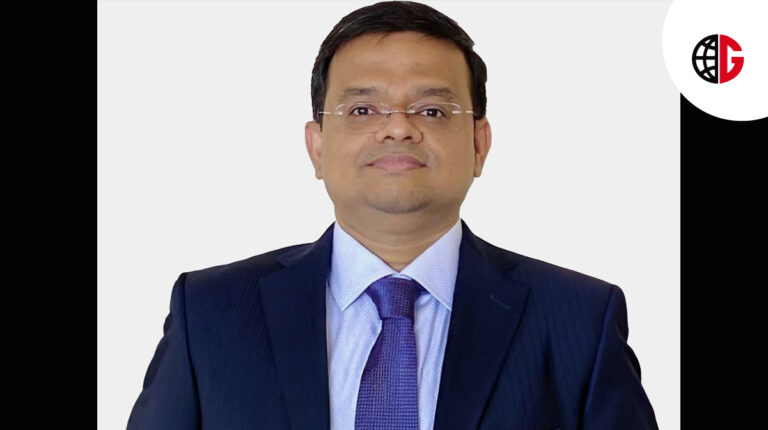
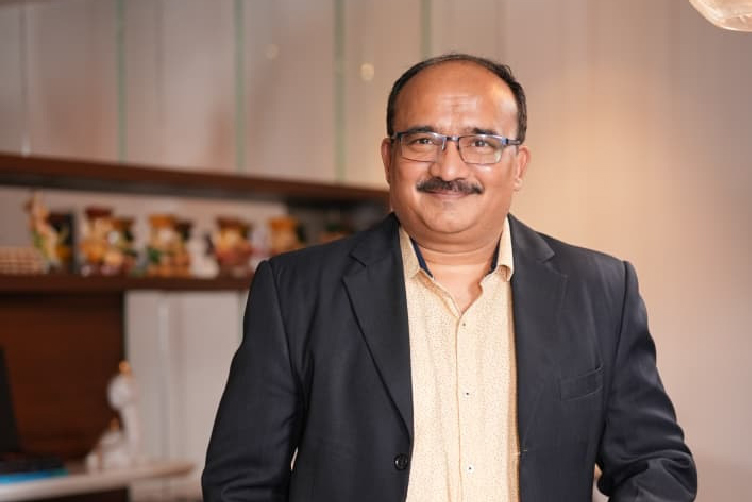
37 years of global experience, out of which 15 years he spent building India’s digital backbone from the inside. Then, at the peak of it, he walked away — to build something truer. Sandeep V. Dandekar, the Corporate Monk, is now the advisor that operators, investors, and hyperscalers call when the stakes are too high for comfortable answers. Founder. Author. Keynote voice. The Corporate Monk who traded hierarchy for honest counsel.
He is also the author of four influential books, including Wired Nation: The Untold Story of India’s IT Landscape — Y2K to AI, 1999 to 2030, which explores the evolution of India’s technology ecosystem and the future of digital innovation. Through advisory, mentorship, and thought leadership, Sandeep continues to inspire leaders and organizations to rethink growth, technology, and transformation in an increasingly AI-driven world.
Read more on thought leadership at Eradicating Latency: Engineering Autonomous Multi Agentic ERPs in 21 Days