
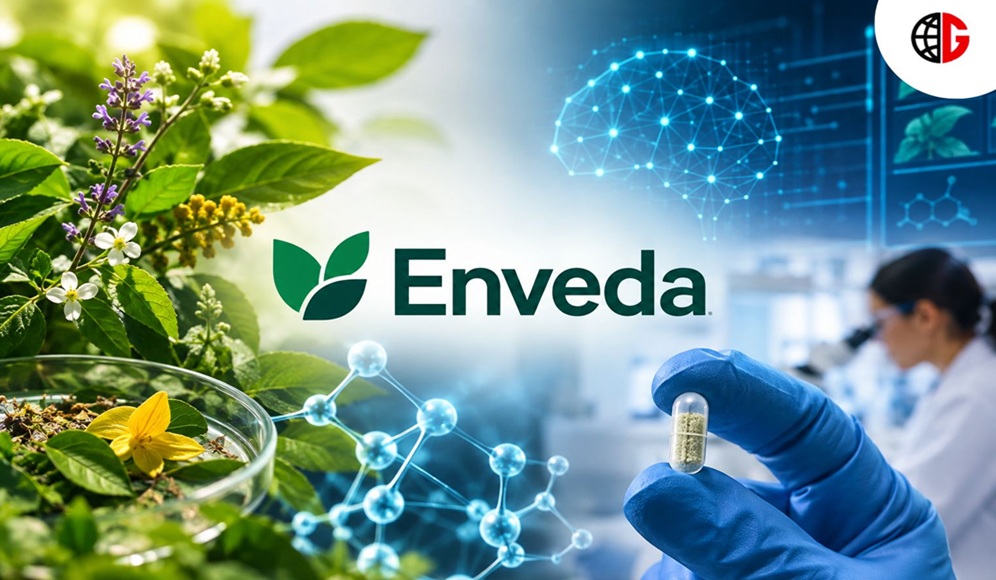
The race to use artificial intelligence to transform drug discovery is entering a new phase, and Enveda Biosciences is putting an unusual resource at the center of that effort: nature.
The Boulder, Colorado-based biotechnology company has raised $311 million in a Series E financing round at a valuation of approximately $2 billion, giving the AI-driven drug discovery startup substantial new capital to move its clinical pipeline forward and expand the technology behind it. The round was led by Catalio Capital Management, with participation from new investors including Durable Capital Partners, ICONIQ, Lightspeed, Surveyor Capital, accounts advised by T. Rowe Price Investment Management, Digitalis Ventures, Alderline Group and a sovereign wealth fund. Existing backers including Baillie Gifford, Premji Invest, FPV Ventures, True Ventures, Kinnevik, Dimension, Lifeforce Capital and Lux Capital also participated.
The financing marks a significant step for Enveda, which says it has now raised more than $845 million since its founding in 2019. More importantly, the company is moving from the promise of AI-assisted discovery toward a stage where its candidates are being tested in humans and, in some cases, moving into later-stage development.
Turning Nature’s Chemistry into New Medicines
Enveda was founded by Viswa Colluru, an early employee of AI drug-discovery company Recursion Pharmaceuticals. His premise was relatively straightforward but technically difficult: nature contains an enormous library of molecules that have evolved over billions of years, and some of those molecules could become powerful medicines if researchers can identify, understand, and develop them efficiently.
Instead of creating every potential compound synthetically, Enveda uses AI to search through the chemical complexity of plants and other living organisms.
Natural products have already played a major role in pharmaceutical history. Aspirin, for example, traces its origins to the pain-relieving properties of willow bark. Yet finding useful molecules in nature remains challenging because biological samples can contain thousands of compounds, many of which are difficult to identify, isolate, or characterize.
Enveda’s technology is designed to address that problem by combining artificial intelligence with analytical chemistry and laboratory automation. Its PRISM platform is intended to identify biologically active molecules, determine their structures, and prioritize compounds that could eventually be developed into medicines. The company says the platform has helped generate 17 development candidates, with three now in human clinical trials.
That represents a significant evolution from Enveda’s earlier stage. In June 2024, the company announced a $55 million financing round intended to accelerate its platform and move multiple candidates into clinical development. At that point, Enveda said its platform had already produced a sixth New Chemical Entity development candidate, with its leading programs expected to enter Phase I trials.
$311 Million Will Take the Pipeline Deeper
The new Series E financing is not simply about expanding research. Enveda plans to use the capital to advance three clinical-stage medicines into later phases of development, initiate additional clinical trials in inflammatory and metabolic diseases, and continue scaling its AI platform and automated laboratory infrastructure.
The company’s current clinical portfolio includes ENV-294, ENV-308 and ENV-6946, each addressing a different medical challenge.
ENV-294 is an oral, once-daily investigational medicine being developed for atopic dermatitis and asthma. Enveda reported positive Phase 1b results for atopic dermatitis in March 2026, following a study involving adults with moderate-to-severe disease. The program has since moved into Phase 2a trials for atopic dermatitis and asthma.
According to Enveda’s August 2026 update, patients in the Phase 1b study experienced an average 85% improvement in eczema severity after 42 days, with no serious side effects reported. Phase 2 trials are now underway, with additional data expected to be presented at the European Academy of Dermatology and Venereology Congress in October.
An AI-Designed Approach to Maintaining Weight Loss
Another program, ENV-308, takes an especially unconventional route into metabolic medicine.
The drug is designed to mimic Lac-Phe, a molecule produced naturally by the body following intense exercise. Enveda is investigating whether this biology can be translated into an oral treatment that helps people maintain weight loss and metabolic health after discontinuing GLP-1 medicines.
The concept addresses a growing challenge in the weight-management market. GLP-1 medicines have transformed obesity treatment, but maintaining weight after stopping therapy remains an important area of research.
In its Phase 1 trial involving 88 healthy volunteers, Enveda reported that ENV-308 was well tolerated, including from a gastrointestinal perspective. The study also found reduced circulating leptin, which the company describes as an early signal that the drug is engaging biology relevant to metabolic disease. The company plans further studies involving people who have stopped or are preparing to stop GLP-1 therapy.
Expanding Into Inflammatory Diseases
Enveda’s third clinical-stage asset, ENV-6946, is being developed for inflammatory bowel disease (IBD).
The oral medicine is designed to act on multiple inflammatory pathways through a novel target and is currently in Phase 1 development. Enveda describes it as a potential “multi-biologic in a pill” approach, with the goal of combining broad biological activity with an orally administered treatment.
The company’s strategy therefore extends beyond a single therapeutic category. Dermatology, metabolic health and gastrointestinal inflammation represent different markets, but they share a common challenge: finding new biological mechanisms that can produce effective and practical medicines.
AI Drug Discovery Moves From Promise to the Clinic
Enveda’s fundraising also highlights a broader shift taking place across biotechnology.
For years, AI drug discovery was largely discussed in terms of computational predictions, enormous datasets and the possibility of dramatically shortening the traditional drug-development process. The harder test, however, comes when computer-generated candidates have to survive laboratory testing, regulatory scrutiny and human clinical trials.
Enveda is now part of the group of companies attempting to make that transition.
The company itself notes that its approach is built around identifying chemistry that may have remained inaccessible to conventional drug discovery. Its platform combines AI models with experimental biology rather than treating software as a replacement for laboratory science.
That distinction is important. AI can help researchers search and prioritize chemical possibilities, but drug development still requires extensive laboratory validation, toxicology studies, clinical trials and regulatory review. A promising AI-discovered molecule is therefore only an early step toward an approved medicine.
From $55 Million to $311 Million
Enveda’s fundraising trajectory illustrates how quickly investor interest has grown around its technology.
In 2024, the company raised $55 million in a Series B2 round involving investors such as Microsoft, Premji Invest, Lingotto Investment Fund and The Nature Conservancy. That financing brought Enveda’s total capital raised at the time to about $230 million and was earmarked for advancing candidates toward clinical trials.
The company subsequently raised $130 million in a Series C, according to its corporate financing history, before reaching the latest $311 million Series E round.
The latest financing takes the company’s valuation to around $2 billion, approximately double the valuation it had achieved a year earlier, according to TechCrunch.
For investors, the attraction now goes beyond the promise of discovering molecules faster. Enveda has clinical data, multiple development candidates and a platform that it intends to scale across a broader range of diseases.
Why Nature Could Become AI’s Next Drug Discovery Frontier
The larger opportunity Enveda is pursuing rests on a simple observation: scientists have studied only a fraction of the chemical diversity present in the natural world.
Plants, microbes and other organisms continuously produce molecules as part of their own biological systems. Those molecules can interact with living organisms in highly specific ways, potentially offering starting points for therapeutic development.
The challenge has historically been finding those molecules and determining which ones are worth pursuing.
AI changes the economics of that search by allowing researchers to analyze huge volumes of chemical and biological information, identify patterns that may be difficult to detect manually and prioritize promising candidates for laboratory testing.
Enveda says its platform is designed to “read” this chemical complexity and translate it into drug candidates. Its current pipeline provides an early demonstration of how that strategy can move from computational discovery into human development.
Still, the ultimate measure will be clinical success. None of the current programs has yet become an FDA-approved medicine, and each must continue through the necessary clinical and regulatory stages.
For now, the $311 million Series E gives Enveda the resources to take its nature-derived, AI-enabled drug discovery model deeper into the clinic. If the company’s current candidates continue to produce encouraging results, the funding could also help establish a broader model for how artificial intelligence and the natural world can work together to uncover medicines that conventional approaches may have overlooked.
Enveda’s bet is not that AI will replace biology. AI can help scientists search biology’s vast chemical library faster—and turn some of its hidden possibilities into medicines.
Read more: OpenAI Expands GPT-6 Lineup With Lower-Cost Sol and Luna Models