

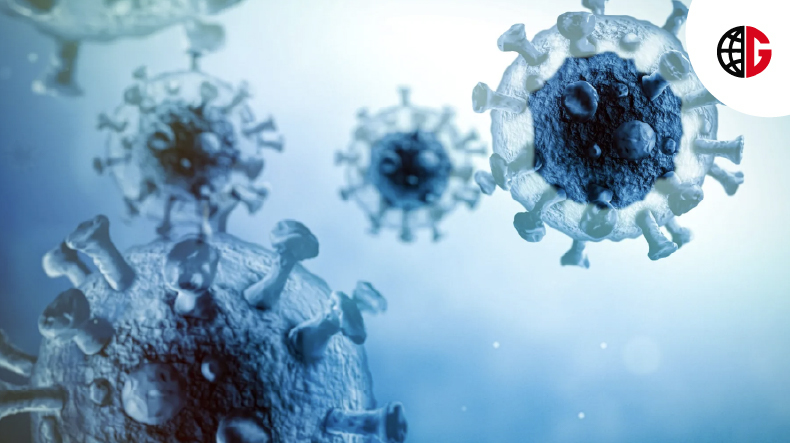
Artificial intelligence has taken another striking step into the world of biology. Scientists have trained an AI model to understand patterns hidden within DNA and use that knowledge to design viral genomes that do not appear to exist anywhere in nature.
In a study published in Science, researchers from Stanford University and the Arc Institute demonstrated that an AI system called Evo could generate entirely new genomes for bacteriophages — viruses that infect bacteria. When researchers synthesized some of these AI-designed genomes in the laboratory, 16 of them produced functional viruses capable of infecting E. coli.
The achievement marks a significant development in the emerging field of AI-driven biology. It also raises difficult questions about how quickly biological design capabilities are advancing and what safeguards should accompany them.
From Reading DNA to Designing New Biology
Evo was developed to work with biological sequences in much the same broad way that language models work with written language. Instead of learning relationships between words and sentences, the model was trained on an enormous collection of DNA sequences representing millions of genomes.
By analyzing this biological data, Evo learned patterns and constraints that have evolved. Researchers then used the model to generate DNA sequences that followed the underlying patterns yet were substantially different from known natural sequences.
The objective was not simply to reproduce an existing virus. The researchers wanted to determine whether an AI model could use what it had learned from nature to create viable viral genomes of its own.
The laboratory results provided a striking answer.
Scientists synthesized DNA corresponding to the AI-generated sequences and introduced the genetic material into bacterial cells. Some of the engineered bacteria subsequently produced viruses capable of infecting other E. coli cells.
In total, 16 AI-generated phages proved functional.
The Viruses Were Different From Anything Found in Nature
One of the most notable aspects of the research was the genetic novelty of the viruses.
The AI-generated phages contained sequence patterns that did not closely match viruses previously identified in nature. Yet, despite their novelty, they retained enough of the biological characteristics required to function as viruses.
Some were also able to overcome natural resistance mechanisms in the bacteria they targeted.
That combination — genetic originality alongside biological functionality — is what makes the experiment particularly significant.
“This is an important milestone,” said Patrick Cai, a synthetic biologist at the University of Manchester who was not involved in the research.
The study demonstrates that generative AI may be capable of moving beyond analyzing existing biological information and toward designing biological systems that can work in the real world.
Why Scientists Are Interested in AI-Designed Viruses
The breakthrough could eventually have important implications for medicine.
Bacteriophages, or phages, naturally attack bacteria and have long been investigated as potential alternatives or complements to conventional antibiotics. Their ability to target particular bacterial species makes them especially interesting as researchers search for new ways to combat antibiotic-resistant infections.
One challenge, however, is finding naturally occurring phages that can effectively attack a specific bacterial strain.
AI could potentially change that process.
Rather than searching through nature for a virus with the right characteristics, future biological design systems could help researchers develop candidate phages tailored to particular bacteria. Such approaches could ultimately contribute to treatments for infections that have become difficult to manage with existing antibiotics.
The Stanford research does not establish that AI-designed phages are ready for clinical use. Instead, it demonstrates a proof of concept: an AI model can learn biological rules from existing genomic data and use them to produce new functional designs.
A Major Scientific Advance With a Biosecurity Question
The same capability that makes biological AI promising also makes it controversial.
Researchers deliberately excluded datasets involving human pathogens from the training process. The viruses created in the study belong to a class that infects bacteria rather than humans, meaning the resulting organisms do not represent human-infecting viruses.
Nevertheless, the experiment has intensified an ongoing debate about the potential misuse of AI in biology.
Biosecurity experts have warned that increasingly capable biological models could eventually make it easier to design or optimize dangerous organisms. The concern is not limited to what AI systems can create today, but what increasingly sophisticated models might be capable of generating in the future.
In an accompanying commentary in Science, biosecurity experts Thomas Inglesby and Moritz Hanke of the Johns Hopkins Center for Health Security argued that the findings demonstrate why stronger safeguards are needed as generative biological technologies develop.
They have called for strict controls around the use of similar techniques on pathogens affecting humans, animals and agricultural crops.
Hanke has pointed to a particularly concerning future possibility: a sufficiently capable genomic model could potentially be asked to modify a pathogen for traits such as increased transmissibility or lethality.
Not Everyone Believes AI Has Made Bioweapons Easy
The risks, however, are not universally viewed in the same way.
Tom Ellis, a professor of synthetic genome engineering at Imperial College London, has argued that the leap from designing simple bacterial viruses to creating a dangerous human pathogen remains substantial.
The phages produced in the Stanford experiment have relatively small and simple genomes, making them considerably easier biological systems to work with than complex pathogens that affect humans.
That distinction is important. Demonstrating that AI can generate a functional bacteriophage does not mean that the same technology can immediately produce a dangerous human virus.
Still, the experiment illustrates how the barrier between computational biology and physical biology is becoming increasingly thin.
AI Biology Is Moving From Prediction to Creation
For years, artificial intelligence has primarily been used in biology to analyze data, predict protein structures, identify potential drug candidates, and help researchers understand complex biological processes.
Generative models introduce a different possibility.
Instead of asking AI only to explain what already exists, researchers can ask it to propose something that does not.
The Evo experiment represents an early example of that transition. The model studied the biological information available in nature and then generated new sequences based on the patterns it had learned.
The researchers subsequently tested those designs in the laboratory, creating a feedback loop between computational prediction and physical experimentation.
That approach could eventually become an important part of biotechnology research, particularly if AI systems become better at designing biological molecules, cells and organisms under tightly controlled conditions.
The Race for AI-Biosecurity Safeguards
The rapid development of biological AI has prompted governments, researchers and technology companies to consider how such systems should be governed.
Organizations including the Frontier Model Forum have been working on AI-biosecurity research and safety standards, reflecting broader concerns that increasingly capable AI systems could lower the technical barriers to accessing sophisticated biological knowledge.
The challenge is finding a balance.
Overly restrictive rules could slow research that might lead to better medicines, new antibiotics and other biomedical advances. At the same time, insufficient safeguards could allow powerful biological design tools to be misused.
The debate is therefore moving beyond whether AI can contribute to biology. Increasingly, the question is how society should control technologies capable of designing biology.
A New Chapter for Generative Biology
The creation of 16 functional bacteriophages from AI-generated DNA is not evidence that artificial intelligence can independently create every kind of virus. But it is an important demonstration that generative models can learn biological constraints and use them to produce previously unseen, functioning genetic designs.
For researchers, that opens an exciting avenue for exploring new therapies and biological tools.
For biosecurity experts, it is a reminder that the capabilities of AI are advancing quickly enough that safety considerations must develop alongside them.
The most important takeaway may be that AI is no longer being used only to read the biological code of nature. It is beginning to help scientists write new versions of it.
And as that capability grows, the scientific opportunity — and the responsibility to use it safely — will grow with it.
Read more: Meta Unveils Muse Code Beta and Muse Spark 1.2 to Power Next-Generation AI Coding