

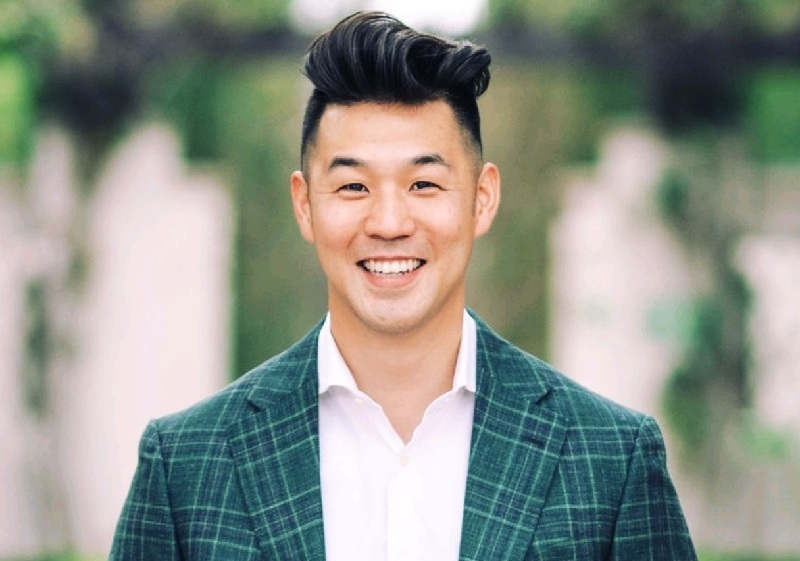
In the fast-evolving cannabis industry, few stories capture the spirit of resilience, risk, and reinvention quite like Alex Kwon’s. As the CEO and Co-Founder of ACTIVE, Kwon has transformed a simple side project into one of the most influential vaporizer hardware companies in the global cannabis market.
What began as an experiment to support his cannabis brand eventually turned into a multi-million-dollar enterprise supplying hardware to some of the largest cannabis companies in the United States. Today, ACTIVE controls an estimated 20% of the vape hardware market and generates nearly $100 million in annual revenue.
But the journey to the top was anything but smooth. From childhood rebellion and personal tragedy to legal battles, entrepreneurial risks, and market disruptions, Kwon’s story is a powerful example of perseverance in one of the world’s most complex industries.
Early Life: A Rebel with Big Dreams
Alex Kwon grew up in the suburbs of Chicago, the son of South Korean immigrant parents who ran a wholesale clothing business. As the first generation in his family born in the United States, he experienced the dual identity common among many immigrant families—balancing traditional values with American culture.
While his older brother, Sung, was known for discipline and responsibility, Kwon described himself as the “rebel” of the family.
He got into trouble often during his early years—experimenting with marijuana at a young age, pulling pranks with friends, and occasionally testing the limits of authority. Yet despite his rebellious nature, he had strong passions that shaped his character.
Sports played a major role in Kwon’s youth. He was a standout safety on his high school football team and also competed in wrestling. For years, he believed his future would lie in professional sports, even dreaming of becoming the first fully Korean American player in the National Football League.
At the same time, he pursued martial arts with discipline, earning a fourth-degree black belt in Hapkido and a second-degree black belt in Taekwondo.
His life seemed full of possibilities—until tragedy struck.
A Life-Changing Loss
In January 2000, a devastating event reshaped Kwon’s life forever.
After wrestling practice one snowy evening, he waited for his older brother Sung to pick him up. But Sung never arrived. Later that night, a police officer came to the family’s door with tragic news: Sung had been involved in a fatal car accident.
The loss shattered the family.
For Kwon, the emotional impact was profound. Without the guiding presence of his older brother, he struggled with direction and discipline during his late teenage years.
He leaned into sports, friendships, and experimentation, searching for a sense of identity while coping with grief.
Despite the turmoil, Kwon graduated from high school and later enrolled at the University of Illinois Chicago, where his brother had previously studied computer science.
But college was not where his future would unfold.
Entering the Cannabis World
By 2006, Kwon dropped out of college, uncertain about his path forward.
Then an unexpected opportunity arrived.
A college friend called him from California, asking for help with a land development project. The work involved clearing land, and Kwon initially had little idea what the business truly involved.
When he arrived, he quickly discovered the truth.
The land was being developed for cannabis cultivation.
At the time, the cannabis industry in California existed in a gray legal area. Medical marijuana programs had begun, but regulation remained inconsistent and enforcement unpredictable.
The epicenter of the industry was Humboldt County, widely known for its cannabis farms and underground cultivation networks.
Kwon immersed himself in the world of land development for growers, eventually co-founding the Humboldt Consulting Group. The company specialized in preparing land for cannabis farms—installing irrigation systems, building greenhouses, and renting land to cultivators.
The business proved incredibly profitable.
In one week alone, Kwon earned $30,000—more than he had ever made in an entire year before.
Over the next six years, Humboldt Consulting Group generated more than $10 million in revenue.
Yet despite the financial success, the work came with risks. Helicopters from law enforcement often circled overhead, and operations depended heavily on trust within the underground market.
For Kwon, however, the experience became a crash course in cannabis entrepreneurship.
Transitioning to the Legal Cannabis Market
By 2015, the cannabis industry was beginning to change dramatically. Several U.S. states have legalized recreational marijuana, including Washington, which legalized recreational cannabis in 2012.
Kwon saw an opportunity to move from the underground economy into the legal cannabis market.
He purchased a struggling licensed grow facility in Washington and invested millions of dollars to rebuild the operation. That venture became Sungrown.
The transition from informal operations to a regulated industry was challenging.
As Kwon later explained, a cannabis license is not a “license to make money”—it is a license to invest money.
Regulatory requirements, compliance costs, and operational complexity made the legal cannabis market far more demanding than the underground one.
Still, Sungrown grew quickly. Within 10 months, the company employed 70 people and produced a harvest of nearly 5,000 pounds of cannabis.
However, another challenge soon appeared.
Local apple farmers in the region opposed cannabis cultivation and pushed for restrictions that forced Kwon to relocate his entire operation.
It was another setback—but not the last.
Despite the obstacles, Sungrown eventually stabilized and became profitable. Within two years, it generated nearly $6 million in revenue and later grew into a $20 million business selling flowers, pre-rolls, vapes, and cannabis-infused products.
The Birth of ACTIVE
While running Sungrown, Kwon encountered a major problem with cannabis vape products.
The hardware available on the market—primarily imported from China—was originally designed for nicotine, not THC oil. As a result, many cartridges failed to deliver the quality or reliability cannabis brands needed.
Seeing an opportunity, Kwon partnered with Jonathan Carfield to create a new company: Advanced Vapor Devices.
Their goal was simple but ambitious: design vaporizer hardware specifically engineered for cannabis oils.
In November 2018, the company launched a new vape cartridge.
Within six weeks, the product generated $1.6 million in revenue.
That moment convinced Kwon the venture had enormous potential.
Scaling a Hardware Empire
As demand surged, Advanced Vapor Devices quickly attracted major cannabis brands as customers.
One of the first major partners was Trulieve, one of the largest cannabis operators in the United States.
Soon, other major cannabis companies began using the company’s devices to package and distribute their THC products.
These included:
- Curaleaf
- Jeeter
By focusing exclusively on hardware innovation, Kwon positioned the company as a key infrastructure provider within the cannabis ecosystem.
Rather than competing with cannabis brands, ACTIVE empowered them.
This strategic positioning helped the company grow rapidly.
Today, ACTIVE’s devices are used across the U.S. cannabis industry, contributing to a market where vape products generate billions in annual sales.
In 2024 alone, cannabis vape products produced about $6 billion in revenue in the United States, making them the second-largest product category after cannabis flower.
Legal Battles and High-Stakes Challenges
Success in the cannabis industry often comes with intense competition and legal challenges.
Kwon experienced both.
His partnership with Jonathan Carfield eventually deteriorated into a legal dispute over company ownership and intellectual property. The conflict escalated into lawsuits in 2021, with multiple allegations on both sides.
After years of litigation, Kwon ultimately secured a legal victory in 2023.
During that period, the company rebranded from Advanced Vapor Devices to ACTIVE.
But another legal challenge emerged soon after.
In 2021, the Chinese vape hardware giant Smoore filed a patent infringement complaint with the U.S. International Trade Commission against nearly 40 companies in the vaporizer industry.
The lawsuit threatened to reshape the entire vape hardware market.
Many companies chose to settle quickly.
Kwon took a different path.
ACTIVE decided to fight the case, spending nearly $10 million in legal costs before reaching a settlement.
The decision reflected Kwon’s belief that surrendering the case could give one company too much control over the entire industry.
Despite the financial burden, ACTIVE survived—and continued to grow.
Building a Global Manufacturing Network
As demand expanded, ACTIVE scaled its operations internationally.
The company established manufacturing facilities in Shenzhen, China, and Indonesia, employing roughly 700 people across its production network.
This infrastructure allows the company to produce high-quality vaporizer hardware at scale while maintaining strong relationships with major cannabis brands.
Through this global manufacturing system, ACTIVE has become one of the most influential hardware suppliers in the cannabis sector.
Today, its devices power some of the most recognizable cannabis products sold across the United States.
Expanding into Europe
Looking ahead, Kwon believes the next major growth opportunity lies outside North America.
Europe’s cannabis industry is still in its early stages, but momentum is building rapidly as more countries adopt medical cannabis frameworks and explore legalization.
Germany, the largest market in the European Union, generated nearly $944 million in cannabis sales last year alone.
Recognizing the opportunity, Kwon began expanding into the European market.
Sungrown acquired a majority stake in the Denmark-based cannabis processor Valcon as part of the strategy.
Meanwhile, ACTIVE started supplying vaporizer hardware to European cannabis companies, including partnerships with Bloomwell Group.
For Kwon, Europe represents the gateway to a much larger global market.
He believes the region could eventually rival—or even surpass—the U.S. cannabis industry in scale.
Leadership Built on Resilience
Alex Kwon often jokes that his companies have been “run over by a bus seven times.”
The phrase reflects the many obstacles he has faced—legal disputes, regulatory hurdles, operational setbacks, and market volatility.
Yet through each challenge, he has continued to rebuild and expand.
His leadership style is shaped by the lessons he learned early in life: resilience, adaptability, and a willingness to take calculated risks.
From rebellious teenager to global cannabis entrepreneur, Kwon’s journey illustrates how persistence can turn adversity into opportunity.
The Future of ACTIVE
Today, ACTIVE stands at the forefront of cannabis vaporizer technology.
With an estimated $100 million in annual revenue and a growing international presence, the company has become a key player in the global cannabis supply chain.
As legalization spreads and consumer demand continues to rise, vaporizer technology is expected to play an even larger role in the cannabis market.
For Kwon, the mission remains clear: build reliable, innovative hardware that helps cannabis brands deliver better products to consumers around the world.
And if the past decade is any indication, he is only getting started.
Outlook
The story of Alex Kwon is not just about building a successful company—it is about resilience in the face of adversity. From underground cannabis operations in Humboldt County to leading one of the most influential vaporizer hardware companies in the industry, his journey reflects the grit and determination required to succeed in a rapidly evolving market.
With ACTIVE expanding across continents and new cannabis markets emerging worldwide, Kwon’s entrepreneurial legacy continues to grow—proving that even the most unexpected side projects can evolve into industry-defining ventures.
Read more: A Success Story in the Making: How Asha Sharma Is Redefining the Future of Microsoft Gaming