

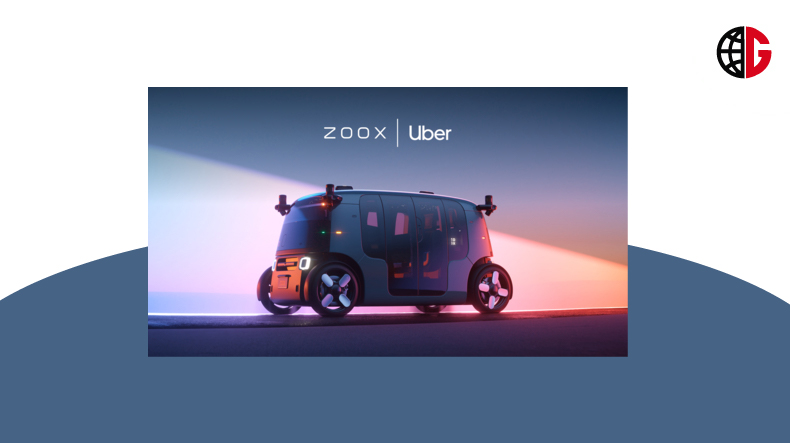
Strategic partnership could bring autonomous ride-hailing to Uber users once regulatory approval is secured.
Zoox, the autonomous vehicle company owned by Amazon, is preparing to introduce its robotaxi service on the Uber platform in Las Vegas later this year. The announcement marks a significant step toward expanding autonomous ride-hailing options in one of the United States’ fastest-growing technology test markets.
Before the service can become commercially available, Zoox must obtain regulatory approval from the National Highway Traffic Safety Administration (NHTSA). The company has applied for exemptions from several provisions of the Federal Motor Vehicle Safety Standards (FMVSS), which typically require vehicles to include features such as steering wheels, pedals, windshield defrosting systems, and windshield wipers.
Zoox’s robotaxis are uniquely designed autonomous vehicles built without traditional driver controls. While the company currently operates these vehicles for demonstration purposes, full commercial deployment will only be possible once federal authorities grant the necessary exemptions. NHTSA has opened a 30-day public comment period to review Zoox’s request before making a final decision.
According to the companies, Zoox plans to launch its own commercial robotaxi service in Las Vegas first. Once operations are established, the autonomous vehicles will become available through Uber’s ride-hailing app, allowing users to request a driverless ride in the same way they currently book traditional rides.
Zoox has already begun offering free test rides in Las Vegas and San Francisco as part of its ongoing pilot programs. The company is also expanding its presence across additional U.S. cities, including Dallas and Phoenix, where it is mapping routes and building operational infrastructure to support future launches.
The partnership between Zoox and Uber has been described as a multi-year strategic collaboration. As part of the agreement, both companies plan to expand the robotaxi service to Los Angeles by 2027.
For Zoox, the collaboration represents its first integration with a third-party ride-hailing platform. Uber, however, has been actively building partnerships across the autonomous vehicle industry. The company already works with numerous self-driving technology providers worldwide. Among its most prominent collaborations is its agreement with Waymo, whose robotaxis are currently accessible through Uber in Austin and Atlanta. Uber has also partnered with Baidu and plans to begin testing autonomous vehicles in London later this year.
Beyond partnerships, Uber has also strengthened its internal capabilities to support the autonomous vehicle ecosystem. Earlier this year, the company launched an initiative known as “AV Labs,” focused on collecting real-world driving data to help improve autonomous systems used by its partners. It has also introduced a new unit called Uber Autonomous Solutions, designed to provide operational support, software integration, and infrastructure services for autonomous vehicle deployments.
Meanwhile, regulators are continuing to evaluate how best to oversee the growing self-driving vehicle industry. During a recent autonomous vehicle safety hearing, NHTSA chief Jonathan Morrison emphasized the need for a clearer regulatory framework that balances innovation with safety.
He noted that regulators are working to develop stronger oversight while also addressing barriers that may slow technological progress in the sector.
As the review process continues, the decision by NHTSA could play a critical role in determining how quickly fully autonomous ride-hailing services become part of everyday urban transportation. If approved, Zoox’s robotaxis on the Uber platform could mark another milestone in the broader rollout of driverless mobility services across the United States.
Read More: OpenAI to Acquire Promptfoo to Strengthen AI Security and Evaluation in Frontier Platform