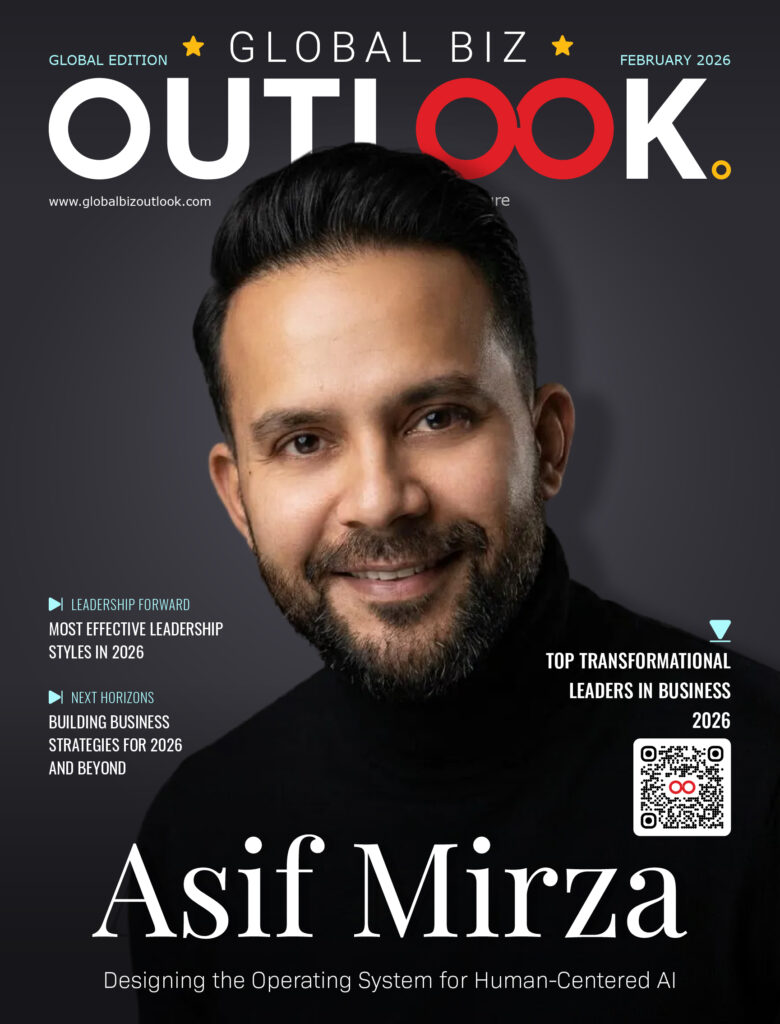

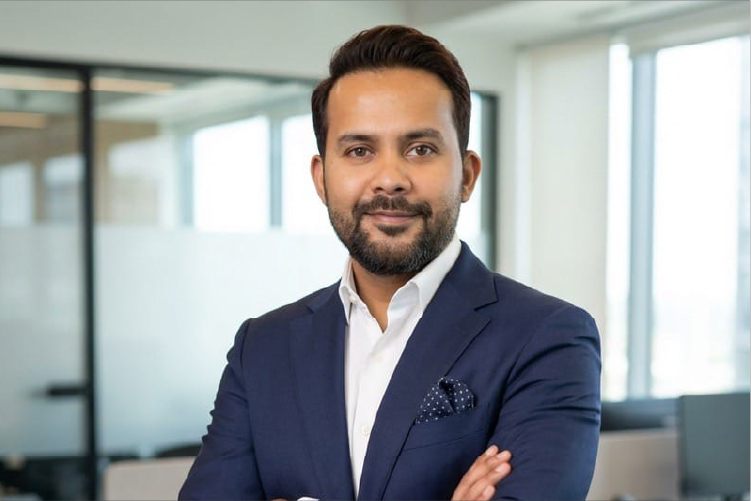
The moment Asif Mirza realized something was broken in the way enterprises were adopting AI didn’t come from a failed algorithm; it came from a successful one. Watching a large organization roll out automation at unprecedented speed, Asif saw productivity metrics climb even as employee trust and customer confidence quietly eroded. The systems worked.
The people disengaged. “That’s when it became clear,” he has written, “that efficiency without empathy doesn’t scale, it fractures.”
That realization would come to define not only his thinking, but the philosophy behind CXAI – Technology Powered, Human Delivered, an AI transformation firm he founded to challenge how intelligence is designed, governed, and experienced inside complex organizations.
AI as a Leadership Test, Not a Technology Race
As generative AI surged into boardrooms, Asif emerged as one of the clearest voices cautioning against speed without stewardship. While many leaders framed AI as a race to automate, his long-form essays, consistently shared on LinkedIn and widely circulated among CX leaders, CIOs, and transformation executives, reframed the moment as a leadership test. In widely read pieces such as “Automation vs. AI: Why Intelligence, Not Just Efficiency, Will Shape the Future and What 2025 Taught Me About Leadership, Humanity, and Building AI That Truly Serves”, Asif argues that empathy is no longer a soft virtue but a measurable business input, one that directly influences adoption, trust, and long-term return on investment. Over the past year, this body of work has gained sustained traction, positioning him less as a commentator and more as a systems thinker shaping how executives define success in the AI era.
Recognition as Signal – Not Destination
Fresh from winning at the 20th Annual Stevie® Awards for Sales & Customer Service, CXAI and Asif Mirza, were honored with 1 Silver and 4 Bronze awards across AI-driven customer experience and service innovation. The recognition reflects the team’s commitment to measurable impact, human-centered design, and responsible enterprise AI.
That perspective has earned Mirza growing recognition across the customer experience and technology ecosystem. In 2025, he was named a Top CX Leader and Top CX Tech Awardee, and recognized as a WLDA Executive Ally for his advocacy of inclusive, human-first leadership.
For Mirza, however, awards are signals and not endpoints. Outcomes matter more. Through CXAI, he works with enterprises to redesign operating models, embed governance before deployment, and ensure that AI strengthens, rather than replaces the human relationships at the core of business.
“Rejection is often redirection,” Mirza has reflected in one of his most-shared LinkedIn essays, a philosophy that mirrors his broader belief that progress, when guided with intention, rarely follows a straight line.
The Most Dangerous Divide in Modern Transformation
This conviction sits at the heart of what Asif describes as the most consequential fault line in modern enterprise transformation: the widening gap between efficiency and empathy. In the pursuit of speed and scale, organizations have optimized systems while quietly eroding trust inside the workforce and across the customer journey. AI has delivered productivity, but often at the cost of connection. What was gained in automation, Asif argues, was frequently lost in understanding.
Why ROI Fails When Humans Don’t Count
Over the past year, this tension has become a defining theme of his writing and advisory work. In essay after essay, Asif challenges leaders to confront an uncomfortable truth: when organizations fail to measure human impact, they miscalculate return on investment. Sustainable value does not emerge from automation alone, but from intelligence guided by intention systems deliberately designed to deepen, rather than dilute, human connection. By questioning how AI is governed, measured, and experienced, Asif has helped shift the conversation from how fast AI can scale to how responsibly it must be led.
Seventeen Years Before AI Became a Buzzword
That perspective was forged long before AI became a boardroom imperative. With more than 17 years at the intersection of customer experience, digital transformation, and enterprise leadership, Asif observed the same pattern repeat across industries and geographies. Technology initiatives rarely failed because of capability. They failed because of structure. Organizations invested heavily in tools, yet lacked clarity around governance, accountability, workforce readiness, and cultural alignment.
Why AI Only Amplifies What Already Exists
“Technology doesn’t transform organizations,” Asif often notes. “People do. AI only amplifies what already exists.” This belief would become foundational to his leadership philosophy-and ultimately, to CXAI itself.
When Urgency Masqueraded as Innovation
The rapid rise of generative AI marked a turning point. As enterprises rushed into adoption, Asif watched enthusiasm outpace preparedness. “What was called AI transformation was often just urgency wearing the mask of innovation,” he recalls.
Risk, governance, workforce impact, and long-term readiness were afterthoughts. The conclusion was unavoidable: enterprises did not need more tools. They needed structure.
Founding CXAI: Readiness Before Rollout
That realization led to the founding of CXAI in 2022, headquartered in Mississauga, Ontario. From the outset, the firm was intentionally positioned not as a technology vendor but as a strategic architecture partner focused on helping organizations design how AI should be led, governed, and embedded at scale. CXAI operates on a deceptively simple premise: AI maturity must precede AI deployment.
Designing the Architecture Behind AI Success
Rather than implementing isolated solutions, CXAI works with enterprises to design end-to-end AI operating models that integrate governance, risk management, leadership capability, and customer experience strategy. Its work spans AI transformation advisory, enterprise readiness and maturity assessments, responsible AI frameworks, operating model design, and leadership development through the CXAI Academy. By focusing on readiness first, the firm helps organizations avoid the most common pitfalls of fragmented adoption, regulatory exposure, and workforce resistance.
Choosing Discipline Over Noise
Entering an AI market crowded with bold promises was not without challenge. “AI was noisy,” Asif says. “Everyone had a tool. Everyone promised speed. Very few talked about discipline.” CXAI deliberately chose the harder path-prioritizing depth over hype.
The firm invested in building proprietary frameworks, publishing thought leadership that challenged prevailing narratives, and engaging executives in difficult conversations about responsibility, trust, and long-term impact. That discipline has positioned CXAI as a trusted advisor to leaders seeking clarity rather than shortcuts, particularly in regulated and high-stakes environments.
Leadership Is the Real Operating System
For Asif, leadership itself is not a personal trait-it is an operating system. “I don’t separate leadership from culture,” he explains. “Culture is an operating model.”
At CXAI, leadership principles are embedded into how the organization works, guided by curiosity, integrity, accountability, empathy, and adaptability. Performance is measured not by intensity, but by intention-a philosophy mirrored in how the firm partners with clients navigating change.
Scaling What Actually Lasts
Looking ahead, Asif sees CXAI playing a defining role in shaping how enterprises worldwide adopt and govern AI. The firm’s roadmap includes scaling the CXAI Academy globally, developing industry-specific AI playbooks across banking, healthcare, retail, and government, expanding partnerships across North America, APAC, Europe, and the Middle East, and embedding CXAI frameworks into enterprise and regulatory ecosystems.
The ambition is not to disrupt for disruption’s sake, but to build what endures.
A Final Word on Legacy
For emerging leaders, Asif offers advice shaped by patience rather than urgency. “Don’t chase disruption,” he says. “Build direction.”
In an era defined by rapid technological change, he believes lasting impact comes from long-term thinking, ethical discipline, and systems designed to outlast their creators.
“Legacy isn’t built by being first,” Asif reflects. “It’s built by being foundational.”