

Norges Bank Investment Management (NBIM), which manages Norway’s $1.8 trillion sovereign wealth fund, the largest in the world, saved 213,000 hours annually through strategic AI implementation. The question isn’t whether to adopt AI, but how to do it right.
NBIM didn’t simply implement AI tools. They fundamentally reimagined operations, achieving:
- 213,000 hours saved annually across compliance and operations
- 60% reduction in portfolio monitoring time
- 40% decrease in compliance review cycles
- ROI within 18 months
But NBIM’s case is the exception, not the rule. Their success required strategic alignment, operational redesign, and strong governance. These are precisely the areas where most organizations stumble: misalignment, inefficiencies, and oversight gaps. And while traditional consultancies have long dominated business transformation, AI demands a more specialized approach, one uniquely suited to advisory firms.
Advisory vs. Consultancy: The Critical Difference
| Aspect | Traditional Consultancy | AI Advisory |
| Approach | Standardized frameworks | Bespoke solutions |
| Team Structure | Large, hierarchical | Lean, specialized |
| Expertise | Generalist with AI practice | Deep AI specialization |
| Responsiven ess | Process-driven | Agile, real-time |
| Implementati on | 12-24 months typical | 6-12 months typical |
AI transformation requires deeper expertise, adaptive strategies, and nuanced understanding of culture & emotional dynamics, rapidly evolving AI landscape, and Responsible AI governance, demands that align with advisory firms’ core strengths.
The Power of Specialization
When NBIM transformed their operations, they needed partners who could:
- Navigate complex regulations across 9,000+ investments in 70 countries
- Build Responsible AI frameworks for 1.5% of global listed companies
- Create scalable systems from individual securities to entire sectors.
Advisory firms excel because they:
- Maintain dedicated AI research teams
- Build deeper, more personal client relationships
- Develop proprietary methodologies
- Offer 24/7 “AI-native” thinking and “AI Helpdesk” approach
Case example: When a pharmaceutical client needed to enhance their clinical trial platform with AI, our advisory team restructured the approach in two weeks, versus much longer lead times quoted by traditional consultancies. We were informed even the approval process to propose for the engagement would require a minimum of six weeks!
Agility in the AI Era
Between 2023 and 2025:
- LLM capabilities improved 10x
- AI implementation costs dropped 70%
- New regulations emerged in 15+ markets
- This rapidly evolving landscape demands agility that traditional consultancies often lack. Advisories’ lean structures enable rapid adaptation to these shifts by:
- Pivoting strategies within hours
- Real-time iteration and testing
- Immediate adoption of AI breakthroughs in use cases, tools, agents, and workflows
- Proactive compliance with emerging regulations
Strategic Alignment Beyond Technology
NBIM’s success came from aligning AI with their unique mandate of managing oil revenues for future generations. Advisories excel in customization across industries:
- Financial services: Risk modelling tailored to regulatory contexts, compliance automation reflecting market positioning
- Healthcare: AI diagnostics integrated with clinical workflows, privacy-compliant patient optimization
- Manufacturing: Predictive maintenance customized to equipment, quality control understanding specific tolerances
- Retail: Personalization respecting brand values, inventory optimization considering local dynamics
Trust and Responsible AI Governance
Advisories address complexities such as transparent decision-making, ethical data use, and clear accountability through:
- Building lasting trust
- Forge strategic partnerships
- Operationalizing Responsible AI into daily operations
- Ensuring continuous governance and accountability
Empowering Workforce and Enabling Talent Transformation
NBIM’s 213,000 hours saved weren’t about replacing humans. They empowered their employees to focus on higher value work.
Advisory firms offer:
- Role-specific AI training, upskilling, and reskilling
- Hands-on talent transformation workshops with teams regarding their individual jobs and expected job augmentation as well as overarching team missionally proactively defined and shaped by employees themselves
- Continuous learning programs
- Leadership alignment sessions
Unlike standardized consultancy modules, advisory programs are custom, practical, and agile, and their impact is measured by cost avoidance, productivity gains, and revenue growth.
When to Choose an Advisory
Consider an AI advisory when:
- Complexity is high: Multiple use cases, legacy integration, critical compliance
- Specialization and AI Experience matters: Industry- specific applications, cutting-edge capabilities with AI use cases, tools, and agents as well as deep bonds with broader AI ecosystem Flexible timelines and agility are essential: for rapid market or technology shifts, when quick wins are needed, or when teams can’t pause their regular work for weeks just to “inject AI.” In some cases, it is also important to slow down to give time and space for employees to learn and adopt their new AI tools.
Deep partnership for sustainable impact is valued: Continuous collaboration from governance through optimization and growth, as outlined in your AI Transformation checklist.
Evaluate potential partners on:
- Industry and AI knowhow and experience
- Hands-on implementation success
- Current AI knowledge and capabilities
- Partnership approach and engagement model
- Responsible AI accreditation and practices
- Talent transformation background and compassionate approach
- Comfort with upskilling and reskilling at all levels
- Long-term impact and sustainability focus
The Advisory Advantage
NBIM’s transformation, saving 213,000 hours while managing $1.8 trillion, demonstrates AI’s immense potential. But realizing that potential takes more than technology; it demands respect for culture & values, emotional intelligence, strategic vision, specialized expertise, and adaptive execution.
For leaders seeking to harness AI responsibly and sustainably, advisory firms offer a compelling alternative. Their deep specialization, agile methodology, and partnership approach create optimal conditions for successful AI transformation. As we advance into the AI-driven future, the bespoke, strategic approach of agile, nimble advisory firms will become the gold standard for organizations committed to lasting success. The question isn’t whether you need AI transformation, it’s whether you’ll choose a trusted partner who can help you deliver it with the precision, speed, and impact your business demands.
Ready to explore AI transformation for your organization? Connect with us (info@lotusai.co.uk) to discuss your unique challenges and opportunities.
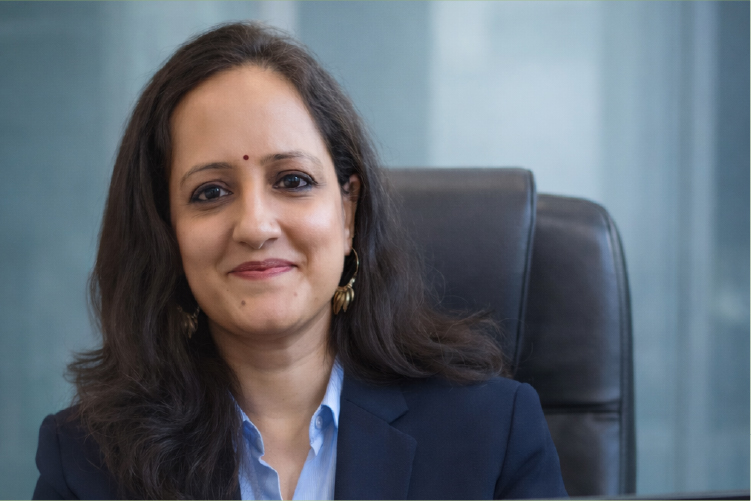
About Didem Ün Ateṣ
Didem Un Ates is a renowned AI and Responsible AI executive, Algorithm Auditor, and Executive Coach with over 25 years of experience driving technology- led transformation across industries.
As the Founder and CEO of LotusAI Ltd, Didem advises private equity, financial services, and consulting firms including Goldman Sachs Asset Management and its portfolio companies – on how to scale AI with impact, integrity, and foresight.
Didem sits on the boards of the Edge AI Foundation, Columbia Women’s Circle, and Wharton AI Studio and serves on the AI/GenAI Council for Goldman Sachs Asset Management. She is recognised as the winner of the CEO of the Year Awards UK 2025 – AI Advisory & Upskilling, a TechWomen 100 Champion, New Technology Consultancy of the Year for 2025, Responsible AI Innovation & Growth in Business Award 2025 – Wealth & Finance Magazine, and a Trailblazer 50.
Previously, she held leadership roles at Capgemini, EY, Accenture, Motorola, Schneider Electric, and Microsoft, where she helped launch Business AI Solutions at Microsoft Research and led AI initiatives within their Chief Data Office, spanning Generative AI and OpenAI partnership.
Discover more similar thought leadership at Securing Tomorrow’s Tables: How Innovation and Collaboration Can Redefine Global Food Security