

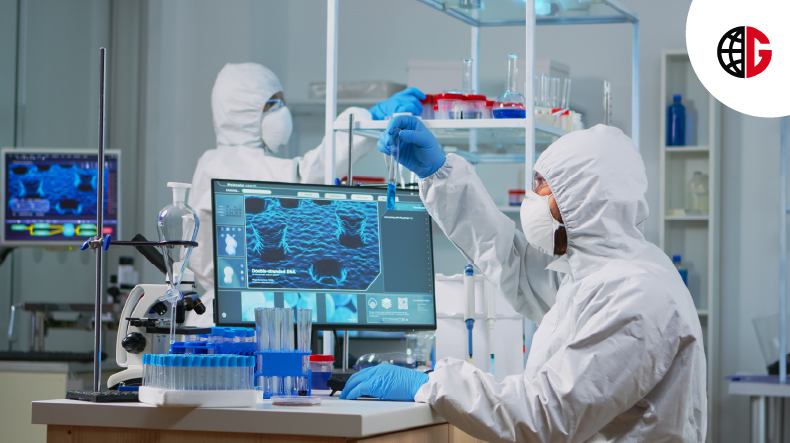
The healthcare and biotechnology industries are undergoing a profound transformation, not just in the drugs and diagnostics they produce, but in how they manufacture, research, and sustain their operations. While breakthrough therapeutics capture headlines, a quieter revolution is unfolding in the laboratories and production facilities that make modern medicine possible. Biotech tools, analytics platforms, and sustainable manufacturing innovations are redefining the infrastructure of healthcare delivery.
This shift addresses critical challenges facing healthcare leaders today: accelerating drug discovery timelines, reducing environmental footprints, and building resilient supply chains. From novel protein sequencing technologies to enzyme-based green chemistry and circular waste bioconversion systems, emerging startups are creating the foundational platforms that will power the next generation of medical innovation.
The Infrastructure Gap in Biotechnology
Traditional biotech research and manufacturing face significant bottlenecks. Conventional protein sequencing methods process only tens of thousands of proteins weekly, creating delays in antibody discovery and therapeutic development. Chemical manufacturing for pharmaceuticals relies heavily on toxic metal catalysts, generating millions of tonnes of carbon emissions annually. Meanwhile, organic waste from healthcare and food systems contributes substantially to global greenhouse gas emissions.
These infrastructure challenges directly impact healthcare economics. Prolonged drug development cycles increase costs, environmental regulations impose compliance burdens, and waste management represents both an expense and a sustainability liability. Forward-thinking biotech startups are addressing these pain points with biology-based solutions that promise both operational efficiency and environmental responsibility.
Accelerating Discovery Through Advanced Protein Sequencing
Glyphic Biotechnologies, founded in 2020 and headquartered in New York, exemplifies how analytical innovation can compress research timelines. The company developed a revolutionary protein sequencing platform using chemical tethering and single-molecule microscopy to read amino acids at dramatically higher throughput than traditional peptide fragment analysis.
According to industry analysis, this approach could significantly reduce drug discovery timeframes by accelerating the critical sequencing step that often creates research bottlenecks. The technology emerged from bioengineering research on the “ClickP” method, which the co-founders initially published in academic literature. Glyphic secured $6 million in seed funding in 2021, reflecting investor confidence in platforms that enable faster antibody discovery.
Currently operating as a sequencing service with plans for eventual kit sales, Glyphic’s business model positions it as foundational infrastructure for proteomics research. Just as next-generation DNA sequencing revolutionized genomics a decade ago, high-throughput protein sequencing could become an essential capability for pharmaceutical companies, contract research organizations, and academic institutions pursuing precision medicine.
For healthcare business leaders, the implications are substantial. Faster protein characterization means quicker validation of therapeutic targets, accelerated antibody engineering, and reduced time-to-market for biologics. These efficiency gains translate directly to competitive advantages in an industry where patent clocks are ticking and first-mover status commands premium valuations.
Sustainable Chemistry Reduces Pharmaceutical Manufacturing Emissions
Environmental sustainability has evolved from a corporate social responsibility initiative to a strategic imperative for pharmaceutical manufacturers. Regulatory frameworks like the EU Green Deal, carbon pricing mechanisms, and ESG investment criteria are creating financial incentives for cleaner production methods.
HydRegen, a 2021 spinout from Oxford University, addresses this need through engineered enzyme catalysts that replace toxic metal-based processes in pharmaceutical and chemical manufacturing. The company raised £2.6 million from Clean Growth Fund in April 2023 to accelerate development of these bio-based manufacturing solutions.
Co-founder Dr. Holly Reeve emphasized that the funding would expedite development of greener, less wasteful manufacturing processes. The company’s environmental value proposition is quantifiable: widespread adoption of HydRegen’s biocatalysts could potentially avoid millions of tonnes of carbon dioxide equivalent emissions annually by eliminating traditional metal catalysts commonly used in pharmaceutical production.
HydRegen’s strategy focuses on creating licensable catalyst processes for major pharmaceutical and chemical companies, leveraging over a decade of research from Professor Vincent’s laboratory. Early industry collaborations testing enzyme alternatives provide product-market fit validation. If the company successfully scales enzyme production to industrial volumes, it could become essential infrastructure for pharmaceutical companies navigating increasingly stringent environmental regulations.
The financial logic is compelling. As carbon pricing expands and environmental compliance costs rise, biotech solutions that simultaneously improve sustainability metrics and reduce production costs offer attractive return profiles. Impact investors and cleantech funds recognize this convergence, driving capital toward companies like HydRegen that address both environmental and economic imperatives.
Circular Bioeconomy: Converting Waste Into Healthcare Resources
The intersection of waste management and biotechnology presents unexpected opportunities for healthcare-adjacent innovation. Organic waste from healthcare facilities, food services, and agricultural systems represents both an environmental challenge and an untapped resource stream.
Entomal Biotech, founded in 2019 in Malaysia, pioneered modular bioconversion technology using Black Soldier Fly larvae to transform organic waste into valuable products. The company’s EMBC units are automated containers that house larvae feeding on organic waste, accelerating decomposition far beyond traditional composting timelines.
Entomal has deployed systems at Malaysian universities and recycling centers, including Taylor’s University and facilities in Shah Alam, with expansion underway. The larvae produce protein meals suitable for animal feed and organic fertilizers as by-products, creating new revenue streams for waste processors. The company is constructing a central facility capable of treating 15 tons of waste daily, supported by ongoing fundraising efforts.
In 2023, Entomal received multiple recognitions including Slingshot Top50 Deep Tech and Petronas Future Tech awards, acknowledging its global potential. The company addresses a significant challenge: Malaysia generates approximately 17,000 tonnes of food waste daily, and if food waste were quantified as a country, it would rank as the third-largest greenhouse gas emitter globally.
CEO Yanni Ching articulates a dual value proposition: reducing methane emissions while fostering food security through alternative protein sources. The larvae can convert tonnes of organic waste into fertilizer and feed within days using energy-efficient, decentralized infrastructure. This contrasts sharply with centralized composting or waste-to-energy facilities that require substantial capital investment and energy inputs.
For healthcare systems managing significant organic waste volumes, bioconversion technologies offer operational cost reduction, sustainability improvements, and potential revenue from by-product sales. As Entomal expands into Brazil and India, the model could provide scalable solutions for healthcare facilities seeking circular economy integration.
Investment Trends in Biotech Infrastructure
The funding patterns for manufacturing and platform biotechs reveal evolving investor priorities. Glyphic’s $6 million seed round, HydRegen’s £2.6 million Series A, and Entomal’s grant awards and venture capital interest demonstrate that infrastructure innovation attracts targeted investment from diverse sources.
Impact investors and cleantech funds increasingly view biotech tools and sustainable manufacturing as commercially viable while addressing ESG mandates. The alignment of regulatory trends, carbon pricing mechanisms, and corporate sustainability commitments creates favorable market conditions for these technologies. Businesses offering quantifiable environmental benefits alongside operational improvements present attractive risk-adjusted returns.
Healthcare business leaders evaluating partnerships or acquisitions should consider how infrastructure innovations create competitive moats. Companies with proprietary platforms that accelerate research, reduce compliance risks, or improve sustainability metrics offer strategic value beyond their direct revenue contributions.
Strategic Implications for Healthcare Leaders
The emergence of biotech tools and sustainable manufacturing platforms has several strategic implications for healthcare organizations. First, early adoption of enabling technologies like advanced protein sequencing can compress development timelines and reduce research costs. Organizations that integrate these capabilities gain time-to-market advantages in competitive therapeutic areas.
Second, environmental sustainability is transitioning from reputational benefit to financial necessity. As carbon pricing expands and environmental regulations tighten, manufacturing processes that reduce emissions and waste become economically advantageous. Partnerships with enzyme catalyst providers or waste bioconversion companies can improve both sustainability metrics and cost structures.
Third, the infrastructure layer of biotechnology represents potential acquisition targets for larger organizations seeking to vertically integrate critical capabilities. Companies that control foundational platforms gain pricing power and supply chain resilience.
Healthcare organizations should evaluate their exposure to infrastructure bottlenecks in research, manufacturing, and waste management. Strategic partnerships or investments in platform biotechs may offer solutions while positioning organizations at the forefront of industry evolution.
Frequently Asked Questions
What are biotech tools and why do they matter for healthcare?
Biotech tools are enabling technologies that accelerate research, improve manufacturing efficiency, or solve operational challenges in healthcare and life sciences. They matter because they compress drug development timelines, reduce costs, and address sustainability requirements that increasingly affect healthcare economics.
How does advanced protein sequencing benefit pharmaceutical companies?
High-throughput protein sequencing enables faster antibody discovery, quicker therapeutic target validation, and more efficient biologics development. This reduces time-to-market for new drugs and lowers research costs, providing significant competitive advantages in pharmaceutical development.
Why are pharmaceutical companies interested in bio-based catalysts?
Bio-based enzyme catalysts offer cleaner alternatives to toxic metal catalysts traditionally used in drug manufacturing. They reduce carbon emissions, minimize hazardous waste, and help companies meet increasingly stringent environmental regulations while potentially lowering production costs.
Can waste bioconversion technologies work in healthcare settings?
Yes, healthcare facilities generating significant organic waste can implement bioconversion systems to reduce disposal costs, lower emissions, and potentially generate revenue from by-products like fertilizers. The technology is particularly relevant for healthcare systems with sustainability mandates.
What should healthcare investors know about biotech infrastructure startups?
Infrastructure biotechs address fundamental operational challenges and often benefit from regulatory tailwinds like carbon pricing and ESG requirements. They may offer more predictable revenue models than therapeutic developers while serving essential roles in the broader healthcare ecosystem.
How do these innovations impact healthcare costs?
By accelerating research, reducing manufacturing expenses, lowering compliance costs, and creating value from waste streams, biotech infrastructure innovations can contribute to overall healthcare cost containment while improving environmental performance.
Read more similar Top List articles at Top AI Course Platforms in 2026: Where Professionals Go to Master the Intelligence Revolution