

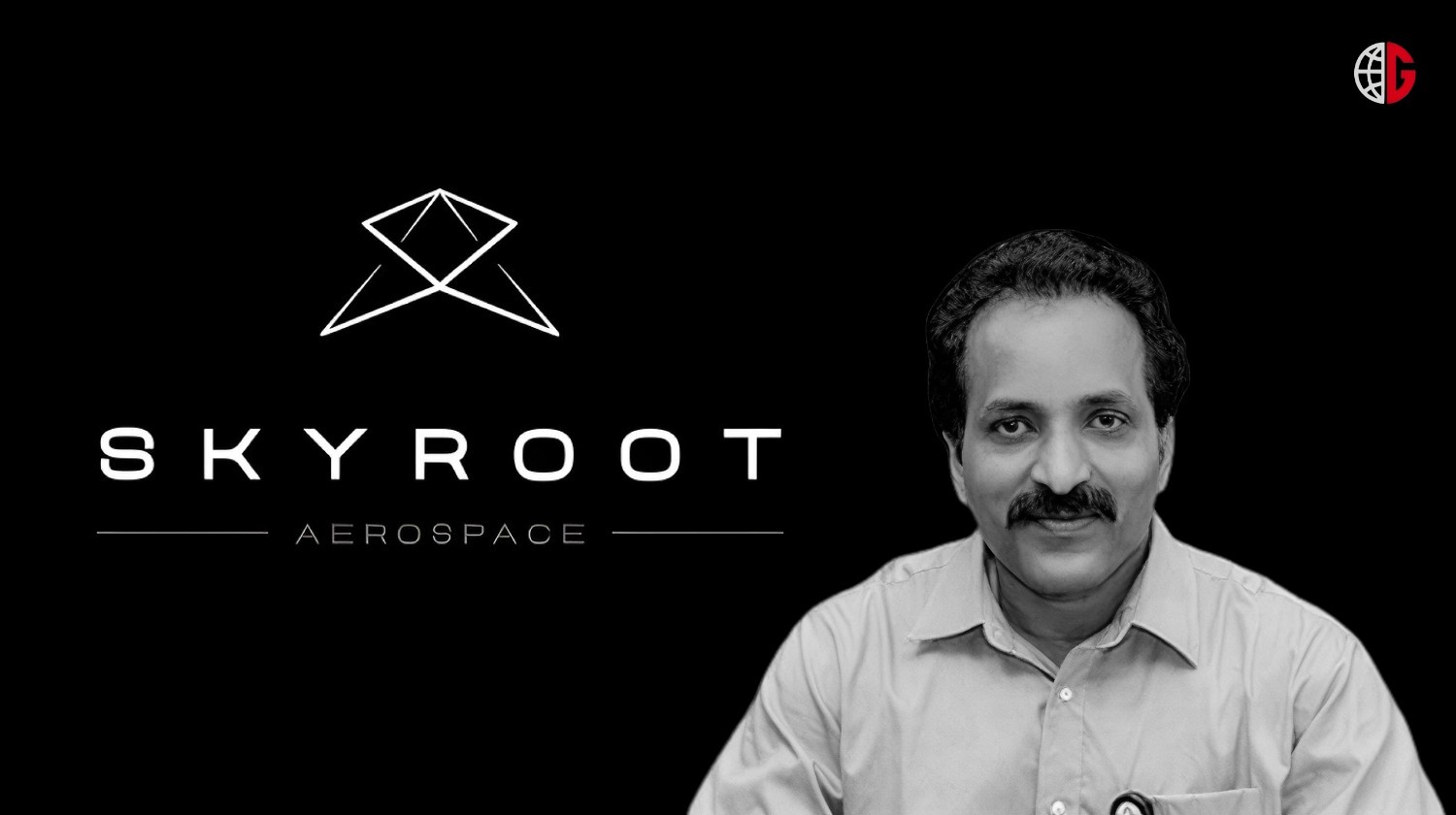
Hyderabad, India – In a significant move that underscores the growing synergy between India’s government space talent and the booming private aerospace sector, Skyroot Aerospace has announced the appointment of Sreedhara Panicker Somanath, the former Chairman of the Indian Space Research Organisation (ISRO), as its Chief Technical Advisor.
The announcement marks a milestone moment for Skyroot Aerospace as it gears up for the orbital flight of Vikram-1, the company’s first full-fledged orbital-class launch vehicle. Dr. Somanath, who led ISRO through one of its most ambitious and successful phases—including the landmark Chandrayaan-3 lunar mission, Aditya-L1 solar mission, and Reusable Launch Vehicle-LEX trials—will now bring his decades of expertise to one of India’s most promising private space tech startups.
A Non-Exclusive, Honorary Role with a Strategic Vision
Skyroot Aerospace clarified that the advisory position is non-exclusive, allowing Dr. Somanath to pursue his other professional interests and affiliations. His role at Skyroot is honorary in nature, with the primary focus on providing technical guidance and strategic oversight as the company accelerates toward its next major milestone: the launch of Vikram-1.
“Dr Somanath’s guidance will boost our technical firepower,” the company stated in an official post on X (formerly Twitter), underscoring the significance of his addition at this pivotal juncture.
Vikram-1: Pushing the Frontiers of Private Rocketry
The upcoming Vikram-1 launch is poised to further cement Skyroot’s position in the private aerospace ecosystem. The 23-metre-long rocket, constructed with advanced carbon composites and featuring a liquid-engine powered Orbital Adjustment Module, is engineered for precision last-mile delivery of satellites in orbit—a major technological leap that places Skyroot among elite private launch service providers.
This development builds on the success of Vikram-S, which made history in 2022 as India’s first private rocket to reach space, launched from Sriharikota. Vikram-1 continues this trajectory, equipped with enhanced capabilities aimed at addressing the growing demand for cost-efficient, agile satellite deployment in Low Earth Orbit (LEO).
Collaboration with Global Giants
Skyroot’s momentum isn’t limited to rocket development. Earlier this month, the company signed a Memorandum of Understanding (MoU) with Axiom Space, the U.S.-based firm that recently flew ISRO astronaut Shubhanshu Shukla to the International Space Station (ISS). The partnership seeks to explore collaborative missions and broaden India’s access to LEO infrastructure, including crewed missions and commercial space research.
Legacy of Leadership: Dr. Sreedhara Panicker Somanath
Dr. Somanath’s appointment is being hailed as a masterstroke. His tenure at ISRO from January 2022 to January 2025 saw India reach critical milestones in space science, including the Chandrayaan-3 moon landing, the launch of Aditya-L1 (India’s first solar observatory), and pioneering work on Launch Vehicle Mark-3 (LVM3)—India’s most powerful rocket to date.
Under his leadership, ISRO regained international prominence, showcasing India’s capacity to carry out high-stakes missions with frugal innovation, strategic precision, and global collaboration. His move to Skyroot is seen as a strong endorsement of India’s private space tech evolution, one that blends ISRO’s institutional legacy with startup agility and innovation.
Skyroot: India’s Rising Private Space Powerhouse
Founded in 2018 by former ISRO scientists Pawan Chandana and Naga Bharath Daka, Skyroot Aerospace has emerged as one of India’s leading private aerospace firms. The company has grown rapidly, now boasting over 400 employees, and in 2023 raised $27.5 million, bringing its total funding to $95 million. These funds have fueled multiple projects, technology upgrades, and critical pre-launch activities.
The company is part of a broader movement catalyzed by the Indian government’s decision to liberalize the space sector, encouraging private participation through regulatory and infrastructure support.
What This Means for India’s Space Future
Dr. Somanath’s entry into Skyroot reflects a new era of cross-pollination between India’s public and private space domains. As startups like Skyroot take the baton forward, the involvement of seasoned leaders ensures not just technical robustness, but also strategic alignment with global standards.
India’s space economy is projected to reach $100 billion by 2040, and the collaboration between legacy institutions like ISRO and agile startups like Skyroot will be key to realizing this vision.
As the countdown begins for Vikram-1, and with Dr. Somanath now guiding its trajectory, Skyroot Aerospace appears well on track to become a global contender in satellite launch services, and a proud torchbearer of India’s private space ambitions.
Read the recent similar article here:Indian Astronaut Shubhanshu Shukla Joins SpaceX’s Axiom-4 Launch Today