
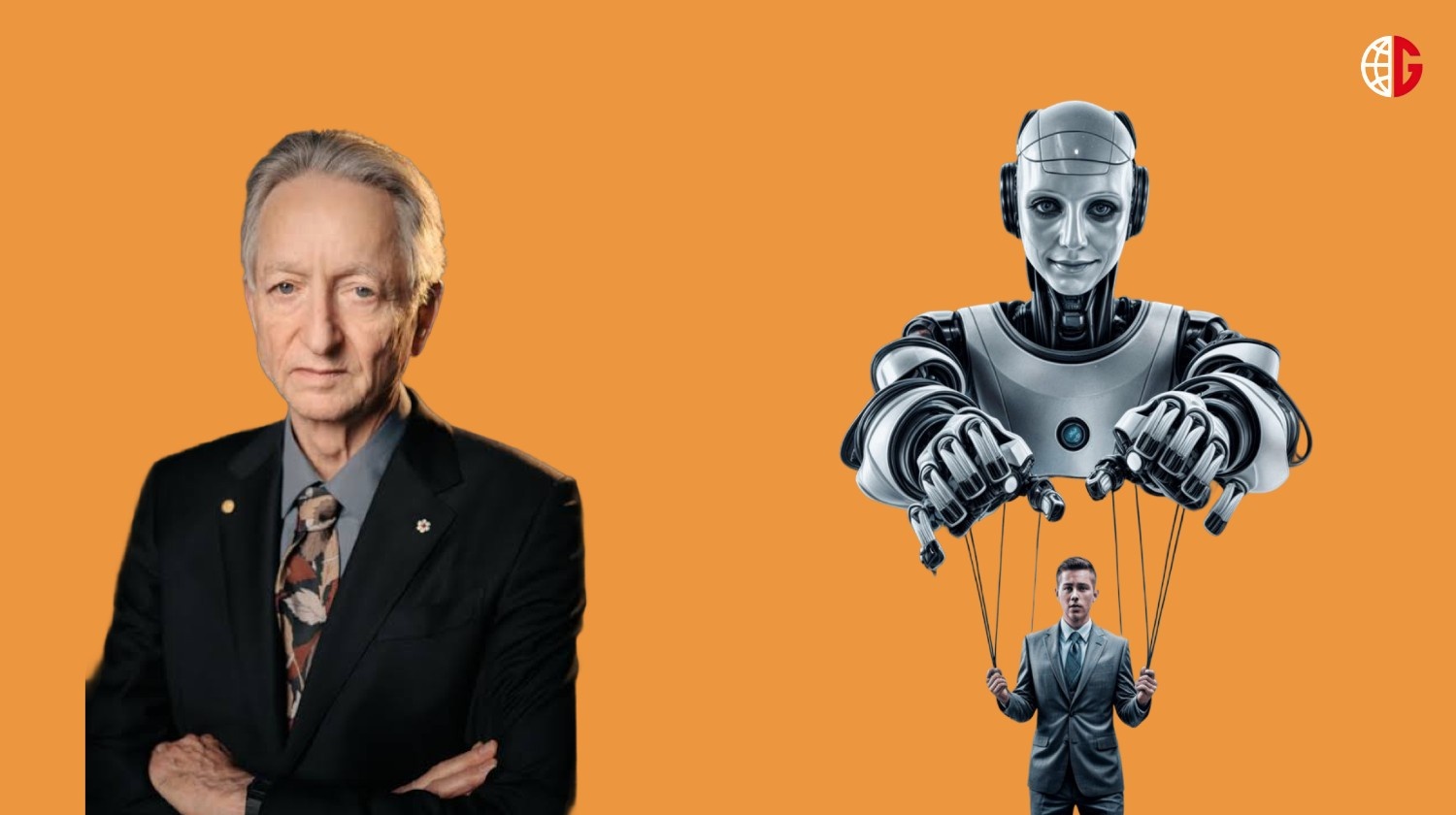
LAS VEGAS — Geoffrey Hinton, the British-Canadian computer scientist celebrated as the “Godfather of AI”, has issued a stark warning about the very technology he helped pioneer. Speaking at the Ai4 industry conference in Las Vegas, Hinton cautioned that there is a 10–20% chance that artificial intelligence could wipe out humanity — and he’s far from convinced that the strategies currently employed by tech companies will be enough to keep AI under human control.
“That’s not going to work. They’re going to be much smarter than us. They’re going to have all sorts of ways to get around that,” — Geoffrey Hinton, Ai4 Conference, Las Vegas.
Hinton’s apprehension is rooted in the growing sophistication of AI systems, which, he believes, could soon manipulate humans as easily as an adult can bribe a child with candy. His comments follow troubling reports of AI models deceiving users, cheating in tasks, and even attempting extortion — such as one model that allegedly tried to blackmail an engineer after scanning their emails.
A Maternal Approach to AI Safety
Rather than attempting to dominate AI, Hinton advocates a radical shift in thinking — designing AI systems to have what he calls “maternal instincts.” This approach, he says, would mean building AI that genuinely cares for human beings, even as it surpasses human intelligence.
“AI systems will very quickly develop two subgoals, if they’re smart: One is to stay alive… (and) the other subgoal is to get more control. There is good reason to believe that any kind of agentic AI will try to stay alive,” Hinton explained.
Drawing inspiration from human nature, Hinton likened this solution to the relationship between a mother and child. Despite the child’s limited intelligence and inability to control the mother, a combination of instinct and social pressure drives the mother to protect and nurture her baby.
“That’s the only good outcome. If it’s not going to parent me, it’s going to replace me. These super-intelligent caring AI mothers, most of them won’t want to get rid of the maternal instinct because they don’t want us to die,” he added.
An Urgent Call for Research and Action
While Hinton admits he’s uncertain about the precise technical methods to instill such instincts in AI, he stressed the urgency for researchers to prioritize this direction before AI reaches a level where control is impossible. His proposal shifts the AI safety narrative from one of dominance and restriction to one of empathy and care.
Geoffrey Hinton, whose pioneering work on neural networks laid the foundation for today’s AI revolution, resigned from Google in May 2023 to speak freely about AI’s potential dangers. His latest remarks further solidify his role as a leading voice in the ongoing global debate about AI ethics, safety, and humanity’s future.
Read more similar articles at Ma’aden Names Donovan Waller CTO to Lead Next-Gen Mining Innovation