
Mountain View, CA – Google has unveiled its latest leap in generative AI with the launch of Gemini 2.5 Flash Image, popularly nicknamed “nano-banana.” The new model brings cutting-edge capabilities in image generation, editing, and multi-image fusion, and is now available through the Gemini API, Google AI Studio, and Vertex AI for enterprises.
The model is priced at $30 per 1 million output tokens, with each image costing 1,290 tokens (around $0.039 per image), making it both powerful and cost-efficient for developers, creators, and enterprises.
Raising the Bar in AI-Powered Image Creation
Google describes Gemini 2.5 Flash Image as a state-of-the-art model that enables deeper creative control. It introduces features like blending multiple images into one, maintaining character consistency across edits, performing precise transformations through natural language prompts, and tapping into Gemini’s built-in world knowledge.
“When we first launched native image generation in Gemini 2.0 Flash earlier this year, you told us you loved its low latency, cost-effectiveness, and ease of use,” Google shared in its announcement. “But you also gave us feedback that you needed higher-quality images and more powerful creative control.”
This new release directly addresses that demand, offering a more sophisticated toolset for developers and enterprises seeking accuracy, reliability, and creativity in AI-generated visuals.
Key Features of Gemini 2.5 Flash Image
1. Character Consistency for Storytelling and Branding
One of the biggest hurdles in AI image generation is maintaining character consistency across different scenes and edits. With nano-banana, Google claims developers can now place the same character in different environments, create product mockups from multiple angles, or design brand assets without losing visual identity.
The company has even built a template app in Google AI Studio to showcase this feature, allowing developers to quickly integrate character consistency into their own creative or commercial workflows.
2. Prompt-Based Image Editing
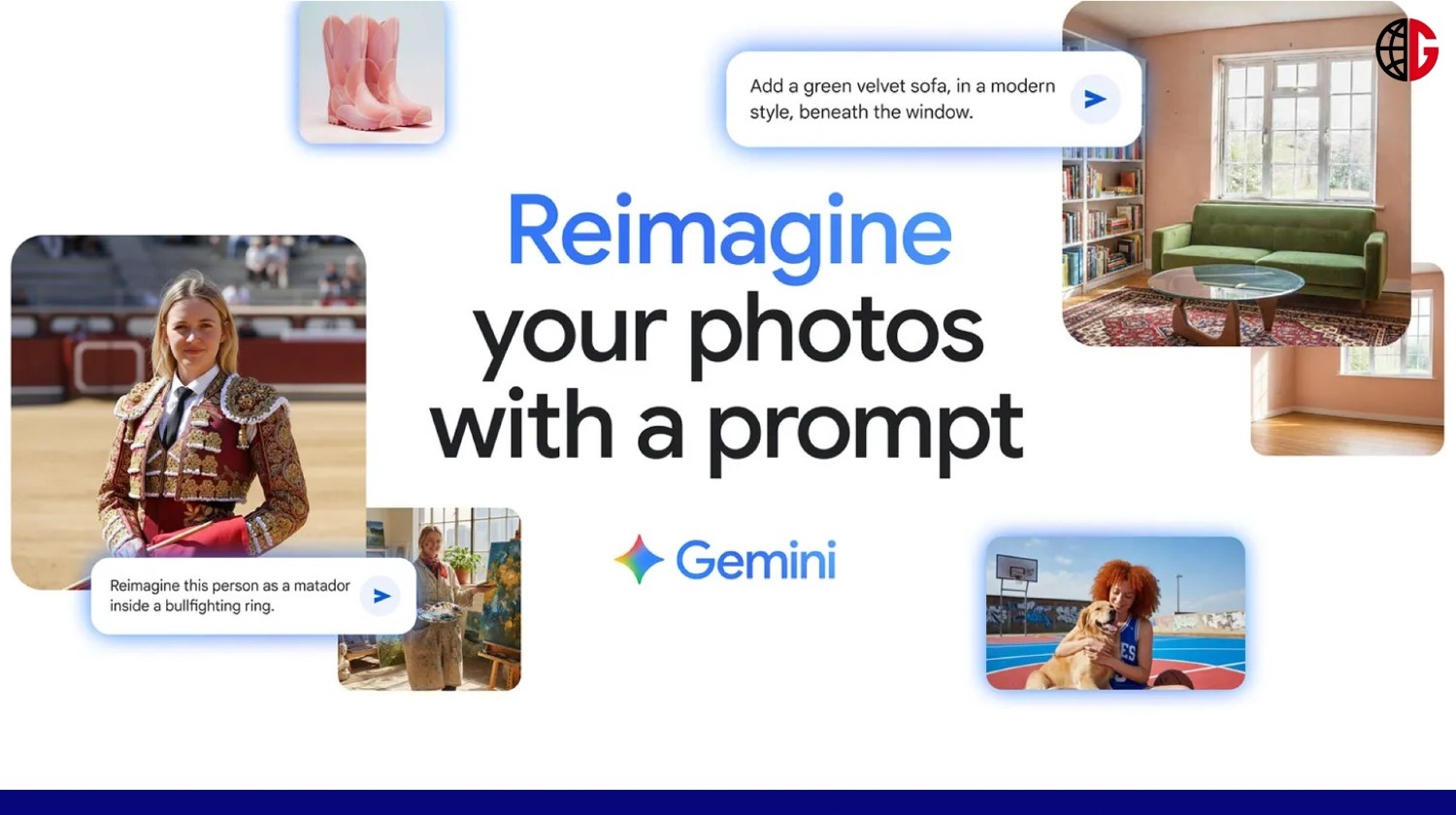
The model allows precise, targeted edits through natural language instructions. From removing objects and blurring backgrounds to altering poses or colorizing black-and-white photos, the system can process complex transformations seamlessly.
For example, users can simply prompt: “Remove the stain from the t-shirt and blur the background”—and the model executes the changes in real-time. Google has provided a photo editing template app in AI Studio to demonstrate how easily this can be applied in practice.
3. Leveraging Native World Knowledge
Unlike earlier models that produced only aesthetically pleasing results, Gemini 2.5 Flash Image integrates real-world understanding. This means it can follow detailed editing instructions, interpret hand-drawn diagrams, or even act as an interactive educational tutor.
Google demonstrated this with a canvas-to-tutor app that transforms simple sketches into interactive lessons, showcasing how the model bridges creative design and functional applications.
4. Multi-Image Fusion
Another standout capability is fusing multiple images into one coherent design. Developers can drag-and-drop objects into a new scene, restyle rooms with different textures, or blend products into photorealistic catalogs.
“This feature opens up new opportunities for industries like e-commerce, real estate, and marketing, where dynamic visual content is essential,” Google explained.
Developer-Friendly Integration
To simplify adoption, Google has significantly upgraded Google AI Studio’s “build mode”, allowing developers to test, remix, and deploy AI-powered apps instantly. From image editing apps to creative remix tools, developers can now build and share applications directly from AI Studio or save code to GitHub for scaling.
OpenRouter.ai has also partnered with Google to bring Gemini 2.5 Flash Image to its 3M+ developers worldwide, marking the first image generation model on the platform. Additionally, fal.ai is collaborating with Google to expand accessibility for generative media creators.
All images generated or edited with Gemini 2.5 Flash Image come with an invisible SynthID digital watermark, ensuring authenticity and traceability of AI-generated content.
Pricing and Availability
Gemini 2.5 Flash Image is currently in preview mode via the Gemini API and Google AI Studio, with enterprise access available through Vertex AI. The model will stabilize in the coming weeks as Google continues to gather developer feedback.
At $30 per 1 million output tokens—equating to $0.039 per image—Google positions nano-banana as an affordable yet powerful option compared to other generative AI tools.
What’s Next
Google noted that it is working on improving long-form text rendering, enhancing character consistency, and fine-tuning factual accuracy in image generation. The company encouraged developers to share feedback via forums and social platforms.
“We can’t wait to see what you build with Gemini 2.5 Flash Image,” Google concluded in its announcement.
With nano-banana, Google isn’t just pushing boundaries in AI creativity—it’s also setting the stage for a new era of intelligent, world-aware image generation that blends aesthetics with real-world utility.
Read More: Elon Musk Introduces ‘Macrohard’ to Rival Microsoft in AI