

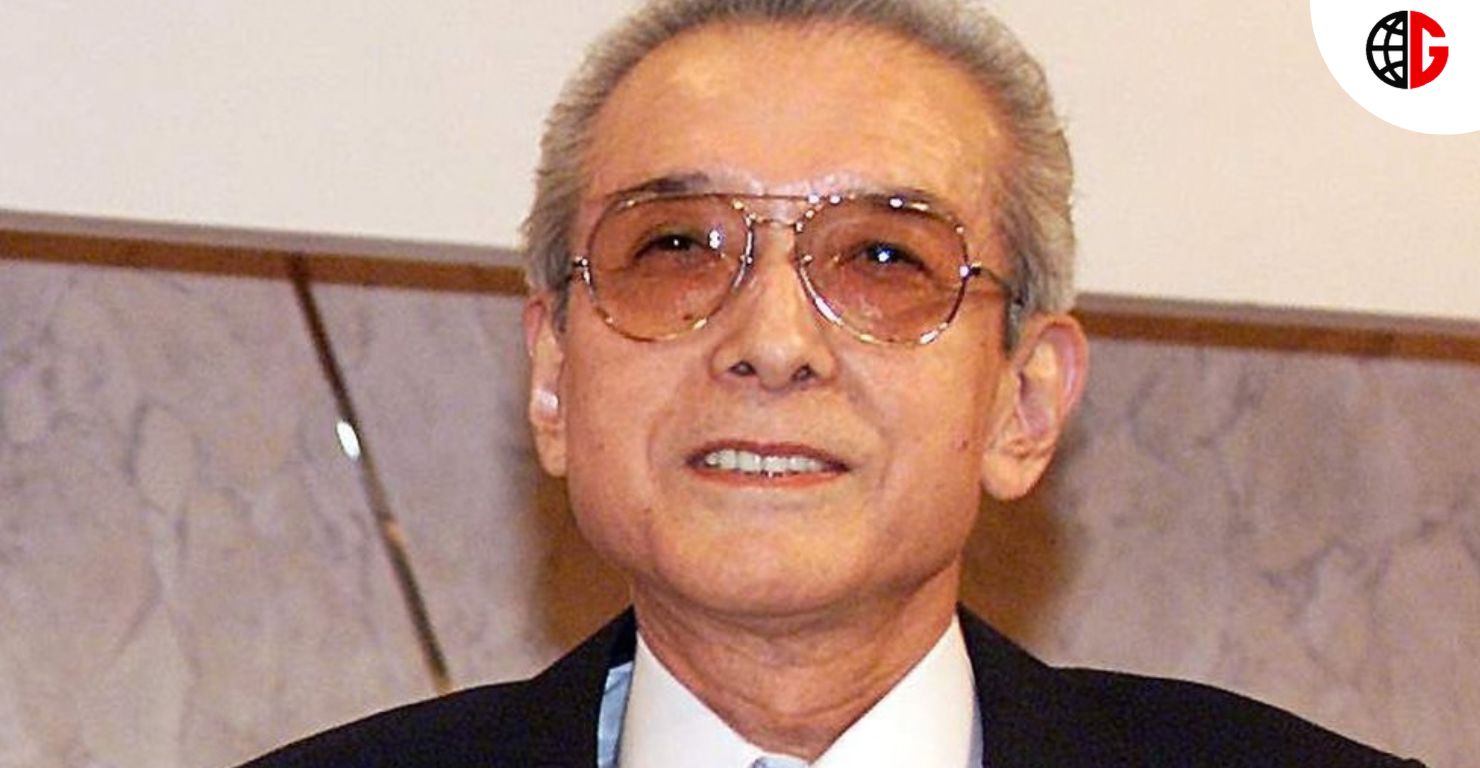
There are business leaders who build companies, and there are those who redefine what a company can become. Hiroshi Yamauchi belonged to the second category. When he took control of Nintendo in 1949, the Kyoto-based company was known primarily for making traditional Japanese hanafuda playing cards. More than five decades later, when he stepped down as president in 2002, Nintendo had become one of the most recognizable entertainment companies in the world.
Yamauchi did not invent Nintendo, nor did he personally design Mario, Donkey Kong, Game Boy, or the company’s legendary consoles. His extraordinary achievement was recognizing the potential of talented people, emerging technologies, changing consumer habits, and most importantly, the power of entertainment.
Under his leadership, Nintendo moved through several industries before finding its defining identity in electronic entertainment. The journey included playing cards, toys, mechanical games, arcade machines, home consoles, handheld gaming, and some of the most influential video game franchises ever created. Nintendo itself traces its origins to 1889, when Fusajiro Yamauchi began producing hanafuda cards in Kyoto. Hiroshi Yamauchi, Fusajiro’s great-grandson, would eventually transform that legacy into something almost unimaginable.
An Unusual Beginning
Hiroshi Yamauchi was born in Kyoto in 1927 into the family that owned Nintendo. But his childhood was far from the privileged story one might expect from the heir to a family business.
When Yamauchi was five, his father left the family. His mother subsequently entrusted his upbringing to his grandparents, including his grandfather Sekiryo Kaneda, who was then leading Nintendo. The experience shaped a young man who would eventually become known for his independence, determination, and uncompromising approach to business.
Yamauchi studied at Waseda University and initially had plans that were not necessarily centered on running Nintendo. The Second World War disrupted his education and career plans. Yet circumstances eventually brought him back to the family enterprise.
In 1949, at just 21 years old, Yamauchi became president of Nintendo. It was an extraordinary responsibility for a young executive taking charge of a traditional business at a time when Japan itself was undergoing enormous transformation. Nintendo’s own historical records identify 1949 as the year Yamauchi took office.
He inherited a company with a proud history, but a relatively narrow market.
His challenge was simple to describe and extraordinarily difficult to solve:
How do you turn a traditional playing-card company into a business capable of surviving the future?
Yamauchi’s answer would eventually change the global entertainment industry.
Breaking Away from Tradition
Yamauchi understood early that Nintendo could not depend forever on traditional playing cards.
One of his first important moves was modernizing the card business. In 1951, the company became Nintendo Playing Card Co., Ltd., and in 1953 it became the first company in Japan to successfully mass-produce plastic playing cards.
Then came another strategically important decision.
In 1959, Nintendo began producing playing cards featuring Disney characters. It was a clever move because it connected a traditional product with popular culture and opened Nintendo to a much broader children’s market. The initiative helped generate a significant boom in the card business.
But Yamauchi was not satisfied with simply making Nintendo better at selling cards.
He wanted Nintendo to discover entirely new markets.
In 1963, the company changed its name to Nintendo Co., Ltd. and began manufacturing games and toys alongside playing cards. That seemingly modest change represented a major shift in the company’s identity. Nintendo was no longer simply a card manufacturer. It was becoming an entertainment company.
The Courage to Experiment
The road from playing cards to video games was not a straight line.
Nintendo experimented with a wide range of products. Some worked. Others did not. But Yamauchi’s willingness to experiment became one of his greatest strengths.
The company entered the toy industry and developed products that were increasingly sophisticated. Among the people who became important during this transformation was engineer Gunpei Yokoi, whose creative work helped Nintendo develop innovative toys.
Nintendo gradually began incorporating electronics into its products. In the early 1970s, the company developed the Beam Gun series, bringing electronic technology into the Japanese toy industry. It later developed laser-based shooting systems and image-projection technology, while also exploring arcade entertainment.
By the mid-1970s, Nintendo was experimenting with video game systems and working with Mitsubishi Electric on electronic gaming technology.
These experiments mattered because Yamauchi was building something much more valuable than individual products: a culture of reinvention.
He understood that the future did not necessarily belong to companies that protected their existing business. It belonged to companies willing to build the next business before the old one disappeared.
Entering the World of Video Games
The late 1970s represented a turning point.
Electronic entertainment was beginning to emerge as a major consumer opportunity. Nintendo began producing home video game systems, including the Color TV Game series, and expanded its involvement in arcade gaming.
But the company’s transformation accelerated when Yamauchi placed his confidence in a new generation of creative talent.
One of those talents was Shigeru Miyamoto.
Miyamoto would eventually become one of the most influential game designers in history. Under Yamauchi’s leadership, Nintendo gave creative people the opportunity to create experiences that were fundamentally different from traditional arcade products.
That approach produced Donkey Kong in 1981.
The game was a breakthrough. Its protagonist, originally known as Jumpman, would eventually become Mario—the character who would grow into one of the most recognizable figures in global popular culture. Nintendo’s own history records Donkey Kong as a major arcade success and identifies Miyamoto as its creator.
For Yamauchi, this was more than a successful game.
It was evidence that Nintendo could create intellectual properties capable of traveling across borders and generations.
The Famicom Bet
Yamauchi’s defining business achievement may have been the development and launch of the Family Computer, better known as the Famicom.
Nintendo introduced the system in Japan in 1983. The product was designed to bring high-quality gaming into people’s homes at an accessible price.
The Famicom became a cornerstone of Nintendo’s future.
But success did not come without challenges. An early hardware problem reportedly forced Nintendo to recall defective systems, with Yamauchi choosing to absorb the cost rather than compromise the company’s reputation. That decision reflected one of the characteristics that defined his leadership: he could be extremely demanding, but he understood the long-term value of consumer trust.
Yamauchi then faced an even bigger challenge.
Could Nintendo succeed outside Japan?
The American video game market had suffered a major crash in 1983, making the idea of launching another home console particularly risky. Yet Yamauchi believed Nintendo had something different.
The Famicom was eventually introduced internationally as the Nintendo Entertainment System (NES).
The gamble paid off.
Nintendo’s strategy combined hardware with memorable software. Titles such as Super Mario Bros., The Legend of Zelda, Metroid, and others helped turn the NES into a global phenomenon. Nintendo’s historical records note that Super Mario Bros. became a major international hit and that Mario’s recognition among children became extraordinary.
Yamauchi had helped turn Nintendo from a Japanese company into a global entertainment brand.
Building Characters That Outlived Products
Perhaps Yamauchi’s greatest legacy was not a particular console.
It was the idea that characters and experiences could become more valuable than hardware itself.
Mario became the face of Nintendo. Zelda became another pillar of the company’s identity. Donkey Kong grew beyond its arcade origins. Later generations would bring Pokémon, Kirby, Animal Crossing, Metroid, and other globally recognized properties.
Nintendo’s current history reflects just how large that legacy became. The company says its franchises now include Mario, Donkey Kong, The Legend of Zelda, Pokémon, Metroid, Kirby, Animal Crossing, Pikmin, and Splatoon, among others.
Yamauchi’s genius was recognizing that consumers did not simply buy technology.
They bought worlds.
They bought characters.
They bought memories.
And Nintendo became exceptionally good at creating them.
Game Boy and the Expansion of Portable Gaming
Nintendo’s transformation continued beyond home consoles.
In 1989, the company launched Game Boy, a portable gaming system with interchangeable cartridges. It became another defining success and demonstrated that Nintendo could take gaming beyond the television screen.
The partnership between Game Boy and Tetris was particularly powerful, helping make the handheld a global cultural phenomenon.
This was another example of Yamauchi’s broader philosophy: Nintendo did not need to compete solely through technical specifications. It could win by making technology approachable, entertaining, and distinctive.
That philosophy would influence the company’s products for decades.
A Leader Known for Tough Decisions
Yamauchi was not universally regarded as an easy executive.
He was famously demanding and maintained considerable control over Nintendo’s strategic direction. He had a reputation for making decisions based on instinct, market understanding, and an ability to identify products that could connect with consumers.
His leadership style could be uncompromising.
Yet the results were difficult to ignore.
During his tenure, Nintendo went from a traditional Japanese playing-card manufacturer to an international entertainment powerhouse. He served as president from 1949 until 2002 – a remarkable 53-year period.
Not every decision succeeded. Nintendo experienced notable failures, including the Virtual Boy in the 1990s. But Yamauchi’s willingness to accept risk remained central to Nintendo’s evolution.
His story therefore is not one of perfect decisions.
It is a story of strategic persistence.
Beyond Nintendo
Yamauchi’s influence eventually extended beyond gaming.
In 1992, he became involved in the Seattle Mariners, helping prevent the Major League Baseball team from leaving Seattle. His purchase was described as a gesture of goodwill toward the Pacific Northwest, where Nintendo of America was based.
His connection to the Mariners also helped strengthen links between Japanese baseball talent and Major League Baseball. During the broader Nintendo ownership era, players such as Ichiro Suzuki became major figures for the franchise.
It was another unexpected chapter in the life of a businessman whose career had already crossed playing cards, toys, electronics, video games, and global entertainment.
Stepping Down from the Company He Transformed
After more than five decades at the helm, Yamauchi stepped down as Nintendo’s president in 2002.
By then, the company he inherited bore little resemblance to the business he had joined.
The small Kyoto playing-card manufacturer had become an international entertainment brand whose characters were recognized around the world.
Yamauchi’s successor, Satoru Iwata, would guide Nintendo through another important chapter. But the foundation for Nintendo’s distinctive identity had already been established.
Yamauchi died in Kyoto on September 19, 2013, at the age of 85, from pneumonia.
The Legacy of a Relentless Visionary
Hiroshi Yamauchi’s success story is ultimately about more than Nintendo.
It is about reinvention.
He inherited a traditional company and refused to let tradition become a limitation. He entered businesses he did not fully know. He experimented with products that sometimes failed. He invested in technology before electronic entertainment had become the global phenomenon it is today. Most importantly, he surrounded Nintendo with creative minds and allowed the company to turn imagination into commercial success.
His greatest achievement was not simply making Nintendo profitable.
It was changing the question the company asked itself.
Instead of asking, How can we sell more playing cards?
Nintendo began asking:
What can people play next?
That shift changed everything.
From hanafuda cards to Game Boy, from arcade machines to the Famicom, from Donkey Kong to Mario, Yamauchi’s career represents one of the most remarkable transformations in modern business history.
Nintendo’s own mission today is centered on creating entertainment and “putting smiles” on people’s faces, a philosophy that reflects the company’s long evolution from a Kyoto card maker into a global entertainment institution.
Hiroshi Yamauchi understood something many business leaders learn only after decades: the strongest companies are not defined by what they sell today, but by their willingness to imagine what customers will want tomorrow.
He inherited Nintendo as a playing-card company.
He left behind a universe.
And that may be the most enduring measure of his success.
Read more: Varun Sood Takes Charge as Crunchyroll’s Regional Growth Lead for Asia and MENA