
Hong Kong continues to hold a distinctive place in the global business landscape. As a major international financial centre and a gateway connecting Mainland China with markets around the world, the city remains home to executives leading businesses across banking, aviation, insurance, infrastructure, technology, healthcare, and investment.
In 2026, executives are shaping that leadership landscape as they navigate a particularly dynamic business environment. Artificial intelligence, digital finance, sustainability, changing consumer expectations, regional connectivity, and the evolving role of Hong Kong in the Greater Bay Area are influencing how companies think about growth.
Against this backdrop, the CEOs and chief executives leading some of Hong Kong’s most prominent organisations offer valuable perspectives on how businesses are responding to change.
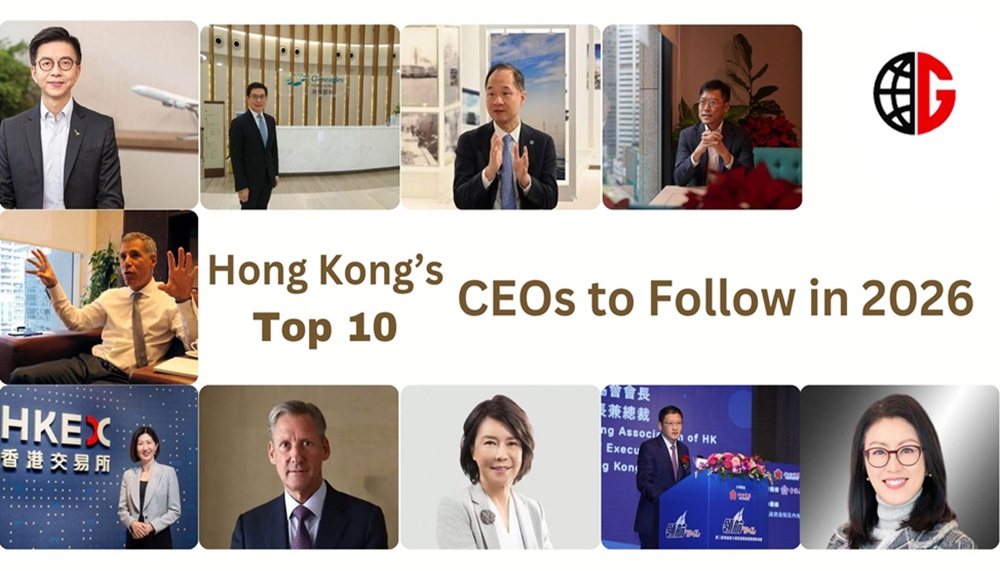
Here are Hong Kong’s Top 10 CEOs to Follow in 2026, selected for the scale and relevance of the organisations they lead and the industries they represent.
1. Ronald Lam — Cathay Group
Chief Executive Officer, Cathay Group
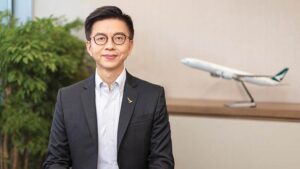
Ronald Lam stands at the centre of Hong Kong’s aviation story at a time when connectivity is becoming increasingly important to the city’s economic ambitions.
Lam has served as Cathay Group Chief Executive Officer since January 2023, leading the overall business direction of the group. He also chairs Hong Kong Express Airways Limited (HK Express). His career at Cathay spans several decades, beginning when he joined the company as a management trainee in 1996. Before becoming Group CEO, he held senior positions including Chief Customer and Commercial Officer and CEO of HK Express.
In 2026, Cathay is operating against a changing aviation backdrop, with Hong Kong International Airport’s Three-Runway System creating additional opportunities for international connectivity. Lam has also been involved in discussions around strengthening Hong Kong’s position as an international aviation hub and expanding connections with the Greater Bay Area.
His leadership makes him an important executive to watch for insights into aviation, tourism, international connectivity, customer experience, and the future of Hong Kong as a global transport hub.
2. Bonnie Y. Chan — Hong Kong Exchanges and Clearing
Chief Executive Officer, Hong Kong Exchanges and Clearing Limited
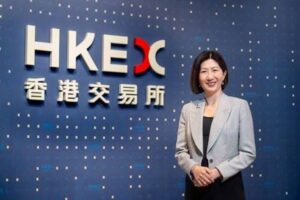
Few business leaders have a role as closely connected to Hong Kong’s position as an international financial centre as Bonnie Y. Chan.
Chan became Chief Executive Officer of Hong Kong Exchanges and Clearing Limited (HKEX) on March 1, 2024. Before taking the top position, she served as HKEX’s Co-Chief Operating Officer and previously led IPO Transactions. Her career includes more than three decades of experience across global capital markets, legal services, and financial infrastructure.
Her tenure comes at a time when exchanges are evolving beyond traditional stock markets. Technology, new investment products, international capital flows, digital infrastructure, and the connection between Mainland and global markets are increasingly important to the competitiveness of financial centres.
The significance of Chan’s role was reinforced in August 2026, when HKEX announced that her employment contract had been renewed for another three-year term beginning in March 2027.
For anyone interested in capital markets, fintech, financial infrastructure, and the future of Hong Kong’s financial ecosystem, Chan is a leader worth following.
3. Chiang Tung Keung — CLP Holdings
Executive Director & Chief Executive Officer, CLP Holdings
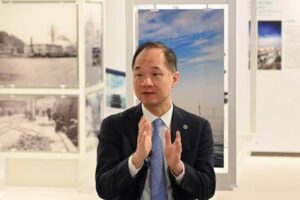
Energy is another area undergoing profound transformation, and Chiang Tung Keung is leading one of Hong Kong’s most significant energy businesses.
Chiang has been Chief Executive Officer of CLP Holdings since October 2023. Before becoming CEO, he served as Managing Director of CLP Power Hong Kong from 2017 to 2023, giving him extensive experience in the company’s Hong Kong operations.
His responsibilities place him at the intersection of energy security, infrastructure, technology, sustainability, and the transition toward lower-carbon energy systems.
CLP’s business extends beyond Hong Kong, giving Chiang a regional and international perspective on the changing energy landscape. His leadership is particularly relevant as businesses and cities consider how to balance reliability, affordability, decarbonisation, and new technologies.
For executives interested in sustainable business growth, energy transition, infrastructure, and long-term corporate strategy, Chiang’s leadership journey provides an important perspective.
4. Lee Yuan Siong — AIA Group
Executive Director, Group Chief Executive & President, AIA Group
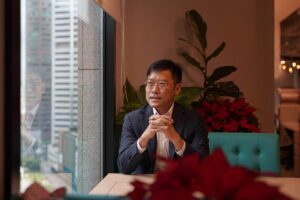
The insurance industry is undergoing its own transformation as changing demographics, digital technology, data, healthcare needs, and customer expectations reshape the sector.
Lee Yuan Siong has served as Executive Director and Group Chief Executive & President of AIA Group since June 2020. He joined AIA in March 2020 and brings more than three decades of experience in the insurance industry.
His career has included senior leadership roles across several Asian markets. Before joining AIA, Lee was an executive director of Ping An Insurance Group and served as its co-CEO and Chief Insurance Business Officer.
His experience across Asia is particularly relevant to AIA, whose operations span multiple markets throughout the region. Under his leadership, the group continues to operate at the intersection of insurance, healthcare, technology, customer engagement, and long-term financial protection.
Lee is therefore a significant name for readers following insurance innovation, Asian business leadership, financial services, and the transformation of customer-focused financial products.
5. Georges Elhedery — HSBC
Group Chief Executive, HSBC Holdings
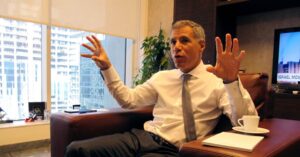
Georges Elhedery leads one of the world’s largest international banking groups, with Hong Kong remaining deeply connected to HSBC’s history and global operations.
Elhedery became Group Chief Executive of HSBC on September 2, 2024, following his earlier role as Group Chief Financial Officer. He joined HSBC in 2005 and has held senior positions spanning markets, global banking, and regional operations across Europe, the Middle East, and Asia.
His leadership comes as global banking continues to be reshaped by technology, artificial intelligence, geopolitical changes, regulatory developments, digital payments, and changing patterns of international trade and investment.
Hong Kong remains central to HSBC’s identity. In 2026, the bank continued to describe Hong Kong as its “spiritual home,” while bringing global investors and business leaders together in the city through its Global Investment Summit.
For people following international banking, financial technology, global markets, and cross-border business, Elhedery’s leadership provides a window into how a major financial institution is adapting to a rapidly changing world.
6. Maggie Ng — HSBC Hong Kong
Chief Executive Officer, Hong Kong, HSBC

Maggie Ng represents another important leadership voice within Hong Kong’s financial-services sector.
HSBC announced that Ng would take on the responsibilities of Chief Executive Officer, Hong Kong, effective October 2025, alongside her existing role as Head of Retail Banking and Wealth, Hong Kong.
Her role places her close to the everyday relationship between one of Hong Kong’s largest banks and its retail and wealth-management customers. That makes her leadership particularly relevant to developments in digital banking, wealth management, customer experience, financial inclusion, and the changing expectations of Hong Kong consumers.
The importance of technology in her remit is already visible in HSBC’s 2026 activities. The bank has been developing its digital-finance capabilities in Hong Kong, including plans connected to its newly granted stablecoin issuer licence.
Ng is therefore a CEO to watch for anyone interested in how traditional banking is adapting to digital finance and increasingly technology-driven customer relationships.
7. Sun Yu — Bank of China (Hong Kong)
Vice Chairman & Chief Executive, Bank of China (Hong Kong)
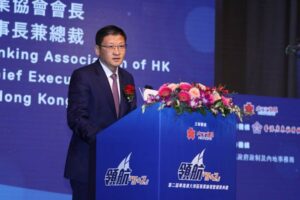
Sun Yu is another major figure in Hong Kong’s banking landscape.
He has served as Vice Chairman and Chief Executive of Bank of China (Hong Kong) Holdings and Bank of China (Hong Kong) since December 2020. He joined Bank of China in 1998 and has held senior positions across international banking operations, including leadership in London.
His experience gives him a perspective that crosses Hong Kong, Mainland China, and international financial markets. That cross-border dimension is especially relevant as Hong Kong continues to position itself as a bridge between Mainland businesses and international capital.
Sun’s leadership can offer useful insights into commercial banking, cross-border finance, wealth management, internationalisation, and the continuing development of Hong Kong’s role in the regional financial system.
8. Vivian Cheung — Airport Authority Hong Kong
Chief Executive Officer, Airport Authority Hong Kong
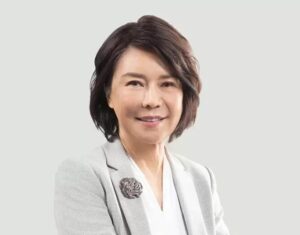
Hong Kong’s airport is one of the city’s most strategically important pieces of infrastructure, and Vivian Cheung is now leading the organisation responsible for its operation and development.
Cheung was appointed Chief Executive Officer of Airport Authority Hong Kong in April 2025. She previously served as Chief Operating Officer from December 2022 and as Acting CEO from June 2024. She has more than 30 years of airport-management experience, having joined the Airport Authority in 1992.
Her leadership comes at a significant moment for Hong Kong aviation. The airport’s expanded infrastructure and the city’s ambitions to strengthen international and Greater Bay Area connectivity create a broad strategic agenda.
Cheung’s background also reflects the growing importance of technology and operational efficiency in modern airports. Her experience makes her a notable executive to follow across aviation, infrastructure, smart-city development, sustainability, and large-scale operations.
9. Henri Leimer — LGT Private Banking Asia Pacific
CEO, LGT Private Banking Asia Pacific
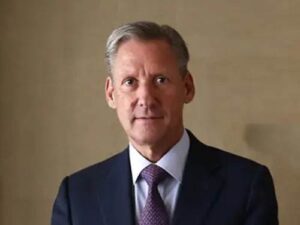
The wealth-management industry is another important component of Hong Kong’s financial ecosystem, and Henri Leimer leads LGT Private Banking’s Asia Pacific business.
LGT identifies Henri Leimer as CEO of LGT Private Banking Asia Pacific. The firm’s Asia Pacific operations provide wealth-management and investment services to clients across the region.
His role is particularly relevant at a time when private banking is evolving beyond traditional investment management. Wealth preservation, family governance, philanthropy, alternative investments, digital capabilities, and increasingly sophisticated client expectations are influencing the industry.
Hong Kong’s position as an international wealth-management centre also makes regional leadership in this sector significant. Leimer offers a perspective on how global investment expertise can be combined with a deep understanding of Asian clients and markets.
For readers interested in private banking, investment strategy, family offices, wealth management, and Asian financial markets, his leadership is worth following.
10. Kenneth Tsang — Gleneagles Hospital Hong Kong
Regional Chief Executive Officer, IHH Healthcare North Asia; Chief Executive Officer, Gleneagles Hospital Hong Kong
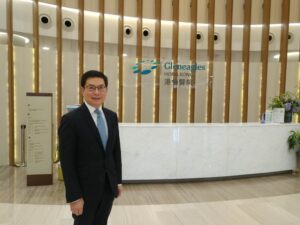
The final name on the list brings the healthcare industry into focus.
Dr Kenneth Tsang serves as Regional Chief Executive Officer of IHH Healthcare North Asia and Chief Executive Officer of Gleneagles Hospital Hong Kong. He became CEO of Gleneagles Hospital Hong Kong in 2021 and was appointed Regional CEO of IHH Healthcare North Asia in 2024.
His responsibilities extend beyond hospital operations. Tsang’s remit includes healthcare development, digital health, clinical innovation, and research, reflecting the way healthcare leadership is increasingly connected with technology and innovation.
Hong Kong’s healthcare sector is evolving alongside advances in digital health, medical technology, clinical research, and patient-centred care. Tsang’s regional role provides a broader perspective on how healthcare organisations can respond to these changes.
For business leaders following healthcare innovation, medical technology, hospital management, and the future of health services in Asia, Tsang is a notable executive to watch.
Leadership in a City Built for Change
The leaders shaping Hong Kong’s business environment in 2026 come from very different industries, but their challenges increasingly overlap.
Aviation leaders are thinking about connectivity and infrastructure. Banking executives are navigating digital finance and changing global capital flows. Insurance leaders are responding to demographic and technological shifts. Energy executives are balancing reliability with sustainability. Healthcare leaders are exploring digital transformation and new models of care.
What connects these leaders is not a single industry or management philosophy, but the need to operate in an environment where change is becoming continuous.
Hong Kong’s position between Mainland China and the wider international economy gives its business leaders an unusually broad stage. Their decisions can influence not only individual companies but also the city’s role in finance, trade, technology, transportation, healthcare, and regional connectivity.
For professionals, entrepreneurs, investors, and aspiring leaders, following these executives can provide a useful way to understand how major organisations are responding to the opportunities and pressures defining business in 2026.
From financial markets and aviation to energy, insurance, healthcare, and wealth management, Hong Kong’s leadership landscape continues to evolve and these CEOs and chief executives are among the executives worth watching as that transformation unfolds.
Read more: Top 10 Healthcare Trends Transforming Patient Care in 2027