

Healthcare technology is often discussed in terms of innovation curves and digital transformation. The language can get big, quickly.
But somewhere in a radiation therapy room, none of that language matters. What matters is whether systems work, whether workflows hold, whether clinicians can focus, and whether patients receive care without friction created by upstream decisions.
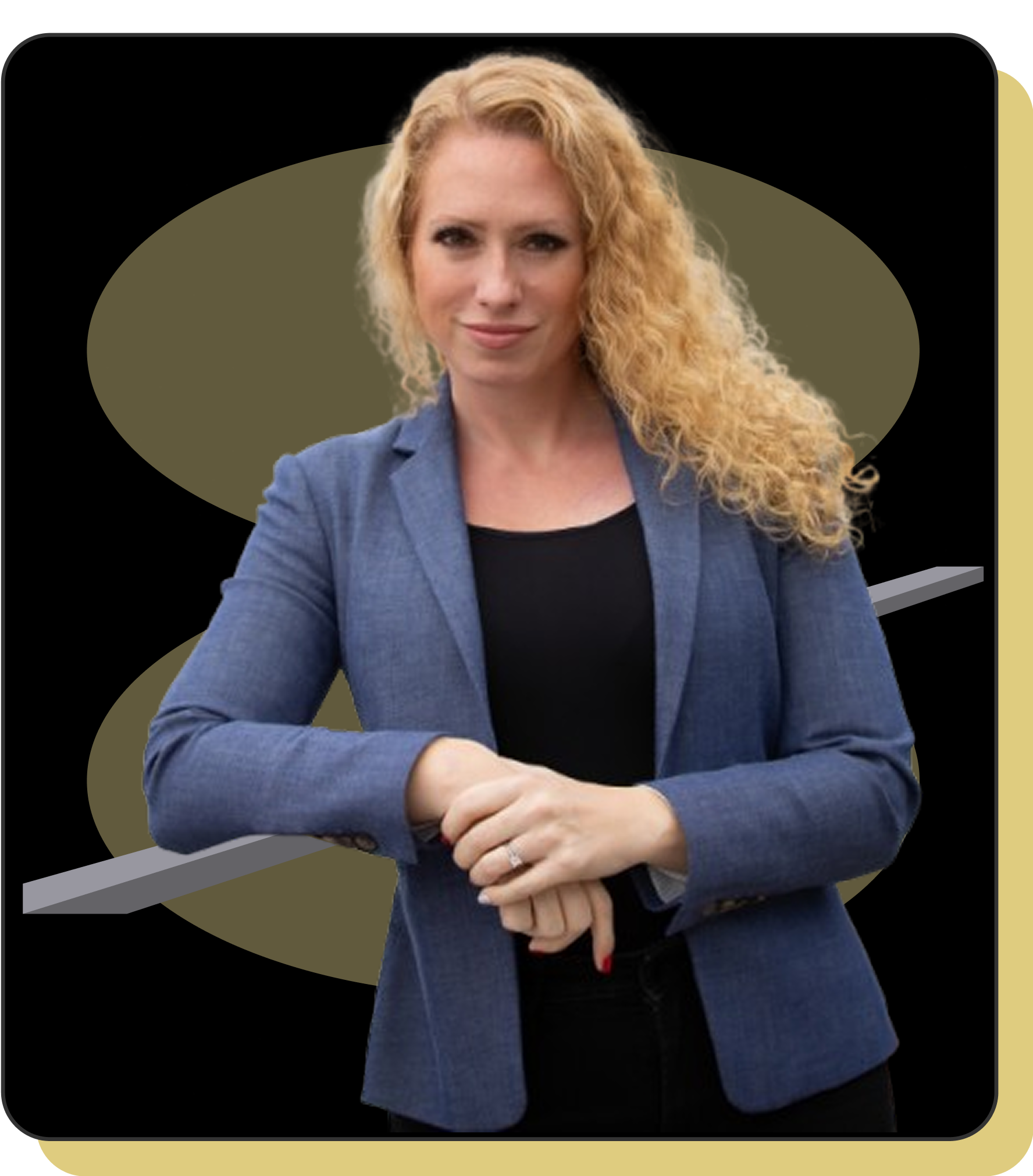
Jeannie Tan has lived on both sides of that equation.
Long before leading software solutions across Asia Pacific and Japan for Elekta Pty Ltd, she was working directly with patients in radiation therapy. It was not a strategic role. It was practical, precise, and human. You learn very quickly in that environment that every process must work the way it was intended. There is no room for theoretical excellence.
That grounding never left her.
“If I had to choose one word that encapsulates my identity as a leader, it would be clarity,” she says. “In complex environments, clarity of direction, priorities, and decisions is what allows teams to move forward with confidence and purpose.”
Clarity, in her case, is an operational discipline.
Seeing the System from Three Angles
Many leaders understand healthcare from one vantage point. Jeannie has seen it from three.
Clinician. Vendor. Customer.
Each role carries its own pressure. Clinicians prioritise patient outcomes and workflow efficiency. Vendors navigate innovation cycles and commercial realities. Customers balance budgets, policy constraints, and system-wide sustainability.
Working across these sides of the ecosystem became the most defining influence on her leadership ethos. It exposed trade-offs. It revealed why friction happens. It clarified why alignment is often harder than it appears.
Leadership, as she frames it, is less about authority and more about enabling alignment across diverse stakeholders. Listening matters. Understanding competing viewpoints matters. Decisions rarely exist in isolation; they sit inside a web of incentives and constraints.
That perspective tempers impulse. It sharpens judgement.
No Dramatic Pivot, Just Accumulation
Her decision to enter healthcare began with curiosity about the intersection of medicine, technology, and patient care. Over time, curiosity matured into commitment. She realised she wanted to operate in spaces where technology could tangibly improve clinical outcomes.
Rather than one turning point, there were repeated confirmations. Seeing how well-designed systems supported clinicians. Observing how structure and process could either enable or obstruct care delivery.
“Having seen healthcare from both clinical and organisational perspectives, I am acutely aware that decisions made upstream often have very real consequences downstream, for patients and families.”
That sentence is experiential.
Leading in a Region That Refuses Uniformity
Elekta, founded in 1972 in Stockholm, Sweden, was built on a clear mission: to improve, prolong, and save lives through clinically effective and innovative cancer treatment solutions. Over time, that mission has expanded in response to technological shifts and changing healthcare systems.
In Asia Pacific and Japan, that expansion plays out across a spectrum of realities.
Some healthcare systems are building foundational infrastructure. Others are accelerating advanced innovation. The pace, funding models, and operational maturity differ widely.
“One of the most urgent challenges is managing competing priorities across highly diverse markets,” Jeannie notes. The tension intensifies when each market’s urgency is legitimate. “The real difficulty lies in deciding whose urgent problem is more urgent, knowing that every decision has consequences and not making a decision is also a decision.”
There is no elegant formula for that. Only judgement.
Turning Strategy into Execution
Her core responsibility sounds straightforward: ensure that Elekta’s direction translates into day-to-day execution.
In practice, that means standing at intersections. Commercial objectives meet clinical realities. Operational limitations surface during implementation. Software strategy must hold up not just at launch, but over years of use.
“I support teams by providing clarity where priorities intersect, acting as a bridge between commercial, clinical, and operational functions, and serving as a sounding board for complex decisions.”
She describes her leadership style as collaborative, pragmatic, and decisive. There is balance in that sequence. Collaboration ensures inclusion. Pragmatism filters what is workable. Decisiveness prevents drift.
Without the last element, clarity collapses into discussion.
Innovation That Works After the Applause
In healthcare technology, innovation is easy to celebrate and difficult to sustain.
One of the persistent industry challenges, she explains, is balancing advancement with reliability and scalability. New capabilities must be supported by structured implementation, training, and long-term support. Otherwise, progress becomes fragile.
“At Elekta, innovation is defined not only by technological advancement, but by its ability to be operationalised effectively within clinical environments.”
That operational lens shapes initiatives such as the commercialization of software as a service (SaaS). The approach allows Elekta to grow alongside clinicians, scaling services as needed so investment aligns with present realities rather than assumptions about a rapidly evolving healthcare landscape.
It is about durability, rather than novelty.
Sustaining Energy in Complex Terrain
Leadership across regions and functions is cumulative.
Maintaining balance, she says, requires intentional boundaries and prioritisation. Presence matters. Time, whether at work or outside it, should be purposeful. Regular reflection and honest conversations help maintain perspective. So does stepping back when necessary.
Looking ahead two years, she sees Elekta’s evolution shaped by how effectively innovation translates into consistent, real-world outcomes across regions. Her personal focus mirrors that trajectory: clearer decision-making, stronger cross-functional collaboration, disciplined execution.
Healthcare leadership carries particular weight. Organisational decisions ultimately affect clinicians, patients, and families. That awareness remains constant.
For those determined to leave a lasting legacy, her advice avoids theatrics. Leadership paths are rarely linear, and they do not need to be. Focus on doing the work well. Seek diverse perspectives. Be willing to make difficult decisions in complex environments. Clarity, consistency, and purpose matter more than speed or visibility.
Clarity, in Jeannie Tan’s case, is structure, restraint, and the ability to move through complexity without losing sight of who will ultimately feel the impact.
Quote:
“In complex environments, clarity of direction, priorities, and decisions is what allows teams to move forward with confidence and purpose.”
Discover more exclusive interviews at The Soil Beneath Power: How Priti Bhattarai Is Redefining Leadership for the Long Arc