

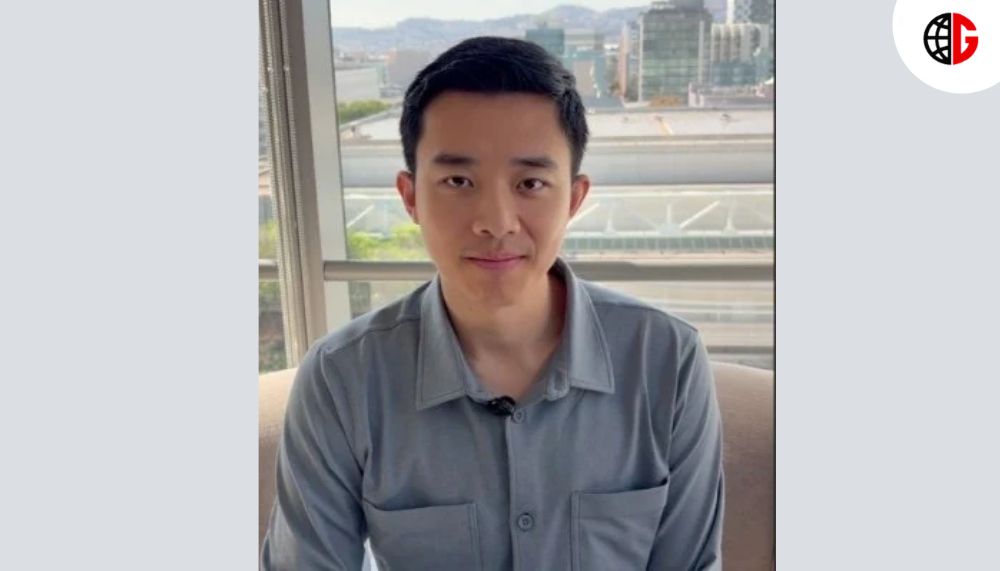
In an era when artificial intelligence is redefining how businesses operate, Jesse Zhang is building a company around one of the most important yet often overlooked aspects of business: customer experience. As the Co-Founder and CEO of Decagon, Zhang is leading an ambitious effort to transform traditional customer support into intelligent, personalized and increasingly autonomous interactions.
What began as an entrepreneurial vision in 2023 has developed into one of the most closely watched AI companies in the enterprise technology sector. Headquartered in San Francisco, Decagon is developing AI-powered agents capable of handling customer conversations across voice, chat and email, while performing practical tasks such as processing returns, resolving account issues, managing bookings and answering complex customer queries.
Zhang’s journey reflects more than the rapid rise of an AI startup. It demonstrates how entrepreneurial curiosity, an understanding of emerging technologies and a willingness to learn directly from customers can turn a familiar business challenge into a significant technology opportunity.
The Early Years: From Curiosity to Entrepreneurship
Zhang’s entrepreneurial mindset began taking shape long before Decagon entered the AI landscape. Raised in Boulder, Colorado, he developed an early interest in mathematics, science and technology. He participated in mathematics competitions and pursued research-oriented activities, experiences that helped strengthen his analytical thinking and problem-solving abilities.
His academic journey eventually took him to Harvard University, where he studied computer science. However, while the university provided him with a strong technical foundation, Zhang increasingly felt drawn toward building practical products rather than spending all his time in academic settings.
He was particularly interested in understanding how technology could solve real-world problems. His ambition to become an entrepreneur grew stronger as he explored startup opportunities and exchanged ideas with people who shared his enthusiasm for innovation.
Rather than following a conventional career path after graduation, Zhang decided to take an unconventional step. He completed his Harvard degree a year early, choosing to dedicate his time and energy to building a business.
This decision marked the beginning of his entrepreneurial journey. It also reflected a characteristic that would later become central to his leadership approach: the willingness to act, experiment and learn through experience.
The First Venture: Building and Selling Lowkey
Before Decagon, Zhang founded another technology company, Lowkey in 2018. The platform focused on helping gamers record, share and engage with gaming content, addressing a growing demand for social interaction within gaming communities.
Lowkey represented Zhang’s first major opportunity to turn his technical interests into a commercial product. He led the company through its early development, product experimentation and fundraising journey, including participation in Y Combinator’s Summer 2018 accelerator programme.
However, the experience was not without difficulties.
Like many first-time founders, Zhang had to navigate the uncertainty of finding the right product-market fit. The company explored different ideas, experimented with product directions and encountered situations in which initial assumptions did not translate into meaningful customer demand.
Looking back, he has acknowledged that the early entrepreneurial journey involved pursuing ideas that were not necessarily useful to customers. These experiences taught him the importance of validating business opportunities through direct conversations rather than relying solely on personal assumptions.
In 2021, Lowkey was acquired by Niantic in a deal reportedly valued in the mid-eight figures. The acquisition provided an important milestone in Zhang’s career, bringing his first startup journey to a successful conclusion.
Following the acquisition, he spent time working with Niantic before moving toward his next entrepreneurial ambition.
The Lowkey experience gave him something particularly valuable: a clearer understanding of the challenges involved in building a technology company, identifying customer needs and making decisions under uncertainty.
Rather than treating his first venture as the ultimate achievement, Zhang used it as a foundation for his next chapter.
The Turning Point: Recognising the Potential of AI Agents
The next significant chapter began in 2023, when Zhang met Ashwin Sreenivas, who would become his co-founder at Decagon.
The two entrepreneurs shared several common interests, including technical backgrounds, competitive mathematics and previous startup experiences. Their conversations gradually developed into a shared ambition to explore the possibilities of artificial intelligence.
They recognised that AI was entering a transformative phase. Advances in large language models were creating opportunities to build systems capable of understanding natural language, reasoning through problems and interacting with users in increasingly sophisticated ways.
However, instead of immediately committing to a particular product idea, the founders decided to investigate where this emerging technology could create genuine commercial value.
Their approach was unusually direct. Zhang and Sreenivas began contacting businesses, arranging conversations with potential customers and exploring the operational challenges organisations were willing to pay to solve.
They wanted to understand not simply whether companies liked an idea, but whether it addressed a meaningful business problem, had an identifiable budget and could deliver measurable returns.
This customer-first discovery process helped them identify an opportunity in customer service.
Businesses across industries were dealing with enormous volumes of customer enquiries, repetitive support requests, rising operational expenses and difficulties maintaining consistent service quality. Traditional support operations often required large teams, extensive training and significant resources to manage fluctuating demand.
The founders saw an opportunity to use AI agents to address these challenges.
Rather than creating another basic chatbot that could only respond to predefined questions, they envisioned intelligent agents capable of understanding customer requests, accessing relevant business information and taking action to resolve problems.
That vision became the foundation of Decagon, founded in August 2023.
Building Decagon: Turning Customer Service into an AI-Powered Experience
Decagon was established with a clear objective: to help businesses deliver exceptional customer experiences through intelligent AI agents.
The company’s approach moves beyond conventional automated responses. Its technology is designed to handle complete customer interactions, understand context, retrieve relevant information and execute tasks through integrations with enterprise systems.
For example, when a customer wants to cancel a subscription, check an order, request a refund or modify a booking, a Decagon-powered agent can understand the request, access the relevant information and carry out the appropriate steps within the company’s established rules and workflows.
The technology supports multiple communication channels, including:
- Voice: Enables customers to speak naturally with AI-powered service agents.
- Chat: Handles enquiries and resolves customer issues through conversational interfaces.
- Email: Responds to customer messages and manages support workflows.
- Enterprise integrations: Connects AI agents with internal databases, customer relationship management platforms and other business systems.
An important part of Decagon’s approach is its Agent Operating Procedures (AOPs). These provide structured instructions that guide agents on how to handle particular situations, which information sources to consult and what actions they are authorised to perform.
This allows businesses to shape AI interactions according to their operational policies, brand voice and customer service standards.
Decagon also combines different AI models and technologies rather than depending on a single underlying model. Its platform has drawn on technologies from providers including OpenAI, Anthropic and ElevenLabs.
The objective is not simply to make AI sound more human. It is to make customer interactions more useful, personalised and effective.
Zhang’s broader ambition is to build agents that combine intelligence with empathy, delivering service experiences that feel natural while maintaining the reliability and consistency businesses require.
From Startup to Enterprise Favourite: Winning Major Customers
One of the most important indicators of Decagon’s progress has been its ability to attract established businesses.
The company initially focused on technology-driven organisations that were willing to experiment with AI and collaborate closely on product development. As its capabilities expanded, its customer base grew across industries, including travel, education, financial services, retail and consumer technology.
Among the companies associated with Decagon’s platform are Duolingo, Hertz, ClassPass, Notion, Substack and Rippling.
These partnerships demonstrate the practical applications of Decagon’s technology.
For example, Hertz has used its AI agents to manage rental-related enquiries, including reservation cancellations and extensions. According to a December 2025 Forbes report, its chatbot was independently resolving approximately 75% of customer queries without escalating them to human representatives.
Similarly, ClassPass deployed Decagon to handle requests involving class cancellations, missed-class fees, billing and refunds. The same report stated that its agent had responded to approximately 3.8 million enquiries and independently resolved around 60% of support issues.
Such results illustrate why enterprise customers are increasingly exploring AI-powered customer service. The technology can help organisations manage large enquiry volumes, reduce waiting times and free human employees to focus on situations requiring more complex judgement.
By November 2025, Decagon’s agents had handled approximately 80 million customer conversations, according to sources.
For Zhang, winning enterprise customers has been about more than demonstrating impressive technology. It has required understanding the specific operational challenges of each organisation and proving that AI can deliver meaningful improvements in everyday business operations.
Achieving Unicorn Status: A Remarkable Funding Journey
Decagon’s rapid commercial progress soon attracted considerable attention from the global investment community. Its ability to combine advanced AI technology with a clear enterprise use case positioned the company as an attractive opportunity for investors seeking exposure to the next generation of AI businesses.
Among its early backers were prominent venture capital firms such as Andreessen Horowitz, Accel and Bain Capital Ventures.
In June 2025, Decagon secured $131 million in Series C funding at a reported $1.5 billion valuation. The investment brought its previously reported total funding to approximately $255 million.
Interestingly, Zhang has indicated that raising capital was never his primary objective. In earlier comments, he explained that he had not actively pursued funding in the conventional sense. Instead, investor interest developed as the company demonstrated customer demand and strong business momentum.
The company’s fundraising trajectory accelerated further in January 2026.
Decagon announced a $250 million Series D funding round led by Coatue Management and Index Ventures, with participation from existing investors, including Andreessen Horowitz, Accel and Bain Capital Ventures. The round valued the business at $4.5 billion, approximately three times its previous reported valuation.
By November 2026, the $4.5 billion valuation remains the latest widely reported funding valuation identified in available coverage.
The scale of this investment reflects growing confidence in Decagon’s ability to establish itself as a major player in enterprise AI and customer experience automation.
However, funding is only one part of the company’s growth story. Its commercial expansion offers another indication of its progress. Sacra estimated that Decagon reached approximately $100 million in annualised revenue in July 2026, although this is an external estimate rather than a company-published audited financial figure.
Scaling the Business: From an Emerging Startup to a Global AI Company
Building an innovative product is one challenge; scaling it into an organisation capable of serving large enterprises is another.
As Decagon’s customer base expanded, Zhang and Sreenivas faced the demands of growing a business operating in one of the fastest-moving areas of technology.
The company had to strengthen its engineering capabilities, expand customer-facing teams, improve deployment processes and maintain product quality while responding to increasing enterprise demand.
According to a September 2026 interview with Zhang, Decagon’s workforce had grown from approximately 50 employees to around 500 within a year. Its operations had also expanded beyond San Francisco, with teams and offices in New York and London and further international expansion.
Such growth requires more than hiring talented individuals. It involves developing an organisational structure that can support innovation without compromising execution.
Zhang has spoken about the importance of maintaining high hiring standards, particularly when expanding rapidly. He and Sreenivas were personally involved in interviewing candidates during the company’s earlier stages, helping establish the culture and expectations that would guide its development.
He has also acknowledged that a fast-growing company must continually adapt its internal processes. In his view, organisations cannot assume that the systems that worked at one stage will remain effective as the business becomes larger and more complex.
This willingness to rethink established practices has become an important element of Decagon’s growth strategy.
Leadership Philosophy: Customer Understanding, Speed and Execution
Zhang’s leadership approach reflects lessons learned from both his entrepreneurial experiences.
One of the most significant is the importance of staying close to customers. Rather than developing products based entirely on what founders believe the market needs, he emphasises understanding what customers are actually willing to adopt and pay for.
His experience launching Decagon reinforced this principle. The founders spent considerable time speaking directly with potential customers, identifying operational problems and evaluating whether their proposed solutions could generate measurable business value.
Another defining element is speed of execution.
In the AI industry, technological developments happen rapidly, and opportunities can emerge and evolve within a short period. Zhang believes founders need to recognise important technology shifts early and identify the specific applications where they can create meaningful value.
He has also highlighted the importance of having a co-founder. Having previously built Lowkey as a solo founder, he found that running a company without an equally committed partner could create a significant burden. A co-founder provides someone with shared context, complementary perspectives and the ability to challenge ideas before important decisions are made.
His partnership with Sreenivas has therefore become a central part of Decagon’s foundation.
Together, they combine technical understanding, entrepreneurial experience and a shared commitment to building a company around a major technological transition.
Navigating Competition and the Challenges of AI Customer Service
Despite its impressive progress, Decagon operates in an increasingly competitive market.
Established enterprise software companies such as Salesforce and Zendesk, alongside AI-focused competitors such as Sierra and Intercom, are investing heavily in AI-powered customer interactions.
These companies bring substantial resources, established enterprise relationships and years of experience in customer service technology.
For a relatively young company, competing in such an environment requires continuous product development and a clear understanding of what differentiates its offering.
Decagon’s strategy centres on delivering agents capable of performing complex tasks rather than merely generating conversational responses. Its emphasis on enterprise integrations, structured operating procedures, custom workflows and implementation support helps distinguish its approach.
Nevertheless, AI customer service presents challenges that cannot be overlooked.
Accuracy and reliability: An incorrect refund, booking change, or account decision can damage customer trust. AI agents must operate within carefully defined boundaries and provide reliable answers.
Data security and privacy: Customer service systems frequently access sensitive personal and financial information. Businesses need strong security measures, appropriate permissions and responsible data handling.
Human oversight: Not every customer interaction should be automated. Complex complaints, unusual circumstances and sensitive situations may require human judgement and intervention.
Integration complexity: Large organisations often operate multiple legacy systems. Connecting AI agents to these environments while maintaining consistency can be technically demanding.
Customer acceptance: While many customers appreciate faster service, others prefer speaking with human representatives. Companies must ensure automation improves the experience rather than creating additional frustration.
These challenges highlight why the future of AI-powered customer service will depend not only on increasingly sophisticated models but also on responsible deployment, transparency and effective human-AI collaboration.
For Zhang, the opportunity lies in building technology that can meet enterprise expectations while making customer interactions more efficient and personalised.
The Bigger Vision: Redefining the Future of Customer Experience
Decagon’s ambition extends beyond automating repetitive customer support tasks. The company is positioning its platform as an intelligent customer experience layer through which businesses can manage interactions across multiple communication channels.
As AI agents become more capable, their role could expand from answering questions to coordinating complex customer journeys, anticipating needs and resolving issues before they become larger problems.
For businesses, this could mean more consistent service, reduced operational friction and greater visibility into customer expectations.
For customers, it could mean receiving assistance without navigating lengthy phone menus, waiting in queues or repeating the same information to multiple representatives.
The opportunity is particularly significant as companies increasingly seek ways to personalise customer interactions at scale.
Decagon is also operating in a market where expectations are changing rapidly. Businesses are no longer evaluating AI solely on its ability to generate human-like responses. They want measurable outcomes: successful resolutions, faster response times, improved customer satisfaction and lower operational costs.
This shift from conversational automation to outcome-driven AI is central to the next phase of enterprise adoption.
Zhang’s challenge will be to ensure that Decagon continues to deliver meaningful results while maintaining the trust of the organisations and customers using its technology.
Looking Ahead: Building the Next Generation of AI-Powered Businesses
As artificial intelligence continues to reshape industries, Zhang is working toward a future in which AI agents become an integral part of how organisations operate and communicate with their customers.
Decagon’s development reflects a broader shift in enterprise technology: moving from software that simply assists employees to intelligent systems capable of independently completing defined business tasks.
The company’s next phase will likely involve improving agent intelligence, expanding its capabilities across voice and digital channels, strengthening enterprise integrations and supporting increasingly complex customer interactions.
International expansion also presents significant opportunities, particularly as organisations across different industries seek scalable customer experience solutions.
However, sustaining growth will require continued investment in technology, talent, security and customer relationships. The company must also demonstrate that its AI agents can deliver consistent performance in real-world environments where reliability and trust are essential.
For Zhang, the journey is still unfolding. Having already experienced the challenges of building and selling his first startup, he now has the opportunity to build something with a potentially much broader impact on enterprise operations.
A Success Story Defined by Vision, Learning and Execution
Jesse Zhang’s entrepreneurial journey demonstrates how recognising a technological shift and identifying the right business opportunity can create extraordinary possibilities.
From studying computer science at Harvard and building Lowkey to co-founding Decagon, his career has been shaped by experimentation, persistence and an understanding that successful businesses must solve problems customers genuinely care about.
What makes his journey particularly noteworthy is the transition from developing a gaming product to building an enterprise AI platform. Although the industries are different, both ventures reflect his interest in using technology to create new experiences and address evolving market needs.
Decagon’s rise to a multibillion-dollar valuation demonstrates the growing commercial significance of AI agents and the confidence investors have placed in the company’s vision. More importantly, its adoption by established global businesses shows that the technology is moving beyond experimentation into practical business applications.
As the boundaries between artificial intelligence and everyday business operations continue to evolve, Zhang is positioning Decagon to play an important role in that transformation.
His story reinforces an important entrepreneurial lesson: identifying an opportunity is only the beginning. Lasting success comes from understanding the problem, listening to customers, building the right solution and having the determination to keep evolving.
Read more: Japan’s Akiya Market: Turning Abandoned Houses into Luxury Rentals