

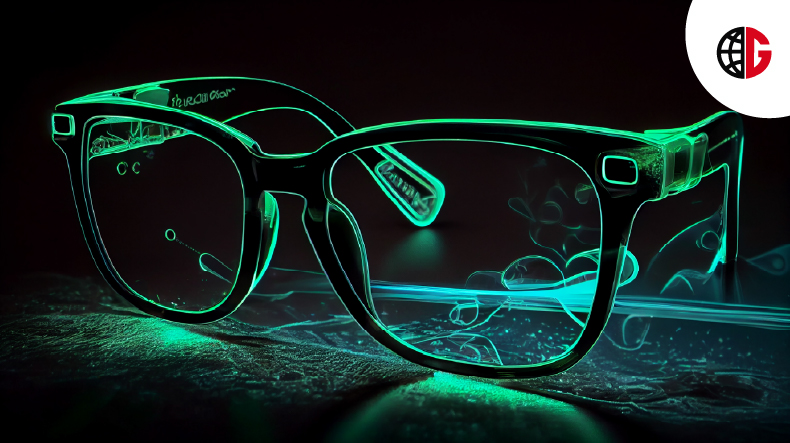
smart glasses and wearable devices with built-in cameras become more common, concerns around privacy and consent are intensifying. Many of these “luxury surveillance” gadgets look nearly identical to regular eyewear, making it difficult for people to know when they may be recorded without their knowledge.
A new Android app called Nearby Glasses aims to address this issue by alerting users when someone nearby may be wearing smart glasses or other always-recording devices.
How the App Works
Developed by Yves Jeanrenaud, Nearby Glasses continuously scans for Bluetooth signals emitted by compatible wearable devices. It identifies hardware using publicly assigned Bluetooth manufacturer identifiers, enabling it to detect devices produced by companies such as Meta (including its Ray-Ban and Oakley smart glasses collaborations) and Snap Inc..
When the app detects a Bluetooth signal associated with these manufacturers, it sends an alert to the user. The app also allows individuals to manually add specific Bluetooth identifiers, expanding its ability to detect a broader range of surveillance-capable wearables.
Rising Privacy Concerns
The launch of Nearby Glasses comes amid growing public resistance to devices that constantly record video or audio. Critics argue that such technologies can capture and process information about bystanders without their consent.
Jeanrenaud has been outspoken about his concerns, describing smart glasses as an “intrusive” technology that neglects consent. He has cited instances where wearable devices have allegedly been used in controversial contexts, including immigration raids and harassment cases. He also expressed concern over the integration of face recognition features in some smart glasses, which he believes could significantly expand privacy risks.
Limitations and False Positives
Like many detection tools, Nearby Glasses is not without limitations. Because it identifies devices based on manufacturer Bluetooth identifiers, it may occasionally produce false positives. For example, the app might flag a virtual reality headset from Meta as a pair of smart glasses, since both devices share the same manufacturer code.
In testing, the app successfully detected devices when specific identifiers were added. For instance, adding Apple’s Bluetooth identifier (0x004C) resulted in a surge of alerts, likely picking up nearby devices from Apple Inc.. This demonstrated that the detection mechanism functions as intended, though it also highlights how broad manufacturer-based scanning can generate numerous notifications.
What’s Next?
Jeanrenaud continues to refine the app and has acknowledged interest in developing an iOS version. However, future updates will depend on time and development resources.
While the developer describes Nearby Glasses as a technical response to a broader social issue, he admits it is not a complete solution. Instead, he views the app as a form of resistance against emerging surveillance technologies—one that may at least give individuals greater awareness in public spaces.
At the time of reporting, spokespeople for Meta and Snap had not publicly commented on the app.
Read more: The $100 Barrel Question: How Middle East Conflict Could Reshape Global Commerce