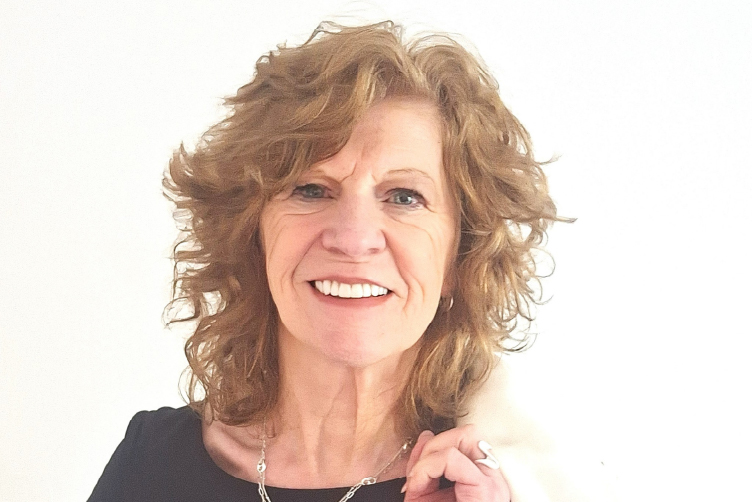

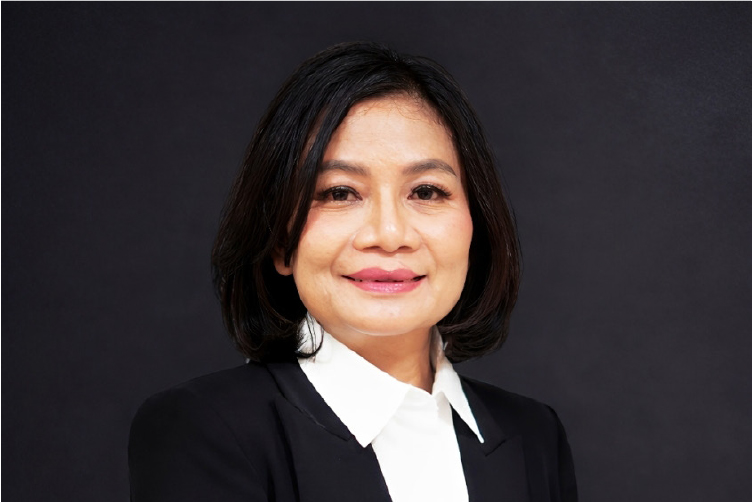
Al Greeny S Dewayanti, (Greeny) social innovator and partnership leader working at the intersection of technology, community development, science and sustainable agriculture, has been awarded a grant from the National Geographic Society to develop a project titled “LIFE: Land Innovation for Food & Empowerment” in Labuan Bajo, Indonesia. She is now one of group National Geographic Explorer in year 2026.
For Greeny, food has never been merely what appears on a plate. It has always been a question of who grows it, who knows how to protect the land beneath it, and who gets to decide its future. In Indonesia’s rural heartlands, where soil, women, and family survival are quietly intertwined, that quiet conviction has become the driving force behind one of the country’s most promising agricultural experiments.
She began her journey far from the fields. Armed with an MBA from Prasetya Mulya Graduate Business School, leadership training at the University of Michigan’s Ross School of Business, and course in the green economy, she understood markets, capital, and systems of scale. Yet it was only when she stepped into villages and listened to the women who actually feed their families that she grasped what those systems were missing.
Across Indonesia, women plant, harvest, cook, and nurture the next generation. They are the unseen backbone of the food chain. But land titles, scientific knowledge, and decision-making power have long remained beyond their reach. At the same time, climate shifts and exhausted soil are silently stealing tomorrow’s harvests.
Rather than accept the divide, she chose to close it. Her answer is LIFE — Land Innovation for Food & Empowerment — a program funded by the National Geographic Society and PepsiCo under its Food for Tomorrow initiative. The project now unfolds in the tropical drylands of eastern Indonesia, where monoculture has left the earth brittle and yields meagre.
The solution she and her team introduced is elegantly simple yet quietly revolutionary: intercropping maize with Sacha Inchi, a hardy vine whose oil is rich in omega-3, 6, and 9. The plant restores degraded soil while producing nutrition that directly combats stunting in children and mothers. One crop heals the land; the same crop heals the body.
Yet she knew crops alone would never be enough. Real change needed knowledge that women could hold in their own hands.
That knowledge now arrives through an unlikely partnership. Working alongside Dr Ariel Pradipta of Genomik Solidaritas Indonesia (GSI) Lab, he translates cutting-edge DNA metabarcoding — the sequencing of soil microbiomes — into everyday advice. Complex laboratory data becomes plain instructions delivered via the AI-powered Go-Farmer platform: “Add compost today,” “The soil is ready for planting.” For many women farmers, it is the first time science has spoken directly to them.
The shift is visible. Shoulders straighten. Decisions grow bolder. A quiet confidence spreads.
Nowhere is that transformation more poignant than in Labuan Bajo, where global tourists marvel at turquoise bays while stunting rates linger stubbornly above the national average. In the villages of Desa Waning and Desa Pacar, beauty and hardship live side by side. Here, her work found its deepest resonance through collaboration with Father Samuel Pangestu, Vicar General of the Jakarta Diocese. Long familiar with the quiet struggles of local farming families — and the lack of opportunities for young people — he opened doors and hearts. Together, they ensured that innovation arrived not as imposition but as invitation.
The women are not beneficiaries; they are owners, decision-makers, and teachers. Indigenous wisdom, modern genomics, and digital tools meet in their hands, creating a new model of agricultural leadership.
Her earlier experience had already prepared her for scale with integrity. Through the Visa Foundation-supported Banyumas Naik Kelas program, she guided 3,500 micro-enterprises toward financial and digital literacy; 170 of them became export-ready, connecting directly with Indonesian trade attachés worldwide. Managing millions in grants and impact investments taught her that numbers matter only when dignity remains intact.
Today she speaks of her work with measured calm: food sustainability is not charity — it is systems change. Healthy soil underpins nutrition. Science must be translated into tools people trust. Digital platforms must democratize knowledge. And women must lead, not someday, but now.
In Labuan Bajo and beyond, her vision is taking root. She dreams of a day when Indonesia’s celebrated natural beauty is matched by the health and prosperity of its people. When women stand at the center of that story — equipped with knowledge, technology, and quiet trust — land heals, families thrive, and resilient economies grow from the ground up.
That future is no longer distant. In the hands of these women, it is already beginning.
*******************************