
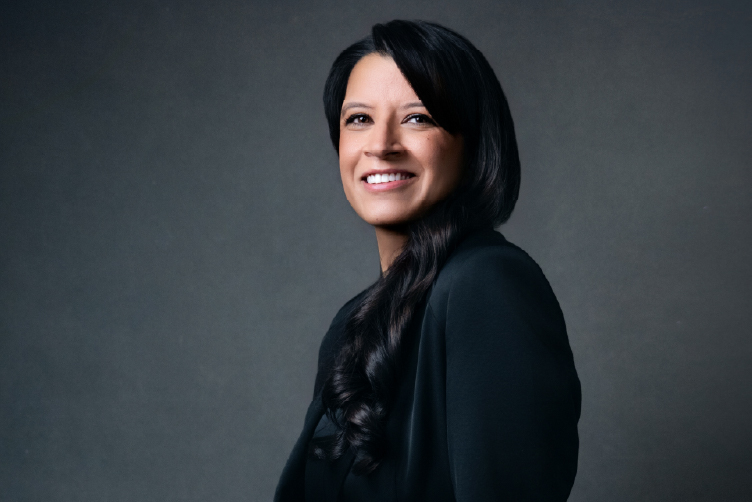
In a time of overlapping crises, accelerating change, and widespread leader depletion, the way leaders come together professionally must fundamentally shift. Systemic change cannot be built on brief encounters alone; it requires depth: trust, shared context, and collaboration that endures. This is why Priti Bhattarai is building a different kind of leadership infrastructure, designed for substance rather than speed. As CEO of Perennial and a guiding force across Hyakusho Enterprises, she is reimagining how leaders gather, creating spaces where relationship becomes the foundation and trust becomes strategy. Through Perennial’s flagship convening, the Perennial Gathering, she builds the conditions for genuine trust, giving leaders the relational foundation needed to create the systemic change they’re working toward.
For over two decades, Perennial has scaled this commitment globally. More than 10,000 leaders across regions have moved through its programs, demonstrating that long-arc leadership is not only a philosophy but a model with measurable impact. Headquartered in Seattle with an office in Singapore, Perennial is redefining leadership development for this moment, shifting away from leadership as performance and toward the cultivation of the inner and relational conditions that make wise action possible.
The Condition Beneath the Action
Before Priti Bhattarai speaks about leadership, she speaks about the condition. Not outcomes. Not performance. Condition.
“A lot of my work is rooted in a simple belief: leadership is not only what we do, it is the condition we are in when we do it. Who you are is how you lead, so we start with you.”
This sentence is not a preface; it is a compass. It explains why Perennial speaks in the language of soil, why leadership is discussed in terms of health, depletion, restoration, and why time, space, and relationship are treated not as soft ideas but as structural necessities.
At Perennial, outcomes depend on the health of the soil. And leadership outcomes depend on what lies beneath the surface.
This is the foundation of the Soil-Building methodology: Time. Space. Relationship. It is paired with Leadership 3.0, a framework that centers reflection, awareness, and wellbeing as core leadership capacities. The logic is unflinching: leaders cannot sustain meaningful impact if the soil beneath their leadership is depleted.
The language is shaped by The Soil of Leadership and The Hyakusho Way, written by Perennial’s founder Dr. Britt Yamamoto, texts that do not romanticize leadership, but humanize it. The Hyakusho Way is a life book as much as a leadership text, an invitation to live and lead as a whole person. It reframes breadth, synthesis, and adaptability not as scatteredness, but as wholeness.
This is not branding. It is a lived philosophy.
Growing Up Between Worlds
Priti Bhattarai’s understanding of what lies beneath systems did not begin in boardrooms. It began in movement.
Born in Nepal. Raised in Japan. Shaped by adult life across the UK and the United States.
Moving across countries at formative stages taught her something most leaders learn much later: culture isn’t background, it is the water we swim in. It shapes what we value, how we communicate, what we assume is “normal,” and which forms of leadership are rewarded.
Being raised across countries also made her attentive to what sits beneath what is visible: values, relationships, unspoken rules, and the quiet architectures of belonging and exclusion that shape how systems behave.
This attentiveness would later become central to her work.
Non-Linear Path, Intentionally So
Professionally, her path has been cross-sector and intentionally non-linear. Her education spans science, business and social policy. Her early work included education and nonprofit systems in Nepal, and policy and advocacy environments in the United States.
Across contexts, the same pattern kept appearing.
Many of the people doing the most important work were also the most depleted.
They were carrying complexity. Holding communities through crisis. Making hard decisions. And doing it with very little space to reflect, restore, or feel genuinely supported as human beings.
That realization became a turning point.
The question shifted from “What solutions do we need?” to “What conditions allow leaders to stay clear, connected, and sustainable enough to do this work over the long arc?”
That question is what brought her to leadership development and to Perennial.
Today, as CEO of Perennial, she supports leaders holding complex social and environmental challenges. The work is shaped by frameworks developed by founder Dr. Britt Yamamoto, whose language gave words to what Priti had sensed for years: transformation is not only about strategies and solutions, it is also about the conditions that make wise action possible.
The Cultivator
If there is one word Priti Bhattarai uses to describe herself, it is Cultivator.
She is drawn to what sits beneath the surface: values, patterns, relationships, pace. She focuses on creating the conditions where people and systems can become more resilient, more humane, and more whole.
At Perennial, the metaphor of soil is not symbolic; it is practical. When time, space, and relationship are depleted, even the best ideas fail. When those conditions are tended, leaders can sustain impact over the long arc.
This orientation, toward tending rather than pushing, quietly shapes everything she builds.
Conference 3.0: A New Way of Gathering
One of the most important expressions of Perennial’s philosophy is the Gathering and its model of Conference 3.0. After years of watching leaders leave convenings inspired but disconnected, full of contacts but without real partners, Priti became convinced something essential was missing.
“I want to be clear that conferences designed primarily around content exchange have their place, they’re often the best way to take a pulse on what’s happening across a field and to see what’s emerging.”Conference 3.0 isn’t trying to replace that. It’s designed for depth: the kind of trust, reflection, and relationship-building that makes collaboration real after people go home,” she says.
The Perennial Gathering is an annual convening in Karuizawa, Japan. The next two Gatherings will take place June 1–4, 2026 and March 11–14, 2027, bringing Perennial’s Leadership 3.0 approach into the way people convene. Leadership is not treated as something delivered through sessions; it is cultivated through the conditions in the room. This is soil-building in practice: designing the container so the quality of relationship, sensemaking, and commitment-making shifts from the start.
Instead of treating relationships as a byproduct of the agenda, Conference 3.0 treats relationships as the agenda. The environment is intentionally paced and relational, with repeated touchpoints that build continuity and trust. Important conversations still happen, but the way they happen shifts. What emerges is not just insight, but shared context and durable collaboration that can carry forward.
The goal is not networking.
It is relational infrastructure.
So collaboration becomes real, not aspirational.
Inheritance and Integrity
Some of the most formative forces in Priti’s life were not institutions, but inherited values.
“One of the most influential experiences in my life was moving from Nepal to Japan. At such a young age, going from one of the world’s poorest countries to one of the richest, I was shocked when I realized not everyone lived in poverty. What stayed with me wasn’t only the contrast, but the deeper awareness that I had done nothing to “deserve” this new life. It was the hard work of my parents, and the generations before them, that made the move possible. That realization planted a lifelong tension in me: gratitude for what opened up, and a quiet commitment to use it with integrity. It also set me on a path of wanting to give back and make a positive contribution. I just needed to find the right way to do it,” she shares.
Her father, Dr. Mukesh Bhattarai, embodied long-arc thinking. Relying on scholarships, his education took him from Russia to the Netherlands and into public service in Nepal, before his work brought the family to Japan through the Asian Productivity Organization.
What he modeled was not glamour, but steadiness. Decisions were made to widen the doorway for those who came after.
Her grandmother, Mrs. Madhuri Bhattarai, never went to school, yet wrote and published 14 books in Nepal. Her life disrupts assumptions about where wisdom comes from. No formal access. Full voice. Endurance.
Her mother, Neerja Bhattarai, taught leadership through continuity. Moving to Tokyo with three children into an unfamiliar culture, often without support, she held the family steady through transition. Leadership, here, was not accomplishment, it was care over time.
Leadership as Understanding
Professionally, few influences have been as formative as Dr. Britt Yamamoto.
One line by him reframed leadership entirely for Priti:
Understanding, in this framing, is not instinct. It is discipline. Reality is allowed to move. What is right in one moment may not be right in another.
Leadership becomes less about control and more about sensing, responding, and acting with integrity.
This perspective is now woven into how Priti leads, and into the heart of the Perennial Gathering. Leaders are invited to slow down enough to understand what is actually happening, in themselves, in their relationships, and in the systems they are trying to change.
For Priti, sustainable leadership looks like this: rooted enough to stay steady, flexible enough to respond, and relational enough to build change that lasts.
The work is not loud. It is patient. And like healthy soil, its power lies in what it makes possible over time.
Clarity Through Leaving
Long before Priti began working with leaders, she was preparing to become one.
She chose to go to medical school for a simple and deeply ethical reason: she wanted to give back and serve in a concrete way. But once she was inside that world, something became clear. She was carrying people’s pain too closely. The work itself was meaningful, but the path was not aligned with who she was.
Leaving medicine felt like failure at the time.
Only later did it reveal itself as clarity.
What followed was not a straight line, but a period of movement through different worlds: corporate work, policy institutions, academic spaces. She was looking for an intersection that could hold both impact and integrity. What she encountered instead was a pattern that would later define her work: changemakers doing vital work, constantly giving, with no real space to be resourced themselves.
That was the moment it clicked.
Leadership development was not an add-on. It was the foundation.
If social and environmental progress was going to be sustained, the people holding the complexity had to be supported, not just in skills, but in sustainability. That realization is what brought her to Perennial. It is also why she stayed.
Perennial builds conditions for leaders to lead with steadiness over the long arc.
Tools and Range
Priti is clear about what prepared her to lead.
“My education gave me tools. My lived experience gave me range.”
Growing up across Nepal and Japan, and later living in the UK and the United States, shaped her ability to navigate differences without feeling pressured to assimilate. It created groundedness in multiple cultural contexts, and comfort with ambiguity, both essential when leading global work.
It also taught resilience. Reality rarely meets assumptions. Over time, you learn that the leader’s job is not to cling to a plan, but to adapt without losing purpose.
This is why The Hyakusho Way resonates so deeply with her. It names something she has lived, that the most sustainable leaders are not one track people. They are able to integrate, adapt, and stay whole while moving through change.
Leadership growth, like life, is rarely linear. It is iterative, relational, and constantly evolving.
Stewardship, Not Ownership
Priti did not found Perennial. She has stewarded it.
Perennial was founded nearly two decades ago in response to a reality that remains urgent: social change leaders were burning out at an unsustainable pace, and the sector was treating that depletion as normal. The founding mission was clear—to support leaders to lead sustainably, so they could do meaningful work over time without losing themselves.
Under her leadership, that mission has evolved into Leadership 3.0.
Leadership 3.0 centers reflection, awareness, and wellbeing as core leadership capacities. It rests on a simple truth: who you are is how you lead. When inner capacity is depleted, leadership becomes reactive. When leaders are resourced, their judgment, relationships, and impact change.
This approach is shaped by The Soil of Leadership and The Hyakusho Way, which together frame leadership as soil: the conditions beneath results.
Over time, Perennial’s work expanded into a broader ecosystem through Hyakusho Enterprises, bringing together aligned entities across leadership development, education, and cross-cultural learning, including RootSpring’s youth-focused work.
And now, the work has entered a new frontier.
Holding Space in a World That Rewards Speed
One of the most persistent challenges Priti has faced is not operational, it is conceptual.
Helping funders and institutions understand that the way Perennial holds space is not “soft,” but strategic.
Many systems still reward speed, output, and transactional engagement, even though those patterns steadily erode judgment, trust, and sustainability. Perennial did not respond by diluting its work. It stayed grounded in its methodology.
Time. Space. Relationship.
Instead of making the work more palatable, the organization became more precise in naming why it matters. “We also strengthened evidence through feedback and outcomes. In recent programs, participants consistently report not only renewed wellbeing, but also increased leadership effectiveness and readiness to apply learning. We pair depth with rigor: reflection practices, facilitated inquiry, coaching, and integration, so the work is not just meaningful in the moment, but durable afterward,” shares Priti.
Wellbeing as Infrastructure
Perennial designs leadership development programs and retreats that integrate inner development with practical leadership capacity. The work is grounded in Leadership 3.0 and soil-building methodology.
In simple terms, Perennial helps leaders build the inner and relational infrastructure that makes sustained impact possible, especially in complex, high-stakes environments.
What distinguishes this approach is its refusal to treat wellbeing as self-care or as a reward after “real work.” Wellbeing is treated as leadership infrastructure. When leaders are depleted, collaboration collapses into performance. When leaders are resourced, trust and clear decision-making become possible.
This philosophy reaches its most visible expression in the Perennial Gathering.
Stewardship at Scale
As Perennial and the broader Hyakusho ecosystem grow, Priti’s role is less about command and more about stewardship.
“I lead a global team and steward multiple interconnected entities across the Hyakusho ecosystem. My responsibilities include strategy, program integrity, partnerships, team leadership, and organizational sustainability,” she says.
she adds.
“I also spend significant time in ecosystem-building: cultivating relationships with funders, institutional leaders, and social change practitioners because meaningful collaboration depends on the conditions we build before we ask people to ‘work together’,” she continues.
Balance as Discipline
For someone whose work revolves around sustainability, it is unsurprising that Priti Bhattarai resists the idea of work-life balance as a destination.
She treats it as a practice and as a leadership discipline.
Wellbeing, for her, is not indulgence. It is infrastructure. It is what allows for judgment, relationship, and right action under pressure. She returns, again and again, to the same three conditions that shape Perennial’s work: Time, Space, Relationship.
Time is about pace, choosing rhythms that are sustainable and protecting recovery. It is also about recognizing that time shapes who we become. When time is not tended, reactivity takes over.
Space is about spaciousness rather than absence. It is the room required for reflection and integration, the difference between stepping away and actually metabolizing what is being carried. Space allows her to notice what is truly happening, instead of pushing forward on autopilot.
Relationship is the grounding condition. Relationship to self—staying attuned to what she is feeling, avoiding, or needing in order to lead well. Relationship to others, remaining close to people and communities that keep her honest, connected to purpose, and able to ask better questions. Leadership, in her framing, is not a solo performance. It is relational work.
There is one additional discipline she watches carefully: not letting urgency become identity. In high-impact environments, urgency can feel noble. But left unchecked, it erodes discernment and relationships. Staying grounded allows her to lead with clarity rather than adrenaline and to keep building leadership soil that can sustain the work over the long arc.
Steadiness as Power
When asked what quality matters most for women entrepreneurs, Priti Bhattarai does not hesitate.
Steadiness.
Not rigidity, but the ability to stay anchored in values while moving through ambiguity, competing demands, and constant visibility. Steadiness is the capacity to keep choosing integrity, even when incentives pull toward performance. It requires curiosity, an openness to what is actually happening, rather than attachment to what one hopes is true.
For women leaders, the soil beneath leadership often carries extra weight: the expectation to be exceptional without being “too much,” to absorb emotional labor without naming it, to lead across multiple cultural registers while being judged more harshly for imperfection.
In that context, soil-building—Time, Space, Relationship—is not a philosophy. It is survival.
The challenges women leaders face today are intensified by the world itself: polarization, institutional distrust, accelerating complexity, and the pressure to project certainty when certainty is unavailable. Women are often penalized both for confidence and for vulnerability.
This is why Priti believes the deeper work is not only about skills, but about conditions, having the internal and relational infrastructure to lead without losing oneself.
Her reference points are personal. A grandmother who published 14 books without formal schooling. A mother who moved countries with three children and built a life in a language and culture that were not her own. Their leadership was not loud. It was unwavering.
That is the kind of power she trusts.
Changing How Leaders Gather
Looking ahead, Priti Bhattarai’s vision for Perennial is both specific and systemic.
She wants to change the way leaders gather.
The urgency is clear. Leaders across the impact ecosystem are navigating overlapping crises, geopolitical tension, climate disruption, rapid technological shifts, widening inequities, while facing funding uncertainty, burnout, polarization, and pressure to deliver faster with fewer resources.
In moments like this, the most costly mistake is not moving too slowly. It is moving quickly without clarity, coordination, and sustainability.
To move fast, leaders must first slow down.
The Perennial Gathering is Perennial’s flagship expression of this depth-based approach designed so relationship becomes infrastructure and trust becomes strategy.
Over the next two years, the Perennial Gathering will be a major driver of Perennial’s evolution. It is the organization’s way of scaling nearly two decades of learning into a global model that is fit for this moment.
Designed as one integrated experience, professional conference, leadership practice, and retreat, the Gathering allows leaders to strengthen judgment under pressure, restore capacity, and build relational infrastructure across roles and regions.
Priti’s role is clear: stewarding that transformation. Building strategic partnerships. Protecting the integrity of the methodology. Ensuring the Gathering consistently delivers what it is designed to make possible: shared context, clearer judgment, and commitments that hold after the event ends.
Advice for the Long Arc
For aspiring women leaders and entrepreneurs, her guidance is precise and unsentimental.
Build your inner infrastructure early. Titles, momentum, and external validation will not hold you when things fall apart. Values will. Relationships will. The ability to pause long enough to tell the truth will.
Treat relationship as strategy. If your work depends on collaboration, trust is not optional: it is foundational.
And give yourself permission to be non-linear. The Hyakusho Way is an invitation to become everything you already are without dividing life into compartments or leaving essential parts behind.
Lasting impact is rarely built through perfect plans. It is built through steady tending of integrity, relationships, and capacity.
Like healthy soil, the work is quiet. But it is what makes growth possible.