

Finance has always rewarded those who act on better information, faster. In 2026, that edge is increasingly powered by artificial intelligence. From the solo entrepreneur tracking monthly cash flow to the enterprise CFO modeling billion-dollar budget scenarios, AI financial tools have moved from experimental to essential — embedded in the daily workflow of every serious finance function.
What separates 2026’s AI financial tools from earlier generations is the shift from automation to intelligence. The first wave of fintech automated repetitive tasks. Today’s tools anticipate problems, generate narratives, execute decisions, and learn continuously from every transaction they touch. The result is a financial ecosystem that operates faster, with fewer errors and deeper insight, than anything that preceded it.
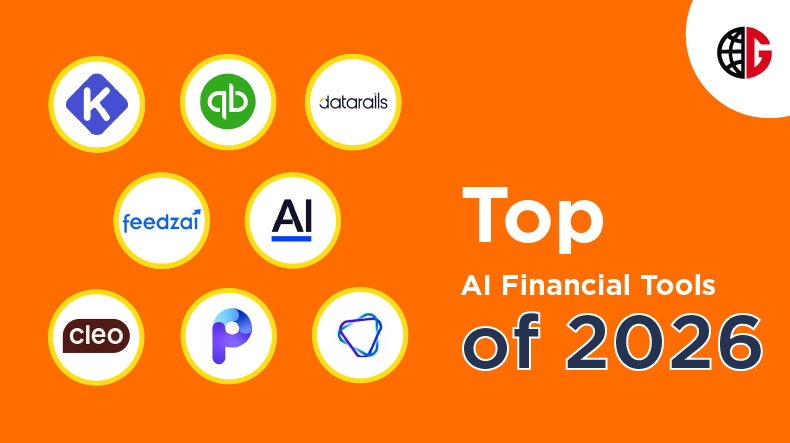
This article profiles the eight most impactful AI financial tools of 2026, examining what each does, why it matters, and who stands to benefit most from deploying it.
- Kavout 3.0 — AI-Powered Investment Intelligence
Kavout has long been a benchmark in AI-driven equity analysis, and the 2026 iteration raises the bar significantly. The platform’s core capability — predictive stock scoring — now operates in real time, processing live market data, earnings call transcripts, and macro-economic signals simultaneously to surface investment opportunities before they register on mainstream radar.
What distinguishes Kavout 3.0 is its integration of alternative data sources: satellite imagery of retail parking lots, credit card transaction aggregates, and social sentiment signals feed directly into its ML scoring models. For active investors and portfolio managers seeking an informational edge in increasingly efficient markets, this depth of signal processing is difficult to replicate manually. The platform also includes explainability features that clarify why specific scores were generated — addressing the interpretability concerns that have historically slowed institutional AI adoption.
Best suited for: Equity investors, hedge fund analysts, and active traders seeking data-driven entry and exit signals.
- QuickBooks AI+ — Generative Accounting for Growing Businesses
QuickBooks has dominated small business accounting for decades, and its 2026 AI-enhanced platform represents the most significant product evolution in the company’s history. QuickBooks AI+ moves beyond automated reconciliation and expense categorization — capabilities its previous generation already handled well — into genuinely generative financial intelligence.
The platform now produces natural-language variance reports automatically, explaining in plain English why this month’s margins differed from last month’s, which expense categories are trending upward, and where cash flow risk is building. For the small business owner who lacks a dedicated CFO, this capability delivers a level of financial clarity that was previously inaccessible at this price point. Integration with payroll, inventory, and e-commerce platforms means the AI operates on a unified data set rather than isolated accounting entries.
Best suited for: Small and mid-sized businesses, freelancers, and accountants managing multiple client books.
- Datarails Copilot — Agentic FP&A Without Replacing Excel
Enterprise finance teams have a complicated relationship with the tools designed to replace their spreadsheets — they keep returning to Excel. Datarails understood this dynamic early and built a platform that enhances Excel workflows with AI rather than supplanting them. In 2026, Datarails Copilot takes that philosophy further with genuinely agentic capabilities.
The Copilot autonomously collects financial data from across the organization, identifies forecast deviations, generates updated projections, and drafts the management commentary that accompanies monthly board packs — all without manual prompting. Finance teams that previously spent two weeks closing the books and another week preparing management reports are completing the same work in days. The platform’s natural-language interface allows non-technical users to query financial data conversationally, democratizing access to FP&A insight across the leadership team.
Best suited for: Finance directors, FP&A teams, and CFOs at mid-market and enterprise organizations.
- Feedzai 2026 — Adaptive Fraud Prevention at Scale
Financial fraud is an adversarial problem: every improvement in detection capability prompts a corresponding evolution in fraud methodology. Feedzai’s 2026 platform is built around this reality, deploying adaptive ML models that update continuously in response to emerging threat patterns rather than relying on static rule sets that criminals can eventually reverse-engineer.
The platform analyzes behavioral biometrics — how users type, scroll, and navigate — alongside transaction data to build individual behavioral profiles. Deviations from those profiles trigger real-time intervention before fraudulent transactions complete. For financial institutions processing millions of daily transactions, the difference between detecting fraud in milliseconds and discovering it in a nightly batch review represents enormous loss prevention. Feedzai’s false-positive reduction has been a particular focus in this release cycle, addressing the customer experience costs of overly aggressive fraud flags.
Best suited for: Banks, payment processors, lending platforms, and any financial institution managing high transaction volumes.
- AlphaSense AI — The Research Analyst That Never Sleeps
The volume of financial information generated daily — earnings calls, analyst reports, regulatory filings, macroeconomic commentary — long exceeded any human team’s capacity to monitor comprehensively. AlphaSense was built to solve this problem, and its 2026 platform now indexes over one billion financial documents, extracting signals and surfacing relevant intelligence in response to natural-language queries.
The tool’s competitive intelligence capabilities have become particularly powerful: users can track how competitors discuss pricing pressure, supply chain risk, or geographic expansion across years of earnings transcripts, identifying strategic shifts that might not be apparent from a single document. For investment analysts, strategy teams, and investor relations professionals, AlphaSense functions as a research layer that operates continuously, delivering relevant insights as they emerge rather than waiting for quarterly review cycles.
Best suited for: Buy-side and sell-side analysts, corporate strategy teams, and investor relations professionals.
- Cleo Pro — Conversational Financial Coaching for Consumers
Personal finance has a compliance problem: most people understand what they should do with money and consistently fail to do it. Cleo‘s insight is that the gap is motivational and behavioral as much as informational, and that conversational AI is better positioned than dashboards and spreadsheets to bridge it. The 2026 Pro version extends this approach with a coaching layer that tracks financial goals over time, adapts recommendations to changing circumstances, and provides accountability through regular check-ins.
Cleo Pro analyzes transaction history to identify spending patterns users might not recognize — the cumulative cost of daily subscriptions, the correlation between stress and discretionary spending, the months where cash flow regularly tightens. It presents these insights conversationally rather than through static charts, making financial awareness feel accessible rather than intimidating. For a generation that conducts most of its financial activity through mobile interfaces, Cleo’s design philosophy is well-matched to how people actually manage money.
Best suited for: Consumers seeking active help with budgeting, savings goals, and building stronger financial habits.
- Planful Predict — Scenario Intelligence for Enterprise CFOs
Enterprise financial planning has historically been constrained by the time required to model alternative scenarios. Building a single annual plan takes weeks; stress-testing it against economic downturns, supply chain disruptions, or acquisition scenarios could take weeks more. Planful Predict compresses that timeline dramatically by maintaining a continuously updated model of the business that can generate scenario analyses on demand.
The platform’s 2026 capability set includes AI-generated scenario narratives — written summaries of what each modeled scenario implies for cash position, headcount, and capital allocation — enabling CFOs to present boards with contextualized options rather than raw numbers. Integration with HR systems, sales pipeline data, and supply chain platforms means Planful’s models incorporate operational reality rather than relying solely on historical financial data. For organizations navigating volatile market conditions, the ability to reforecast dynamically rather than quarterly represents a genuine strategic advantage.
Best suited for: Enterprise CFOs, financial planning teams, and organizations with complex multi-entity structures.
- Vic.ai 2026 — Autonomous Accounts Payable
Accounts payable is one of the highest-volume, lowest-strategic-value functions in most finance organizations. Vic.ai‘s 2026 platform takes direct aim at this inefficiency with a level of automation that approaches end-to-end autonomy for routine invoice processing. The system receives invoices, extracts relevant data, matches against purchase orders, applies the organization’s coding rules, routes exceptions for human review, and schedules payments — all without manual intervention for the majority of transactions.
The ML models underlying Vic.ai learn each organization’s specific coding standards and approval workflows, improving accuracy over time and reducing the volume of exceptions requiring human attention. For finance operations teams processing thousands of invoices monthly, the productivity implications are significant. More strategically, automating AP frees finance professionals to focus on vendor relationship management, early payment discount optimization, and cash flow strategy — work that generates measurable value rather than processing volume.
Best suited for: Accounts payable teams, controllers, and finance operations leaders at mid-market and enterprise organizations.
What 2026’s AI Financial Tools Tell Us About the Future of Finance
The tools profiled here share a common trajectory: they are moving from assisting human financial decisions to actively participating in them. The distinction matters. Earlier generations of financial software stored data and automated calculations. Today’s AI financial tools analyze, predict, generate, and in some cases act — closing the loop between insight and execution in ways that compress timelines and reduce the cost of good financial decision-making.
For business leaders, the implication is clear. Adopting AI financial tools is no longer a technology decision but a competitive one. The organizations that deploy these capabilities thoughtfully — with attention to data quality, integration requirements, and the development of human skills that complement AI judgment — will operate with a financial intelligence advantage that compounds over time. The question in 2026 is not whether AI belongs in your financial function. It is whether your financial function is ready to make the most of it.
Frequently Asked Questions
Q1. What is AI financial tools and how do they differ from traditional finance software?
Traditional finance software automates calculations and stores data. AI financial tools go further by learning from data patterns, generating forward-looking insights, detecting anomalies, and in some cases taking autonomous action. The defining difference is intelligence — the ability to surface insights that humans alone would struggle to identify at scale.
Q2. Which AI financial tool is best for small businesses in 2026?
QuickBooks AI+ is the most practical starting point for most small businesses, offering automated accounting, generative reporting, and financial insight at accessible price points. Cleo Pro suits individual owners who need personal and business finance management in a single conversational interface.
Q3. Are AI financial tools secure enough to trust with sensitive data?
Reputable platforms use enterprise-grade encryption, multi-factor authentication, and comply with relevant data protection regulations including GDPR, SOC 2, and PCI-DSS. Organizations should conduct vendor security assessments before deployment and establish internal data governance policies for AI platform access.
Q4. Can AI financial tools replace a CFO or financial advisor?
No. AI tools automate data-intensive and process-driven tasks exceptionally well, but they do not replicate the strategic judgment, stakeholder communication, and contextual reasoning that experienced finance professionals provide. The most effective deployments augment human capability rather than attempting to replace it.
Q5. How do I choose the right AI financial tool for my organization?
Start by identifying your most pressing financial pain point — whether that is forecasting accuracy, fraud exposure, accounting efficiency, or investment intelligence. Match the tool’s core capability to that specific need, assess integration requirements with your existing technology stack, and evaluate data quality before implementation. A focused deployment that solves one problem well typically delivers more value than a broad platform deployed superficially.
Read more: Top 10 Best AI Voice Platforms 2026