
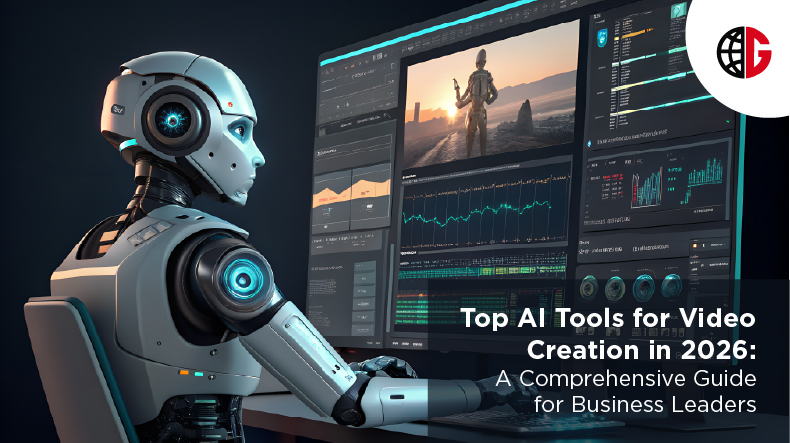
The video production landscape has undergone a seismic transformation. What once required expensive equipment, large crews, and weeks of post-production work can now be accomplished in minutes using artificial intelligence. In 2026, AI-powered video creation tools have matured beyond simple automation—they’re reshaping how businesses communicate, how marketers engage audiences, and how creators bring their visions to life.
This shift matters now more than ever. Video content dominates digital consumption, with platforms prioritizing video across social media, corporate communications, and marketing channels. Yet traditional video production remains resource-intensive and time-prohibitive for many organizations. AI video tools have emerged as the great equalizer, democratizing access to professional-grade video creation while dramatically reducing costs and production timelines. For business leaders, understanding and leveraging these tools is no longer optional—it’s a competitive necessity.
This article examines the most advanced AI video creation platforms available in 2026, exploring how they work, their practical applications, and what they mean for businesses navigating an increasingly visual-first digital landscape.
The Technology Behind AI Video Generation
AI video creation tools operate on fundamentally different principles than traditional video editing software. At their core, these platforms leverage advanced machine learning models—particularly diffusion models and transformer architectures—trained on millions of hours of video footage to understand motion, physics, lighting, and visual continuity.
Text-to-video generators, the most revolutionary category, translate natural language descriptions into moving images by predicting pixel sequences frame by frame. These models comprehend not just objects and scenes, but temporal consistency, realistic motion physics, and contextual relationships between elements. When a user inputs “a golden retriever running through a sunlit meadow,” the AI doesn’t simply assemble stock clips—it generates entirely new footage that adheres to the physical laws of movement, lighting, and perspective.
The practical implications extend far beyond novelty. Businesses can now prototype video concepts without filming, test marketing messages rapidly, and produce localized content at unprecedented scale. The technology has evolved from experimental to enterprise-ready, with major corporations already integrating these tools into their content production workflows.
Text-to-Video Generators: Creating Something from Nothing
Luma AI’s Dream Machine has distinguished itself through exceptional speed and accessibility. This platform generates high-quality video clips from simple text instructions in remarkably short timeframes, making it one of the most approachable entry points for businesses exploring generative video technology.
The tool’s strength lies in its balance of quality and usability. Unlike more complex platforms requiring technical expertise, Luma Dream Machine delivers professional results through straightforward prompts. Its free trial tier has enabled widespread experimentation, allowing marketing teams and content creators to evaluate generative video’s potential without significant financial commitment.
For organizations testing AI video capabilities before larger investments, Luma Dream Machine represents an ideal starting point—offering genuine utility without overwhelming users with advanced features they may not yet need.
Sora has established a new quality benchmark for AI-generated video. This platform produces photorealistic footage with multiple characters, complex camera movements, and accurate environmental physics that were previously impossible through generative methods.
OpenAI’s model excels at understanding spatial relationships and temporal consistency—creating scenes where characters interact believably with their environment and movement follows realistic physics. While access has remained limited to select creators and researchers, early demonstrations have showcased capabilities that threaten to disrupt stock footage markets and fundamentally alter creative concepting processes.
The strategic implications are profound. As Sora becomes more widely available, businesses will gain ability to generate custom B-roll, visualize concepts before production, and create scenario-based training content without location shoots or actors—potentially reducing video production costs by orders of magnitude.
Pika Labs has cultivated a vibrant creator community through its Discord-based interface and web platform, making sophisticated video generation remarkably accessible. The platform excels at diverse animation styles, from anime aesthetics to cinematic realism, with particular strength in social media-optimized content.
Features like lip-sync and image-to-video conversion expand creative possibilities beyond pure text prompts. A marketing team can transform static product photography into dynamic promotional videos or animate illustrated concepts for presentation materials. This flexibility has made Pika Labs particularly popular among social media managers creating content for TikTok, Instagram, and emerging short-form video platforms.
The community-driven development approach means the platform evolves rapidly based on actual creator needs rather than theoretical use cases—resulting in practical features that address real production challenges.
Runway (Gen-2, Gen-3 Alpha)
Runway has positioned itself as the platform for creative professionals seeking granular control over AI-generated footage. Its “AI Magic Tools” suite, including the latest Gen-3 Alpha model, offers text-to-video, video-to-video, and image-to-video generation with sophisticated manipulation capabilities.
The motion brush tool exemplifies Runway’s philosophy: rather than fully automated generation, it provides precise control over movement within individual frames. This appeals to filmmakers and creative directors who view AI as a collaborator rather than a replacement—a tool that enhances creative vision rather than dictating it.
Major production studios have begun incorporating Runway into experimental workflows, using it for rapid prototyping, visual effects previsualization, and creative exploration that would be cost-prohibitive through traditional methods. The platform represents where generative video meets professional creative standards.
AI Video Editors: Transforming Post-Production
Descript has fundamentally reimagined video editing by treating it as a text editing task. The platform transcribes video content, allowing editors to cut, rearrange, and refine footage by simply editing the transcript—removing the technical barrier that traditionally separated writers from video producers.
This text-based approach proves transformative for podcast producers, interviewers, and tutorial creators. When a speaker misspeaks, editors can delete the error from the transcript rather than navigating complex timeline interfaces. The “Studio Sound” feature removes background noise automatically, while the AI voice clone tool can generate corrections in the speaker’s own voice without requiring re-recording.
For businesses producing narrative-driven content—thought leadership interviews, training modules, customer testimonials—Descript collapses production timelines dramatically. What once required dedicated video editors can now be handled by content strategists and communications professionals, fundamentally changing team structures and budget allocations.
Kapwing
Kapwing addresses the specific pain points of social media content teams through cloud-based, collaborative editing. The platform automates repetitive tasks that consume disproportionate time: subtitle generation, silence removal, platform-specific resizing, and highlight clip creation from long-form content.
The collaborative architecture proves particularly valuable for distributed teams. Multiple team members can work simultaneously on projects, with AI handling technical execution while humans focus on creative decisions. This workflow optimization enables lean marketing teams to maintain content volume previously requiring much larger production departments.
Global brands using Kapwing report significant efficiency gains in repurposing content across platforms—transforming a single video asset into platform-optimized versions for YouTube, Instagram, TikTok, and LinkedIn with minimal manual intervention.
OpusClip
OpusClip tackles one of modern content marketing’s core challenges: extracting maximum value from long-form video content. The platform analyzes extended videos—podcasts, webinars, conference talks—identifying the most engaging moments and automatically generating short-form clips optimized for viral distribution.
The AI doesn’t simply cut random segments; it evaluates hooks, emotional peaks, and narrative completeness, then packages these moments with captions and platform-appropriate formatting. Each generated clip receives a “virality score” based on engagement prediction models, helping marketers prioritize which clips to publish.
This automation transforms content economics. A single hour-long podcast can generate dozens of promotional clips, extending reach and lifespan of content investments. Marketing teams report 10x increases in social media content output without proportional increases in production resources.
Wondershare Filmora
Filmora has successfully integrated AI capabilities into an interface that remains approachable for users without professional editing experience. Its AI Copilot Editing assistant guides users through production decisions, while features like Smart Cutout (instant background removal), Audio Stretch, and AI Portrait enable sophisticated effects previously requiring advanced technical skills.
This democratization of professional capabilities matters for small businesses and individual creators who lack access to dedicated video production teams. A small business owner can now create marketing videos with production values that compete with larger competitors, fundamentally leveling the competitive landscape.
The platform’s success demonstrates that AI’s value isn’t solely in cutting-edge generation—sometimes the greatest impact comes from making existing capabilities accessible to broader audiences.
AI Avatar and Presenter Solutions: Scaling Human Presence
HeyGen
HeyGen has achieved remarkable realism in AI avatar technology, particularly through its “Instant Avatar” feature that clones appearance and voice from brief video samples. The platform’s video translation capability—which adjusts lip movements to match translated speech—has proven especially valuable for global businesses.
Sales teams use HeyGen to send personalized video messages at scale, creating authentic-seeming communications that maintain human connection while enabling one-to-many outreach. The technology has evolved beyond the “uncanny valley” issues that plagued earlier avatar platforms, producing results that viewers consistently perceive as genuine human communication.
For international corporations, the translation capabilities eliminate the need for regional spokespeople or expensive localization shoots. A single executive presentation can be translated into dozens of languages with culturally appropriate avatars, dramatically reducing global communication costs while maintaining message consistency.
Synthesia
Synthesia has established itself as the enterprise standard for AI avatar videos, with widespread adoption among Fortune 500 companies for training and internal communications. The platform offers over 160 diverse AI avatars and supports creation of custom digital twins that match corporate spokespersons or brand ambassadors.
The ability to generate content in 130+ languages with perfect lip-sync addresses a critical business need: consistent, scalable communication across global workforces. Training modules, policy updates, and corporate announcements can be produced rapidly and updated instantly—eliminating the lag time and coordination complexity of traditional video production.
Organizations report that Synthesia-produced videos achieve comparable engagement to traditional video while reducing production costs by 80-90% and cutting production timelines from weeks to hours. For compliance training, onboarding programs, and regular internal updates, this efficiency transformation proves genuinely disruptive.
Strategic Implications for Business Leaders
The maturation of AI video tools forces a fundamental reconsideration of content strategy and organizational structure. Video production is shifting from a specialized, resource-intensive function to a distributed capability embedded throughout organizations. Marketing coordinators, HR professionals, and product managers can now create professional video content independently, reducing bottlenecks and enabling more responsive, timely communication.
However, this democratization introduces new challenges. Without traditional gatekeepers, maintaining brand consistency and quality control requires new governance frameworks. Organizations must develop clear guidelines about when AI-generated content is appropriate, how to maintain authentic human connection while leveraging automation, and how to transparently communicate AI involvement to audiences.
The competitive dynamics are equally significant. As these tools become ubiquitous, mere access to AI video capabilities ceases to be differentiating. The competitive advantage shifts to strategic deployment: identifying high-impact use cases, developing workflows that combine AI efficiency with human creativity, and maintaining authentic brand voice amid increasingly automated production.
Navigating Limitations and Emerging Concerns
Despite remarkable advances, current AI video tools face meaningful limitations. Text-to-video generators still struggle with precise temporal control—specifying exact duration or timing of events within generated footage remains challenging. Complex physical interactions, particularly involving multiple moving objects or characters, can produce unrealistic results that require careful prompt engineering or multiple generation attempts.
Ethical considerations loom large. The same avatar technology enabling efficient corporate communications also enables sophisticated deepfakes. Businesses must implement verification systems and disclosure policies to maintain trust. Industry leaders advocate for transparent labeling of AI-generated content, though regulatory frameworks remain evolving and fragmented across jurisdictions.
Intellectual property questions persist around AI-generated content. The legal status of copyright for AI-created videos remains unsettled in many jurisdictions, creating potential complications for commercial use. Forward-thinking organizations are developing internal policies and seeking legal guidance proactively rather than waiting for regulatory clarity.
The Road Ahead: What’s Next for AI Video
The trajectory of AI video technology points toward increasing sophistication and integration. Current development focuses on extending video duration, improving temporal consistency across longer sequences, and enabling more precise creative control through natural language direction.
The convergence of AI video with other technologies promises additional capabilities. Integration with real-time rendering engines could enable interactive AI-generated video that responds to viewer choices. Combination with augmented reality could bring AI avatars into physical spaces for enhanced training experiences or customer service applications.
Perhaps most significantly, these tools are evolving from standalone platforms toward embedded capabilities within broader workflow ecosystems. Expect AI video generation to integrate directly into presentation software, learning management systems, CRM platforms, and content management systems—making video creation a native capability across business applications rather than a separate production process.
Conclusion: Embracing the Video-First Future
AI video creation tools have transitioned from experimental novelty to essential business infrastructure. Organizations that view these platforms merely as cost-reduction mechanisms miss their transformative potential. The real opportunity lies in reimagining what becomes possible when video creation constraints—time, cost, technical expertise—largely disappear.
For business leaders, the imperative is clear: develop organizational literacy around these tools, experiment with applications across functions, and establish governance frameworks that enable innovation while managing risks. The companies that will thrive in an increasingly video-first digital landscape aren’t necessarily those with the largest video production budgets—they’re those that most effectively leverage AI to make video creation a distributed, responsive, and strategic capability.
The question facing organizations in 2026 isn’t whether to adopt AI video tools, but how quickly they can integrate them into workflows, culture, and strategy. The technology has arrived. The competitive advantage belongs to those who deploy it most thoughtfully.
Frequently Asked Questions (FAQ)
Q: Are AI-generated videos distinguishable from traditionally filmed content?
A: Quality varies significantly by platform and use case. High-end text-to-video generators like Sora produce remarkably realistic footage, though careful observers can often detect subtle artifacts in complex physics or extended sequences. AI avatar platforms like HeyGen and Synthesia have largely overcome “uncanny valley” issues for presenter-style videos. For most business applications—training, internal communications, social media content—the quality threshold for effectiveness has been crossed.
Q: Do I need technical expertise to use AI video tools?
A: Most modern AI video platforms prioritize accessibility. Tools like Luma Dream Machine, Descript, and Filmora are designed for users without video production backgrounds. However, achieving optimal results often requires developing “prompt engineering” skills—learning how to describe desired outputs effectively. Most platforms offer templates, tutorials, and community resources to accelerate learning curves.
Q: What are the costs associated with these AI video tools?
A: Pricing models vary widely. Several platforms offer free tiers with limitations (Luma Dream Machine, Pika Labs), while professional tools typically use subscription models ranging from $20-300+ monthly depending on features and usage limits. Enterprise platforms like Synthesia offer custom pricing for large organizations. The cost comparison to traditional video production typically favors AI tools dramatically, even at premium tiers.
Q: How should businesses handle disclosure of AI-generated content?
A: Best practices increasingly favor transparency. Many organizations add simple disclosures like “This video was created using AI technology” to AI-generated content. For AI avatars in customer-facing applications, clear communication that viewers are interacting with AI helps maintain trust. Regulatory frameworks continue evolving, but proactive transparency typically proves the safest approach while standards solidify.
Q: Can AI video tools replace human video production teams entirely?
A: AI tools augment rather than replace human creativity and strategic thinking. While they dramatically reduce technical barriers and production time, human judgment remains essential for creative direction, brand alignment, strategic messaging, and quality control. Forward-thinking organizations are redefining video team roles—shifting from technical execution toward creative strategy, AI tool orchestration, and output curation.
Q: Which AI video tool should my business start with?
A: The answer depends on primary use cases. For social media content repurposing, start with OpusClip or Kapwing. For corporate training and communications, explore Synthesia or HeyGen. For creative experimentation and concept visualization, try Luma Dream Machine or Runway. For podcast and interview content, Descript offers the most immediate value. Most platforms offer free trials—practical experimentation typically proves more valuable than theoretical evaluation.
Q: Are there copyright concerns with AI-generated video content?
A: Copyright status of AI-generated content remains legally complex and varies by jurisdiction. Most AI video platforms grant commercial usage rights to content created on their platforms, but the underlying copyright status continues evolving through legislation and case law. Organizations using AI-generated content commercially should consult legal counsel and monitor regulatory developments in their operating jurisdictions.
Q: How is AI video technology expected to evolve in the next 12-24 months?
A: Industry trajectories point toward longer video generation (currently limited to short clips), improved temporal consistency, better physics simulation, more precise creative control, and increased integration with existing business software ecosystems. Expect continued improvements in realism, reduced generation times, and expanded language support for avatar platforms. The competitive landscape will likely consolidate as leading platforms acquire or merge with complementary technologies.
Read more similar Top List articles at Top Gene Therapy Startups Reshape Healthcare Investment in 2026