
There’s a moment every leader faces, usually alone, usually in crisis, where the map runs out. Where the strategies don’t work anymore, where the data stops making sense, where the path forward simply isn’t visible. In that moment, you discover what kind of leader you actually are. Not the one you project in meetings or describe in your bio, but the one who shows up when certainty disappears and everyone’s looking to you for direction you don’t have.
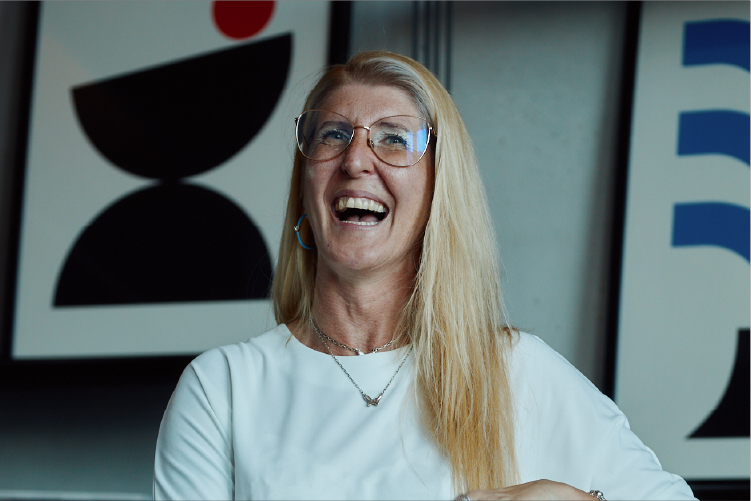
For Urška Jež, that moment came during the 2008–2012 financial crisis, when a company she led went bankrupt despite every effort to save it. She could have treated it as a failure to be minimized, a dark chapter to bury in the resume and never mention again. Instead, she treated it as revelation. In the worst professional experience of her life, she discovered something that would shape everything she built afterward: leadership isn’t about control. It’s about courage, empathy, and the willingness to stay human when it would be easier to hide.
That insight became the foundation of Transformation Lighthouse, the company she founded in 2012 in Slovenia. What started as a practical service, helping companies expand across borders, evolved into something far more ambitious: an ecosystem for human-centric transformation at scale. Today, the organization runs global accelerator programs, corporate innovation labs, leadership development journeys, and high-impact collaborations between startups, corporates, and investors across Europe, Latin America, and beyond.
Navigating Complexity: A Career Built on Movement
If there’s one word that captures Jež, it’s the one she chose herself: navigator. Navigator, because navigation is what you do when the terrain is uncertain, when maps are incomplete, and when the only reliable tool you have is a compass pointing toward something true.
“Looking back my life, both personal and professional, it has been about navigating complexity, uncertainty, and constant change,” she reflects.
She began her career young, in heavy industry and mechanical engineering, spaces dominated by men and governed by rigid hierarchies. These weren’t environments designed with people like her in mind. But she walked into those boardrooms anyway, curious and stubborn, and stayed long enough to understand how they really worked. She learned their language, their logic, their blind spots. And then she started asking the questions they weren’t ready to hear.
Engineering gave her structure, a way of thinking in systems. But leadership gave her something deeper: meaning. She realized early that technology alone never transforms anything. People do. And the biggest obstacles to transformation were never technical. They were emotional. Cultural. Human. That insight would become the backbone of her approach to change.
Her career has been fluid, moving between corporate environments, startups, accelerators, venture ecosystems, and global innovation programs. She’s designed innovation ecosystems across continents, each one teaching her the same essential lesson in a different language: systems don’t change people. People change systems. And sustainable transformation happens when you stop ignoring the humans in the equation.
“I don’t lead and live from a map,” she says. “I lead and live from a compass. When the fog rolls in, and it always does, I move anyway. Or even more so. Carrying rays of light for others to move as well. Hence also the Transformation Lighthouse.”
Crisis as Teacher: The Bankruptcy That Changed Everything
Most leaders talk about their successes. Urška talks about collapse. Specifically, the bankruptcy that happened during the 2008–2012 financial crisis, when a company she led went under despite every effort to save it. That experience didn’t just shape her leadership philosophy. It fundamentally rewired how she understands what leadership actually means.
“Crisis. If it can be a ‘who’. Without hesitation. Crisis has been my most honest teacher,” she says plainly. “Crisis doesn’t ask for permission. It doesn’t care about titles, gender, or carefully crafted strategies. Crisis strips away illusions. It forces clarity. It reveals who people truly are, leaders included. It strips everything down to what actually matters. When you stand in that space, where certainty disappears, you discover what kind of a person, a leader you truly are.”
“During one of the hardest periods of my career, when a company I led was facing bankruptcy, and indeed did go bankrupt after all, transparency and human connection became my strongest tools,” she recalls. “I worked side by side with employees, all of them, no exceptions, shared the reality openly, and experienced something rare: trust deepening under pressure. That period proved my belief that leadership is not about control, but about courage, empathy, and responsibility.”
It was a lesson she’d carry forward into everything she built afterward. Crisis reveals who you are. It strips away pretense. And when you choose to stay present, to remain human, to take responsibility instead of seeking distance, people remember. They trust you differently. They follow you not because you have all the answers, but because you’re willing to stand with them when there are none.
“In crisis you have to be there for people,” she says. “Not as authority. Not as control. But as presence, responsibility, and the willingness to stay human when it would surely be easier to hide behind distance.”
Building the Lighthouse: Transformation at Human Scale
Transformation Lighthouse didn’t emerge from a business school case study or a venture capital pitch deck. It came from a simple, stubborn observation: change fails when people are treated as an afterthought. When organizations implement transformation strategies without considering the humans who have to live with them, those strategies collapse. Not because the logic is wrong, but because the execution ignores reality.
Initially, the company focused on startup acceleration and corporate innovation programs. But over time, the mission evolved into something broader and more ambitious: connecting corporations, startups, investors, and ecosystems into living, breathing organisms of collaboration. Urška is a firm believer in collaboration. Not the buzzword kind, but the real, messy, difficult work of getting different entities to trust each other enough to move forward together.
“We can only grow faster and better if we connect and do things together,” she insists. That conviction shows up in everything Transformation Lighthouse does: accelerators like Hummelnest, corporate transformation programs, hackathons, leadership coaching, and venture partnerships. The company also includes BUMM Solutions, its software development arm. If Transformation Lighthouse is the reinvention coach and ecosystem builder, BUMM Solutions is the technology provider that turns ideas into working systems.
“Today, we don’t just run programs,” Jež explains. “I can say we architect environments where reinvention and innovation can happen sustainably with the ‘cross-pollination’ of different entities, through accelerators like Hummelnest, corporate transformation programs, hackathons, leadership coaching, and venture partnerships. We design environments where trust, experimentation, and transformation are possible. And we offer support and solutions in all the fields one company needs to go ahead and stay ahead.”
The mission hasn’t changed. Only the scale has. The goal remains the same: enable meaningful, human-driven transformation while embracing all the benefits that technology brings in service of human capacity.
The Challenge of Being Different: Credibility Through Results
Human-centric leadership wasn’t always welcomed. When Urška started talking about psychological safety, intuition, and empathy in boardrooms, eyebrows raised. These concepts were considered soft, impractical, irrelevant to the serious work of running businesses.
“Credibility. Speed. And being ‘too different.’ Being too human. Too intuitive. Too… many would say ‘crazy,'” she lists as her early hurdles. But she didn’t argue. She delivered results again and again. She invested time in people, fought company owners over the hours she put into building trust and psychological safety, and refused to back down.
Another challenge was scale. Saying yes to bold opportunities before the path was clear required resilience, adaptability, and trust in her team. She learned that clarity often comes after action, not before. But getting people to trust you on that uncertain path demands persistence, patience, and constant communication of the why behind the work.
Leadership Philosophy: Alignment Over Balance
Ask Urška about work-life balance and she’ll tell you she doesn’t believe in it. Not because she’s a workaholic, but because the concept itself is flawed. Balance implies two opposing forces in tension. But her work and her life aren’t separate entities fighting for her attention. They’re aligned. Transformation Lighthouse is her life’s work, but she never expects it to be her team’s life. She actively encourages rest, curiosity, joy, and boundaries, because exhausted people don’t change the world.
Personally, she resets through movement, nature, reflection, and curiosity. And walks with her dog. She listens closely to her body and mind, which tell her when it’s time to pause or change activity. “It tells the truth faster than my calendar ever could,” she notes.
Her approach to leadership responsibilities is similarly grounded in human reality. She expresses, “I see my key responsibilities as protecting humanity when efficiency threatens to erase it. Making intuitive decisions before data catches up. Reminding people that transformation is not a process; it’s a practice. That needs persistence and patience and repetition. A lot of repetition. And sometimes, or better often, to say ‘yes’ when the path isn’t visible yet.”
Besides, Urška also serves as a connector, bridging startups, corporates, investors, and cultures into functioning ecosystems.
The Future of Leadership: Feminine Energy and Self-Trust
When asked what quality every woman entrepreneur should possess, Urška unhesitantly says self-trust and feminine energy. The two are inseparable in her mind.
“The greatest challenge women leaders face today is not competence; it’s pressure to conform,” she argues. “Too many women adopt masculine leadership styles believing that they will be taken more seriously. Believing that masculine leadership style will grant legitimacy. It doesn’t. Authenticity does.”
The future of leadership, as she sees it, isn’t louder. It’s deeper. Women don’t need to become someone else to lead powerfully. They need to become more themselves. The future of leadership is human, collaborative, and emotionally intelligent. And women already carry these strengths. They just need to stop hiding them.
Looking Forward: Evolution Without Losing Direction
Talking about the future aspirations Urška says that over the next two years, Transformation Lighthouse will continue evolving into a self-correcting, globally connected organization. It will operate across digital and physical spaces, using digital tools where possible but staying human where necessary. The company will deepen its work with early-stage startups, venture ecosystems, and corporate partners who are ready for real transformation, not cosmetic change that looks good on strategy slides.
Urška’s role will remain the same: navigator. Sensing direction, opening doors for others to walk through, enabling them to lead. All with the support of her team, who she credits with teaching her the most on a day-to-day basis. “They see me in all my moments and decide to stand by me, even when I’m not all sunshine,” she acknowledges.
The company’s current focus includes growing connections and successful partnerships, driving genuine corporate change, and deepening integration of AI with human decision-making. They’re working on regenerative business models and cross-border startup-corporate collaboration, particularly across Europe and Latin America. The goal is to continue building ecosystems that value depth and impact over speed.
Advice for the Next Generation: Move Before You’re Ready
Urška’s advice to aspiring women leaders and entrepreneurs is deceptively simple. “Say yes before you feel ready,” she urges. “Trust your intuition, even if and when it scares you. Build relationships before strategies. And remember: if you don’t go, you don’t have a story.”
Impact, she insists, is not created by perfection and certainty. It’s created by courage. Courage to move when the fog rolls in. Courage to stay human when systems demand efficiency. Courage to trust your compass when everyone else is demanding a map.
The Lighthouse Effect
Urška Jež didn’t set out to revolutionize leadership or build an innovation ecosystem spanning continents. She set out to solve a problem: why do transformations fail? And the answer she found, through crisis and collapse and rebuilding, was that transformations fail when they forget the humans at the center. When they treat people as variables in a strategy instead of the entire point of the exercise.
What makes her work powerful isn’t that she rejects structure or strategy or systems thinking. She was trained as an engineer; she understands how systems work. What makes her work powerful is that she refuses to let systems erase the humans inside them. She holds space for both. Logic and intuition. Structure and creativity. Efficiency and humanity. She navigates between them, carrying light through the fog, showing others that it’s possible to move forward even when the path isn’t clear.
That’s what a lighthouse does. It doesn’t calm the storm. It doesn’t promise safety. It marks the rocks and shows the way through. And for leaders trying to navigate the turbulence of constant change, uncertain markets, and accelerating technology, that guidance is worth everything.
Urška has learned to trust herself when certainty disappears. She’s learned that crisis reveals truth faster than success ever will. She’s learned that authenticity matters more than conformity, that courage outlasts perfection, and that the best leaders don’t have all the answers. They just know how to keep moving when everyone else freezes.
She doesn’t lead from a map. She leads from a compass. And when the fog rolls in, as it always does, she moves anyway. Carrying rays of light for others to move as well.
Quotes:
“Systems don’t change people -people change systems.”
“The greatest challenge women leaders face today is not competence- it’s pressure to conform. Too many women adopt masculine leadership styles believing that they will be taken more seriously. Believing that masculine leadership style will grant legitimacy. It doesn’t. Authenticity does.”
“Impact is not created by perfection and certainty – it’s created by courage.”