
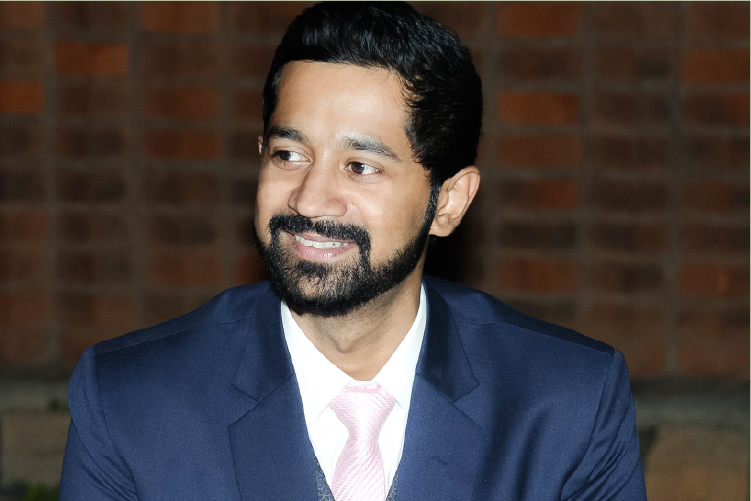
By Nigel Mathew, Co-Founder & CEO, Tenori Labs
There’s a conversation happening in boardrooms right now. It sounds something like this: “We need an AI strategy.” And the response, almost everywhere, is the same – a chatbot on the website, a dashboard with some automation, maybe a pilot with a large language model that nobody quite knows how to measure.
That’s not an AI strategy. That’s anxiety dressed up as action.
I say this not to be contrarian, but because I’ve spent years in advertising and communications, understanding how brands speak, how audiences listen, and why the gap between the two costs businesses more than they realise. I’ve watched the AI wave arrive in India with enormous promise and enormous noise.
And somewhere in all that noise, the most important insight is getting buried.
India doesn’t primarily communicate in text. India talks.
Over 1.4 billion people. Roughly 125 million speak English with any real proficiency. That leaves over a billion people conducting their daily lives buying products, learning new skills, resolving complaints, applying for loans, in one of 22 constitutionally recognised languages, or one of hundreds of dialects beneath them.
Now consider how most enterprise AI is being deployed today. Text based. English first. Designed for a user who can type a query into a box and read a structured response back.
That is not most of India. And that gap between how AI is being built and who India actually is – that is where the real opportunity lives.
The answer is voice. Multilingual, culturally aware, conversational voice AI that meets people where they already are.
Three industries are about to feel this most acutely.
Education
India’s edtech sector had a reckoning. The gold rush slowed. Companies that built beautiful apps for English speaking urban students discovered that retention falls off a cliff when the product doesn’t speak the student’s language, not just literally, but contextually.
Think about a first generation learner in a Tier 3 town trying to navigate an upskilling platform. The content might be excellent. But if the support experience, onboarding, doubt resolution, progress check-ins is a cold chatbot in English, you’ve lost them before the second week.
Voice AI changes this. Imagine a student in rural Maharashtra being able to ask questions in Marathi and get clear, conversational responses. Not robotic prompts, but actual dialogue that understands intent. Imagine an AI powered academic assistant that checks in proactively, flags disengagement, and routes the right intervention at the right moment.
That is not futuristic. That is deployable right now. And for edtech companies trying to crack retention beyond metro India, it could be the difference between a product people finish and one they abandon after day three.
D2C Marketplaces
The D2C boom in India is real. Hundreds of brands have built genuinely great products. But most of them hit the same wall: post purchase customer experience at scale.
Returns. Exchange requests. Delivery complaints. Product queries. Loyalty program questions. These are not complicated interactions, but they are high volume, and they are the moments that determine whether a customer comes back or leaves a one star review.
Right now, most D2C brands are handling this with a patchwork of WhatsApp Business, human agents, and basic bots that frustrate more than they help. The better funded ones have call centres. The rest are drowning.
Voice AI built for regional languages means a customer from Jaipur who bought a skincare product can call, speak in Hindi, and get a resolution. Not a ticket number, not a call-back promise, an actual resolution in under two minutes. The brand looks professional. The customer feels heard. And the cost per interaction drops dramatically compared to a human agent.
For D2C founders, this is not a luxury upgrade. It is a growth lever. Customer retention is the only sustainable path to profitability, and you cannot retain customers you cannot communicate with effectively.
Healthcare
This is perhaps the most important use case of all, because the consequences of poor communication here are not just commercial. They are human.
India has a doctor to patient ratio that the World Health Organisation considers critically low. Primary healthcare infrastructure in rural and semi urban areas is stretched to breaking point. And when a patient finally gets access to a clinic or a telemedicine service, the experience often hits a language wall that no amount of clinical expertise can bridge.
A patient in Odisha who cannot describe her symptoms clearly because the interface only supports English is not being served by modern healthcare. She is being failed by it.
Voice AI in healthcare is not about replacing doctors. It is about removing every barrier that exists before the doctor is even involved. Appointment scheduling in the patient’s language. Symptom triage that actually listens and responds conversationally. Medication reminders and follow up calls that feel like a check in from someone who cares, not an automated system clearing a queue.
For hospital networks, insurance providers, and telemedicine platforms trying to genuinely reach Bharat, this kind of infrastructure is not optional. It is foundational. The patient who feels understood is the patient who shows up, follows through, and trusts the system. That is not just better healthcare. It is better outcomes.
The Gap Nobody Talks About
Here is the part that gets missed in most of the AI conversation: the technology is not the hard part anymore. Deployment is.
Too many AI companies are selling capability demos. What enterprises actually need is a partner who understands their operational reality, their compliance requirements, their existing systems, their customer base, and the complexity of serving India’s diversity at scale.
The gap between a great demo and a working deployment is where most enterprise AI initiatives quietly fail. The pilot impresses the boardroom. Six months later, the system is handling a fraction of projected volume, because nobody thought seriously about the last mile.
From where I sit, building enterprise voice AI for Indian and global markets, I see this every day. And I’ve come to believe that the companies who will define India’s AI decade are not the ones with the most sophisticated models. They are the ones who solve for real deployment in real languages, for real users, in real operating conditions.
India is not behind on AI. India is actually perfectly positioned, if we are willing to build for India specifically rather than adapt solutions designed for very different markets.
The revolution will not be typed. It will be spoken in Hindi, in Tamil, in Marathi, in Bengali, in Odia, in whatever language the person on the other end of the line uses to describe their life.
The question is whether Indian enterprises are ready to listen.
About Author:
Nigel Mathew is the Co-Founder & CEO of Tenori Labs, an enterprise multilingual voice AI company building AI powered communication infrastructure across Indian and global markets. He is also the Executive Director of Disha Communications, one of India’s established full service advertising agencies running for four decades.