

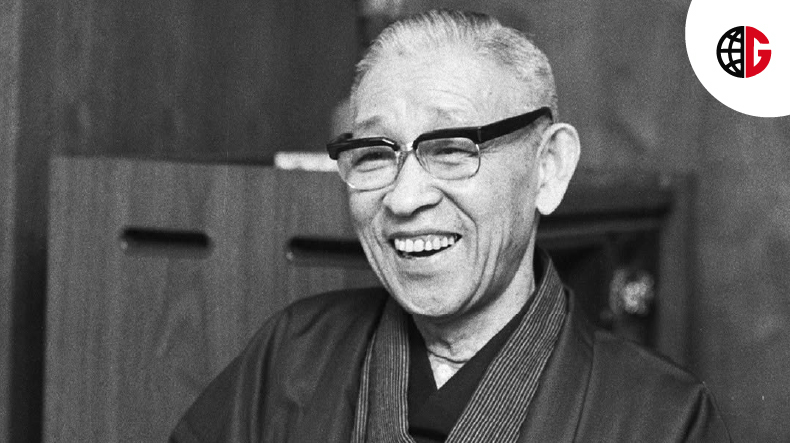
From Poverty to Global Leadership: The Inspiring Journey of Konosuke Matsushita
In the history of global business, few entrepreneurs have left a legacy as profound as Konosuke Matsushita. Revered across Japan as the “God of Management,“ Matsushita transformed a small electrical socket workshop into one of the world’s most respected consumer electronics companies, Panasonic. His journey from extreme poverty to becoming one of the most influential business leaders of the twentieth century remains a timeless example of resilience, innovation, and visionary leadership.
More than just an entrepreneur, Matsushita was a philosopher of business who believed that companies exist to serve society. His management principles continue to influence executives, entrepreneurs, and organizations worldwide, decades after his passing.
From Poverty to Possibility: The Making of a Future Business Legend
Konosuke Matsushita was born on November 27, 1894, in Wakayama Prefecture, Japan. Although his family initially enjoyed a comfortable lifestyle through farming and land ownership, financial disaster struck when his father made unsuccessful speculative investments.
The family lost nearly all their wealth, forcing young Matsushita to confront poverty at an early age. At just nine years old, he left school and moved to Osaka to work as an apprentice in a bicycle shop. While most children his age were focused on education, Matsushita was learning the realities of hard work and business survival.
These difficult experiences shaped his character. Rather than becoming discouraged by hardship, he developed an unwavering determination to create a better future. The lessons he learned during these years would later form the foundation of his management philosophy.
Discovering Opportunity in Electricity
As Japan entered an era of rapid modernization, electricity was beginning to transform homes and industries. Recognizing the enormous potential of this emerging sector, Matsushita secured employment with the Osaka Electric Light Company.
Working as an electrical inspector, he gained valuable technical knowledge and firsthand exposure to the growing demand for electrical products. During this period, he observed shortcomings in existing electrical equipment and began developing ideas for improved products.
One invention in particular—a redesigned electric socket—convinced him that he could build a successful business of his own. Despite having limited financial resources, he was determined to pursue his vision.
Founding Matsushita Electric in 1918
In 1918, at just 23 years old, Konosuke Matsushita left his stable job and founded Matsushita Electric Housewares Manufacturing Works, the company that would eventually become Panasonic.
The startup began in a modest rented home in Osaka. The company’s initial workforce consisted of only three people: Matsushita, his wife Mumeno, and his brother-in-law.
The early days were incredibly challenging. Orders were scarce, cash flow was limited, and the young company struggled to survive. At one point, the business came dangerously close to bankruptcy.
However, Matsushita’s perseverance paid off when the company received a large order for electric fan insulating plates. The contract provided enough revenue to stabilize operations and fund future growth.
This breakthrough marked the beginning of an extraordinary entrepreneurial journey.
Innovation as a Growth Strategy
Unlike many manufacturers of his era, Matsushita believed innovation should focus on practical solutions that improved everyday life.
His company introduced numerous affordable electrical products designed specifically for ordinary households. Rather than targeting only wealthy consumers, Matsushita sought to make modern conveniences accessible to the broader population.
One of his earliest successes was a battery-powered bicycle lamp known as the “National Lamp.” At a time when bicycle lamps were unreliable and short-lived, Matsushita’s version offered superior performance and durability.
Initially, retailers doubted the product. To overcome skepticism, Matsushita distributed sample units free of charge. The lamps quickly proved their quality, leading to widespread demand and establishing the company’s reputation for reliability.
This customer-first approach became a hallmark of his business strategy.
Building a Trusted Brand
Throughout the 1920s and 1930s, Matsushita Electric expanded rapidly.
The company introduced a growing portfolio of products, including:
- Electrical sockets
- Bicycle lamps
- Radios
- Household appliances
- Batteries
- Heating equipment
Matsushita understood that consumers were not merely buying products—they were buying trust.
He emphasized quality control, fair pricing, and customer satisfaction long before these concepts became standard business practices. This commitment enabled the company to build strong relationships with both retailers and consumers.
His philosophy was simple: if products genuinely improved people’s lives, business success would naturally follow.
Leadership During Difficult Times
The outbreak of World War II created significant challenges for Japanese businesses. Like many manufacturers, Matsushita Electric had to adapt to wartime conditions and economic uncertainty.
Following Japan’s defeat in 1945, the company faced one of the most difficult periods in its history. Economic devastation, resource shortages, and occupation policies threatened its survival.
Many executives might have abandoned their ambitions under such circumstances, but Matsushita remained focused on rebuilding.
He worked tirelessly to preserve jobs, restore production, and position the company for long-term recovery. His leadership during these years reinforced employee loyalty and strengthened the organization’s culture.
The post-war period ultimately became a launching pad for future growth.
The Rise of Panasonic
As Japan’s economy experienced rapid expansion during the 1950s and 1960s, Matsushita Electric emerged as a major force in consumer electronics.
The company expanded beyond Japan and entered international markets with products known for quality, durability, and affordability.
The Panasonic brand gradually became synonymous with innovation across categories such as:
- Televisions
- Audio systems
- Home appliances
- Batteries
- Video equipment
- Industrial electronics
By focusing on technological advancement while maintaining competitive pricing, Panasonic successfully challenged established Western manufacturers.
The company’s global expansion transformed it into one of the most recognized electronics brands in the world.
Why He Was Called the “God of Management”
Konosuke Matsushita earned the nickname “God of Management” not merely because of business success, but because of his revolutionary management philosophy.
He believed that:
Businesses Exist to Serve Society
Matsushita argued that profits should be viewed as a reward for serving customers effectively. Companies, in his view, had a social responsibility to improve people’s lives.
Employees Are Partners
Long before employee engagement became a popular management concept, Matsushita treated workers as valuable stakeholders rather than disposable labor.
He invested heavily in employee development and encouraged personal growth.
Continuous Improvement Is Essential
He advocated constant learning and innovation, emphasizing that organizations must adapt to changing customer needs and market conditions.
Leadership Requires Humility
Matsushita believed leaders should listen carefully, admit mistakes, and remain committed to learning throughout their careers.
These principles continue to be studied in business schools worldwide.
Establishing the Matsushita Institute of Government and Management
In 1979, Matsushita founded the Matsushita Institute of Government and Management, reflecting his commitment to nurturing future leaders.
The institution was designed to develop ethical and capable leaders for public service and business. Matsushita believed Japan’s future depended on visionary leadership grounded in integrity and social responsibility.
This initiative demonstrated that his interests extended far beyond corporate success.
Management Philosophy That Changed Business Thinking
Konosuke Matsushita authored numerous books and delivered influential lectures on leadership and management.
Among his most enduring beliefs were:
- Success comes from serving society.
- Challenges create opportunities for growth.
- Long-term thinking is more valuable than short-term profits.
- Human potential is an organization’s greatest asset.
- Leadership requires both vision and compassion.
Many modern management practices—from employee empowerment to stakeholder-focused leadership—reflect ideas that Matsushita championed decades earlier.
Global Impact and Lasting Legacy
By the time Konosuke Matsushita stepped back from active management, Panasonic had become a global powerhouse with operations spanning numerous countries.
His influence extended beyond electronics manufacturing. Business leaders around the world studied his methods for building sustainable organizations and fostering strong corporate cultures.
Today, Panasonic remains one of Japan’s most recognized multinational corporations, continuing the legacy established by its founder more than a century ago.
Matsushita’s teachings remain relevant in an era defined by technological disruption, globalization, and rapid change.
Key Lessons from Konosuke Matsushita’s Success Story
1. Adversity Can Become an Advantage
Growing up in poverty taught Matsushita resilience, discipline, and resourcefulness—qualities that later fueled his entrepreneurial success.
2. Innovation Should Solve Real Problems
His products succeeded because they addressed genuine consumer needs rather than chasing trends.
3. Serve Society First
Matsushita believed that businesses thrive when they create meaningful value for customers and communities.
4. Invest in People
Employees are an organization’s most important asset, and their growth contributes directly to long-term success.
5. Think Beyond Profits
Sustainable success comes from balancing financial performance with social responsibility.
Outlook
The success story of Konosuke Matsushita is far more than the tale of a business founder. It is the story of a visionary who transformed personal hardship into extraordinary achievement and built a company that changed the way people live.
From a small workshop in Osaka to the creation of a global electronics giant, Matsushita demonstrated that determination, innovation, and a commitment to serving society can overcome even the greatest obstacles. His leadership principles continue to inspire entrepreneurs, executives, and aspiring leaders across the world.
More than a century after founding Panasonic, Konosuke Matsushita remains one of the most respected figures in business history—a true pioneer whose legacy extends far beyond consumer electronics and into the very foundations of modern management.