

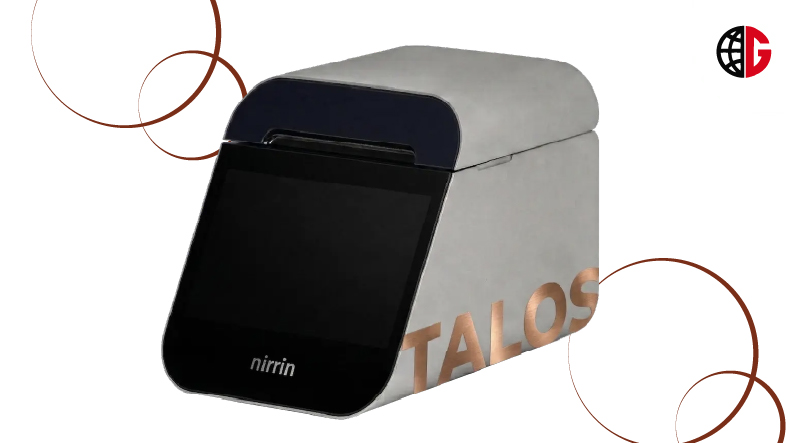
Collaboration Aims to Accelerate Adoption of TALOS™ Protein Quantitation System Across Japan’s Growing Biopharmaceutical Industry
In a significant move that underscores the growing demand for advanced analytical technologies in life sciences, Nirrin Technologies has announced a strategic partnership with S.T. Japan has appointed the company as the exclusive distributor of its innovative TALOS™ protein quantitation system in Japan. The collaboration marks an important milestone for both organizations as they work to deliver next-generation protein measurement solutions to one of the world’s most sophisticated biopharmaceutical markets.
The agreement will enable Japanese researchers, biopharmaceutical manufacturers, and process development teams to gain direct access to TALOS technology through local evaluation and technical support services. As part of the partnership, S.T. Japan will acquire a TALOS demonstration system, creating a dedicated platform for potential customers to assess the technology using their own samples, processes, and laboratory workflows before implementation.
Strengthening Innovation in Japan’s Biopharmaceutical Landscape
Japan has long been recognized as a global leader in pharmaceutical research, biotechnology innovation, and advanced manufacturing. As the country’s biopharmaceutical sector continues to expand, the demand for efficient, reliable, and scalable analytical tools has become increasingly important.
By partnering with S.T. In Japan, Nirrin Technologies is positioning itself to serve this evolving market more effectively. The collaboration combines Nirrin’s breakthrough protein quantitation technology with S.T. Japan’s extensive experience in introducing and supporting advanced scientific instrumentation throughout the Japanese life sciences community.
According to Nirrin Technologies CEO Dr. Bryan Hassell, Japan represents a critical market for the company’s growth strategy due to its strong concentration of pharmaceutical innovation and manufacturing expertise. He highlighted S.T. Japan’s proven track record in helping customers successfully adopt sophisticated analytical technologies through technical knowledge and customer-focused support.
TALOS™: A New Approach to Protein Quantitation
Protein quantitation is a fundamental step in biopharmaceutical research, drug development, process optimization, and manufacturing quality control. However, traditional measurement methods often involve complex workflows, calibration requirements, dilution steps, and manual adjustments that can slow productivity and introduce variability.
Nirrin Technologies developed TALOS™ to address these challenges through a fundamentally different approach.
Unlike conventional variable pathlength ultraviolet (UV) methods, TALOS utilizes a fixed-path near-infrared (NIR) measurement technique that simplifies the protein quantitation process. By directly measuring absorption from the peptide backbone, the system can rapidly determine protein concentrations across a broad range without requiring sample dilution, protein-specific calibration models, extinction coefficient calculations, or manual pathlength modifications.
This streamlined workflow offers researchers and manufacturers an opportunity to reduce operational complexity while improving consistency and efficiency.
Driving Efficiency Across the Drug Development Lifecycle
The advantages of TALOS extend beyond laboratory convenience. As biopharmaceutical companies seek to accelerate development timelines while maintaining strict quality standards, analytical technologies that simplify workflows and generate reliable results are becoming increasingly valuable.
According to Takao Nakagawa, President of S.T. Japan, TALOS represents a meaningful advancement in protein analysis by delivering rapid and reproducible measurements through an easy-to-use platform. These capabilities make the system particularly attractive for modern bioprocessing environments, where speed, consistency, and scalability are essential.
From early-stage process development and analytical research to regulated GMP manufacturing operations, TALOS has the potential to support a wide range of applications across the entire biopharmaceutical value chain.
Nakagawa emphasized that Japan’s expanding biopharmaceutical industry is actively seeking technologies that improve efficiency and reduce workflow complexity. He noted that TALOS could play a key role in helping organizations optimize operations and accelerate innovation across drug development and manufacturing.
Local Demonstration Capability to Accelerate Adoption
A notable aspect of the partnership is the establishment of local demonstration and evaluation capabilities within Japan. The dedicated TALOS demonstration system will allow scientists and manufacturing teams to test the technology directly using their own materials and protocols.
This hands-on evaluation approach is expected to accelerate adoption by providing prospective users with real-world performance data relevant to their specific applications. It also enables S.T. Japan provides localized technical support, training, and consultation services, helping customers seamlessly integrate the technology into existing workflows.
Expanding Opportunities for Analytical Innovation
As the global biopharmaceutical sector continues to invest heavily in biologics, cell therapies, and next-generation medicines, demand for accurate and efficient analytical tools is expected to rise significantly. Partnerships such as the one between Nirrin Technologies and S.T. Japan highlights the industry’s growing focus on technologies that can simplify complex laboratory processes while maintaining scientific rigor.
With TALOS now positioned for broader adoption in Japan, the collaboration could contribute to enhanced productivity, faster decision-making, and improved operational efficiency for researchers and manufacturers across the country’s rapidly evolving life sciences ecosystem.
Outlook
The exclusive distribution agreement between Nirrin Technologies and S.T. Japan represents more than a commercial partnership—it signals the introduction of a potentially transformative protein quantitation technology into one of the world’s most advanced biopharmaceutical markets. By combining innovative near-infrared measurement capabilities with localized expertise and customer support, the two companies are poised to help Japanese biopharma organizations streamline workflows, improve analytical consistency, and accelerate innovation in the years ahead.
Read more: Singapore Strengthens AI Governance with New Agentic AI Framework Update