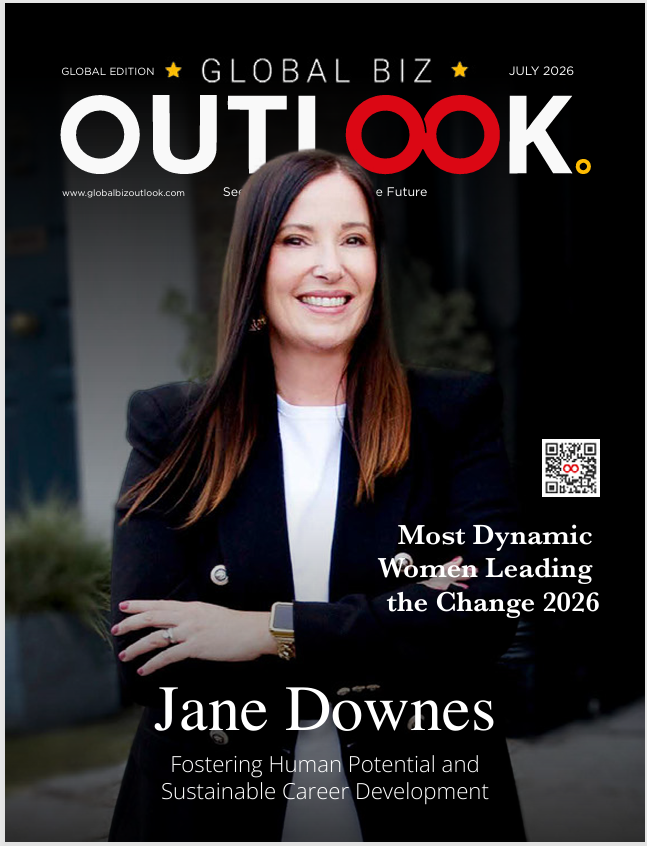


By Dr. Carolyn Mason Parker, Executive Head, leading strategic initiatives in learning innovation, organizational culture, governance, and future-ready education.
The global conversation around artificial intelligence often begins with technology. Organizations discuss platforms, tools, infrastructure, cybersecurity, and investment costs. Schools debate which AI applications students should use and how educators should respond. Boards ask about readiness, while leaders search for the next competitive advantage.
Yet after two years of working with AI across international education, I have become convinced that the organizations most likely to succeed are not those with the best technology. They are those with the strongest learning cultures.
AI readiness is not fundamentally a technology strategy. It is a people strategy.
This distinction matters because many organizations are making the same mistake. They assume that purchasing access to AI tools will automatically result in transformation. Research from McKinsey suggests that while AI adoption is increasing rapidly, the organizations seeing the greatest value are those that invest equally in workforce development, leadership capability, and organizational change rather than technology alone.
As an Executive Head overseeing two International Baccalaureate (IB) schools in Thailand, I see this challenge every day. The question is no longer whether AI will change education, business, or society. It already has. The real question is whether our people are ready to adapt, learn, and thrive alongside it.
The Lesson Schools Can Teach Business
Education has spent decades learning how people respond to change.
Every major innovation in schools follows a familiar pattern. Initial excitement is often followed by uneven adoption, resistance, and inflated expectations. Over time, organizations discover that success depends less on the technology itself and more on how people understand, use, and integrate it into their daily work.
AI is no different.
At KIS International Schools, we have deliberately avoided approaching AI as a technology initiative. Instead, we have framed it as a learning initiative. This aligns closely with the philosophy of the International Baccalaureate, which emphasizes inquiry, critical thinking, reflection, ethical decision-making, and lifelong learning.
The IB Learner Profile was not designed with artificial intelligence in mind, yet its attributes have never been more relevant. In an AI-enabled world, being a thinker, communicator, principled decision-maker, and reflective learner may matter even more than simply possessing knowledge.
AI can access information instantly. Human value lies in our ability to evaluate it, challenge assumptions, ask better questions, apply judgment, and act ethically.
The AI Skills Gap Is Really a Confidence Gap
One of the most concerning trends emerging across industries is the growing gap between leadership ambition and employee readiness.
Many organizations have invested heavily in AI tools but far less in helping their people understand how to use them effectively. According to the Microsoft and LinkedIn Work Trend Index, leaders increasingly expect employees to use AI, yet many report receiving little formal training or guidance.
This creates what I would describe as an AI confidence gap.
While some individuals embrace AI quickly, many others worry about changing expectations, job displacement, or simply looking incompetent while learning something new. The challenge is often not capability but confidence.
In schools, we know that learning flourishes when people feel psychologically safe enough to experiment, make mistakes, and ask questions. Adults are no different. Google’s Project Aristotle identified psychological safety as the most important characteristic of high-performing teams.
Organizations that create cultures of curiosity, experimentation, and continuous learning are therefore far more likely to realize the benefits of AI than those focused solely on compliance or productivity.
Why Leadership Matters More Than Ever
One of the most common misconceptions about AI readiness is that it belongs to the technology department.
In reality, AI readiness is a leadership responsibility.
Leaders determine whether AI is viewed as a threat or an opportunity. They establish expectations around ethics, governance, and professional learning. Most importantly, they model learning themselves.
In schools and organizations alike, people quickly notice whether leaders are willing to learn alongside them. Leaders who demonstrate curiosity, humility, and adaptability create conditions where innovation can flourish.
The World Economic Forum consistently identifies adaptability, lifelong learning, and leadership agility among the most important skills for future workforce success. The most effective leaders of the AI era may not be those who know the most about technology, but those who create environments where others feel empowered to learn and adapt.
Beyond Efficiency: Preserving What Makes Us Human
Organizations must also confront a broader question: What is the purpose of AI?
Too often, the conversation focuses exclusively on efficiency, lower costs, and greater productivity. These outcomes matter, but if efficiency becomes the sole objective, organizations risk overlooking their most important asset: people.
In education, our purpose is not simply to deliver information more efficiently. Our purpose is to develop human potential. The same principle applies in business.
The most successful organizations will not use AI to replace human judgment, creativity, empathy, and relationships. They will use AI to enhance them. Deloitte’s Human Capital Trends research suggests that organizations create the greatest value when technological capability is combined with uniquely human skills.
At KIS International Schools, this philosophy underpins our approach to learning. We are exploring how AI can help students and educators work more effectively while continuing to prioritize the human skills that define meaningful learning and leadership.
Preparing for an Uncertain Future
No organization can predict exactly what work will look like in five or ten years. Jobs will evolve, new roles will emerge, and today’s cutting-edge technologies will become commonplace. This uncertainty understandably creates anxiety for educators, parents, and business leaders alike. Yet it is also the strongest argument for investing in human capabilities rather than narrow technical skills.
In schools, we already see this reality. Students use AI to support research, generate ideas, and receive feedback. Yet the students who benefit most are rarely those who simply know how to use the tool. They are the students who ask thoughtful questions, evaluate responses critically, identify bias, connect ideas, and know when human judgment matters.
The same principle applies in the workplace. Employees who can adapt, collaborate, think critically, and make ethical decisions will remain valuable long after any particular platform or software has been replaced.
This is why the International Baccalaureate’s emphasis on inquiry, reflection, communication, and principled action feels more relevant than ever. At KIS International Schools, we increasingly see our role not as preparing students for specific jobs, but for a lifetime of learning.
The World Economic Forum’s Future of Jobs Report predicts that analytical thinking, resilience, creativity, curiosity, and lifelong learning will continue to rise in importance across almost every industry.
The organizations that thrive in the coming decade will not necessarily be those with the most advanced technology. They will be those that build cultures where learning is expected, experimentation is encouraged, and people are supported to grow alongside new technologies. AI may reshape the way we work, but the defining advantage will remain our capacity to learn, adapt, and apply human judgment in an increasingly complex world.