

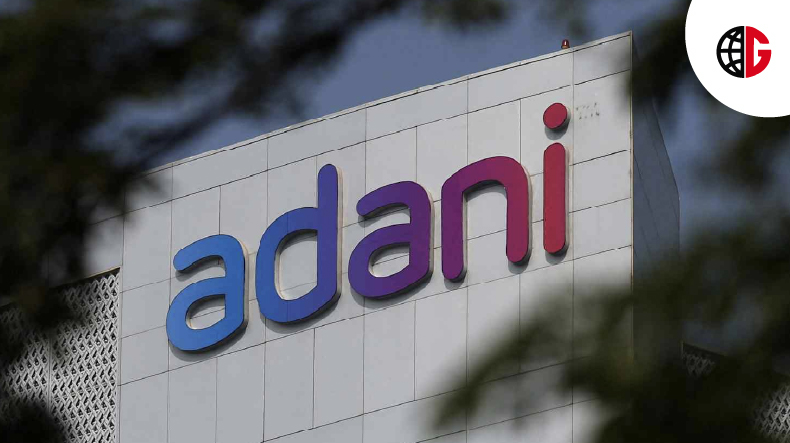
Gautam Adani Unveils Bold Digital Infrastructure Vision Combining AI, Data Centres, and Nuclear Power
India’s digital transformation journey is accelerating, and the Adani Group is positioning itself at the center of this evolution. Chairman Gautam Adani has unveiled an ambitious roadmap that aims to reshape the country’s digital infrastructure landscape, with a target of building 3 gigawatts (GW) of data centre capacity by 2030 and expanding into nuclear energy to meet the growing power demands of the AI era.
Speaking at the company’s Annual General Meeting (AGM), Adani highlighted that the future of business growth will be driven by two interconnected forces—robust infrastructure and intelligent technologies. As artificial intelligence continues to transform industries worldwide, the conglomerate is preparing to leverage its vast expertise across energy, logistics, transportation, and industrial sectors to support India’s emerging digital economy.
Data Centres Become the Next Growth Frontier
With AI applications generating unprecedented demand for computing power and data storage, Adani Group is making a significant bet on digital infrastructure. The company’s goal of achieving 3 GW of data centre capacity by 2030 represents one of the most aggressive expansion plans in India’s rapidly growing data centre market.
A key component of this strategy is a major partnership with Google for a gigawatt-scale data centre project in the coastal city of Visakhapatnam. The project is expected to strengthen India’s ability to support large-scale AI workloads, cloud services, and next-generation digital applications.
According to Adani, data centres are no longer just technology assets—they are becoming critical national infrastructure that will support economic growth, innovation, and technological sovereignty. As AI adoption accelerates across industries, the demand for reliable, scalable, and energy-efficient computing infrastructure is expected to surge dramatically.
AI and Infrastructure: The Twin Engines of Future Growth
The Adani Group’s long-term strategy revolves around what Adani described as the dual pillars of “accelerating infrastructure” and “leveraging intelligence.” This approach reflects a growing recognition that physical assets and digital intelligence must work together to drive competitiveness in the modern economy.
The conglomerate believes that integrating AI capabilities into its existing businesses can unlock new efficiencies, improve decision-making, and enhance operational performance. By combining digital technologies with its extensive infrastructure network, the company aims to create a future-ready ecosystem capable of supporting India’s ambitions as a global technology powerhouse.
Industry experts increasingly view AI infrastructure as a strategic asset, and Adani’s latest announcement signals the group’s intent to become a major player in this rapidly evolving sector.
Nuclear Power Emerges as a Strategic Energy Solution
Recognizing the enormous energy requirements of data centres and AI-driven computing, Adani also announced the group’s entry into the nuclear energy sector through Adani Atomic Energy.
The company plans to develop 10 GW of nuclear power capacity by 2035, a move designed to ensure long-term access to stable, low-carbon electricity for future digital infrastructure projects.
As AI systems become more computationally intensive, the relationship between energy production and data processing is becoming increasingly important worldwide. Global technology companies and infrastructure providers are actively exploring nuclear energy as a reliable power source capable of supporting large-scale AI operations while helping meet sustainability goals.
For Adani Group, the expansion into nuclear energy represents a strategic effort to align power generation with the growing needs of India’s digital economy.
Preparing the Organization for the AI Era
Beyond investing in technology and infrastructure, Adani emphasized the importance of organizational transformation. The group is restructuring its operations through a three-tier management framework designed to accelerate decision-making, improve execution, and enhance agility in an increasingly digital business environment.
The company is also investing heavily in workforce development, rolling out extensive training programs that deliver thousands of learning hours focused on future technologies and advanced digital skills.
This focus on talent development reflects the broader challenge facing businesses worldwide: ensuring employees are equipped to thrive in an AI-driven economy where technology adoption is advancing at unprecedented speed.
A Vision for India’s Digital Future
Adani Group’s latest announcements underscore a broader vision that extends beyond traditional infrastructure development. By combining large-scale data centres, artificial intelligence capabilities, advanced energy solutions, and workforce transformation, the conglomerate is positioning itself to play a pivotal role in India’s next phase of economic growth.
As demand for AI computing, cloud infrastructure, and digital services continues to rise, the group’s investments could help create the technological backbone needed to support India’s ambitions of becoming a global digital and innovation hub.
With billions of dollars expected to flow into AI and digital infrastructure over the coming decade, Adani’s strategy signals that the future of infrastructure may no longer be defined solely by roads, ports, and power plants—but also by data, intelligence, and the energy required to power them.
Read more: OpenAI Expands Daybreak Initiative with GPT-5.5-Cyber to Accelerate Global Vulnerability Remediation