

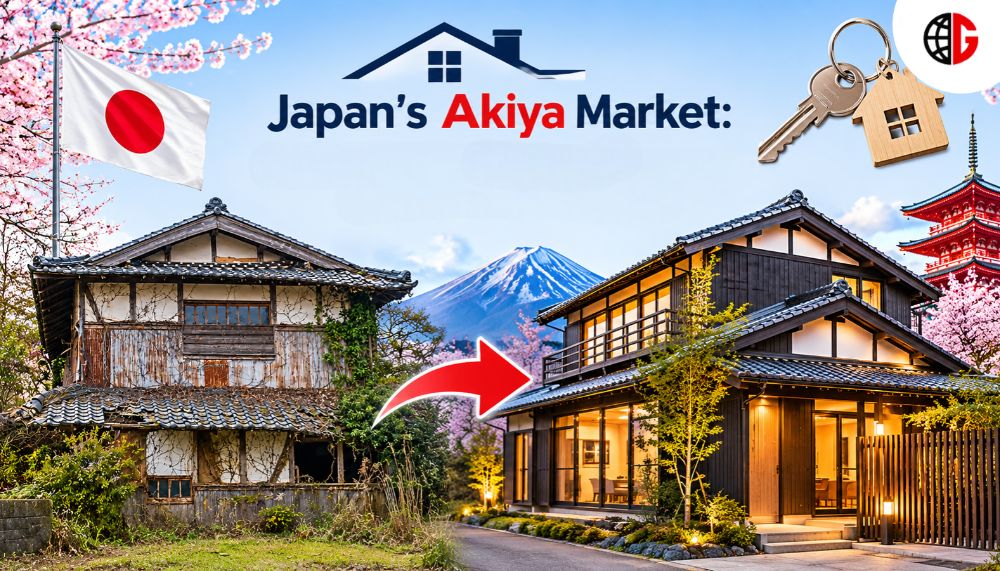
Discover how Japan’s abandoned akiya houses are becoming luxury rentals, creating new opportunities in real estate, tourism, and heritage preservation.
Japan is facing an unusual real estate paradox. Across its cities, towns, and countryside, thousands of homes stand empty, some abandoned for years, while demand for distinctive accommodation, traditional Japanese experiences, and premium holiday rentals continues to attract travellers from around the world. These vacant properties, commonly known as akiya, are increasingly becoming the focus of a new wave of real estate entrepreneurship.
What was once seen as a symbol of population decline and economic uncertainty is increasingly viewed as an opportunity for reinvention. Old wooden houses, traditional farmhouses, and neglected residential properties are becoming boutique holiday homes, luxury retreats, designer villas, and high-end rental accommodations.
This transformation is about more than renovating ageing buildings. It represents a shift in how Japan’s unused housing stock can contribute to regional tourism, local economies, property investment, and cultural preservation. For entrepreneurs and investors willing to understand the complexities of the Japanese property market, akiya could offer an unconventional route into the country’s evolving hospitality industry.
Understanding the Akiya Phenomenon: Why Are So Many Japanese Houses Empty?
The term akiya translates to “empty house” in Japanese. It describes residential properties that are unoccupied, often because their owners have relocated, passed away, moved into care facilities, or inherited homes that younger family members no longer wish to maintain.
The growing number of akiya is closely connected to Japan’s demographic and economic changes. An ageing population, declining birth rate, migration towards major cities, and shrinking rural communities have collectively contributed to an expanding supply of unused residential properties. In many smaller towns, younger generations have moved to urban centres such as Tokyo, Osaka, and Yokohama in search of education and employment, leaving family homes behind.
The scale of the issue is significant. According to Japan’s Statistics Bureau, the country’s 2023 Housing and Land Survey recorded approximately 9.02 million vacant homes, representing 13.8% of the country’s total housing stock. Both figures marked record highs. The number had increased by more than 500,000 compared with the 2018 survey.
However, the statistics require an important distinction. Not every vacant house is abandoned or available for purchase. Some are second homes, some are being rented or sold, and others remain tied up in inheritance or ownership arrangements. The 2023 survey identified approximately 3.86 million homes in the category excluding properties intended for rent, sale, or use as second homes. These are particularly relevant to discussions about unused residential assets.
For local communities, abandoned properties can create several challenges. Poorly maintained buildings may deteriorate, attract pests, become safety hazards, and negatively affect surrounding neighbourhoods. Owners may struggle with maintenance expenses, property taxes, and the difficulty of finding buyers.
Yet, what creates a problem for one generation can become an opportunity for another. Instead of allowing these homes to deteriorate further, property entrepreneurs are exploring ways to restore them, preserve their architectural identity, and introduce them to a new market.
This is where the growing interest in Akiya Focus becomes relevant: looking beyond the low purchase price and recognising the potential of neglected Japanese properties as hospitality and lifestyle assets.
From Neglected Properties to Premium Hospitality Experiences
The transformation of an akiya into a luxury rental is not simply a matter of repainting walls, replacing furniture, and listing the property online. It requires a carefully developed vision that combines architectural restoration, contemporary comfort, and an understanding of what modern travellers value.
Traditional Japanese homes, particularly kominka (historic traditional houses), offer architectural features that are difficult to reproduce in modern developments. Exposed wooden beams, sliding shoji screens, tatami flooring, tiled roofs, internal courtyards, and beautifully proportioned living spaces give these properties a distinctive character.
For international travellers, these features can provide something different from the conventional hotel experience. Rather than staying in a standardised room, guests can experience the atmosphere of a traditional Japanese home while enjoying modern facilities.
The strongest renovation concepts often preserve the original architectural identity while introducing carefully selected contemporary elements. A traditional wooden structure might be complemented by a modern kitchen, premium bathrooms, underfloor heating, comfortable bedrooms, and discreet smart-home technology.
The objective is to create a property that feels authentic without compromising convenience.
This approach also creates opportunities for different accommodation categories, including:
- Luxury countryside retreats: Traditional farmhouses converted into private holiday residences surrounded by mountains, forests, and agricultural landscapes.
- Boutique heritage stays: Restored historic homes offering an intimate alternative to conventional hotels.
- Wellness-focused properties: Rural residences designed around relaxation, meditation, Japanese bathing traditions, and nature-based experiences.
- Designer holiday homes: Architecturally distinctive properties combining Japanese craftsmanship with contemporary interior design.
- Exclusive group accommodation: Larger traditional houses renovated to accommodate families, private groups, and longer-stay international visitors.
The commercial appeal lies in the property’s ability to offer an experience rather than merely a place to sleep.
Why Luxury Rentals Are Becoming an Interesting Business Opportunity
Japan’s tourism industry provides an important backdrop to the growing interest in restored traditional properties. International travellers increasingly seek accommodation that allows them to experience local culture, architecture, food, and regional lifestyles.
While major cities continue to attract visitors, regional destinations can offer a different proposition: quieter surroundings, traditional communities, seasonal landscapes, and opportunities to explore Japan beyond its most familiar tourist locations.
A restored akiya can become part of this experience.
For property investors, the business model is particularly interesting because it connects relatively underutilised real estate with the hospitality market. Instead of competing directly with large hotel chains, owners can develop smaller, differentiated properties that appeal to travellers looking for privacy, authenticity, and personalised experiences.
There are several potential revenue opportunities:
- Premium nightly accommodation
A beautifully restored farmhouse or traditional residence can be positioned as a private luxury stay. Its pricing potential depends on location, quality, accessibility, facilities, and the strength of local tourism demand.
- Extended-stay accommodation
Some visitors prefer spending several weeks or months in Japan rather than following a short sightseeing itinerary. Akiya properties with functional kitchens, comfortable workspaces, reliable internet, and everyday conveniences can appeal to this segment.
- Exclusive cultural experiences
Property owners can collaborate with local businesses to introduce guests to Japanese cooking, traditional crafts, tea ceremonies, agricultural activities, and regional cultural experiences.
- Private retreats and group bookings
Larger properties may be suitable for family holidays, creative retreats, small corporate gatherings, or wellness-focused stays, subject to local regulations and the property’s permitted use.
- Property appreciation through restoration
Renovation can improve a property’s condition, usability, and market appeal. However, increased value is not guaranteed, particularly in areas experiencing population decline or weak property demand.
The opportunity, therefore, is not based on buying the cheapest house available. It is about identifying a property whose location, architectural character, and renovation potential support a viable hospitality business.
The Renovation Strategy: Preserving Japanese Heritage While Introducing Luxury
One of the most important decisions in an akiya investment is determining how much of the original property should be preserved.
Traditional Japanese architecture has an identity that can easily be lost through excessive modernisation. Removing original wooden features, replacing traditional layouts unnecessarily, or introducing generic interiors may weaken the very qualities that make the property attractive.
A more thoughtful strategy begins with understanding the building’s original structure.
Structural restoration comes first
Before considering interior design, investors must assess the building’s structural condition. Many older properties may have suffered from roof leaks, timber deterioration, moisture damage, termite activity, or inadequate maintenance.
Earthquake resistance is another important consideration. Japan’s seismic environment makes structural inspections particularly important, especially for older buildings constructed under earlier building standards.
Depending on the property’s condition, renovation may require foundation reinforcement, roof replacement, timber repairs, insulation improvements, and electrical and plumbing upgrades.
A low acquisition price can quickly become expensive if major structural problems are overlooked.
Creating a balance between tradition and comfort
Once the structure is secure, the design process can focus on preserving the property’s identity.
Original wooden beams, traditional doors, tatami rooms, and garden-facing spaces can become central design features. Modern additions should complement these elements rather than overpower them.
For example, a traditional farmhouse could feature an open-plan living area, a contemporary kitchen, premium bedding, a carefully designed bathroom, and a private outdoor relaxation space.
The use of natural materials such as wood, stone, bamboo, and linen can further strengthen the connection between the building and its surroundings.
Introducing modern amenities
Luxury hospitality depends on comfort as much as appearance. Guests expect reliable heating and cooling, quality bathrooms, good mattresses, high-speed internet, well-equipped kitchens, and convenient access to essential services.
Older Japanese homes may not have been designed for contemporary expectations around insulation, soundproofing, or year-round temperature control.
Addressing these requirements is essential to making a traditional property commercially competitive.
Landscaping and outdoor experiences
The exterior environment can be equally important. Traditional gardens, stone pathways, wooden decks, private courtyards, and carefully restored landscaping can significantly strengthen the guest experience.
In rural locations, mountain views, surrounding forests, rivers, and agricultural landscapes may already provide a natural setting that would be difficult to recreate in an urban development.
The goal is to make the property feel like a complete destination rather than simply a renovated building.
Where Investors Can Find Akiya Opportunities in Japan
Location plays a decisive role in determining whether an abandoned house can become a successful luxury rental. A property may have exceptional architectural features, but without access to transportation, attractions, restaurants, or essential services, attracting consistent bookings can be difficult.
Investors exploring the akiya market should therefore look beyond popular urban destinations and consider regions where traditional architecture, natural beauty, and tourism potential intersect.
Some regions offer particularly interesting possibilities:
Kyoto: Beyond its famous urban districts, Kyoto Prefecture has traditional villages and rural communities where historic architecture and cultural experiences can support heritage-focused accommodation. Properties close to established tourist attractions may benefit from existing visitor demand, although acquisition and restoration costs can be higher in sought-after locations.
Nagano: Known for its mountain landscapes, ski destinations, hot springs, and outdoor activities, Nagano offers opportunities for countryside retreats and seasonal accommodation. Traditional houses can be positioned as private escapes for visitors interested in nature and Japanese rural life.
Hokkaido: Its natural scenery, winter tourism, outdoor recreation, and agricultural landscapes make Hokkaido an interesting location for distinctive holiday properties. However, heating, insulation, snow management, and accessibility require careful consideration.
Shikoku: With its traditional villages, temples, coastal landscapes, and quieter tourism environment, Shikoku may appeal to travellers seeking a more immersive Japanese experience. Its relatively less crowded destinations can provide opportunities for carefully positioned boutique stays.
Wakayama: Known for its mountains, coastline, spiritual heritage, and access to the Kumano Kodo pilgrimage routes, Wakayama offers opportunities for accommodation centred on nature, wellness, and cultural exploration.
Ultimately, the right location depends on the intended customer. A mountain farmhouse designed for winter holidays requires a different investment strategy from a heritage property targeting cultural travellers or a coastal residence aimed at longer summer stays.
The Akiya Investment Model: What Makes a Property Profitable?
The financial appeal of akiya often begins with comparatively affordable acquisition prices. Some properties are advertised at remarkably low prices, and certain local authorities operate vacant-house banks to connect prospective buyers with available homes.
However, investors should avoid assuming that a low purchase price automatically translates into a profitable investment.
The actual financial commitment includes several components:
| Investment component | What it involves | |
| Property acquisition | Purchase price, ownership transfer, and associated transaction expenses | |
| Due diligence | Structural inspections, title verification, and legal checks | |
| Renovation | Structural repairs, plumbing, electrical work, and interior upgrades | |
| Luxury furnishing | Furniture, appliances, lighting, bedding, and design elements | |
| Compliance | Building requirements, accommodation permissions, and safety measures | |
| Operations | Cleaning, maintenance, utilities, insurance, and property management | |
| Marketing | Photography, online listings, branding, and guest acquisition |
The renovation budget can vary considerably depending on the property’s age, condition, size, and location. A house requiring cosmetic improvements will have a very different financial profile from one needing extensive structural reconstruction.
Investors should also calculate ongoing operating expenses and realistic occupancy levels before committing capital.
For example, consider a hypothetical renovated property that generates an average nightly rate of ¥40,000 and achieves 45% annual occupancy.
Illustrative annual rental revenue
Average nightly rate : ¥40,000
Annual occupancy: 45%
Estimated booked nights: 164
Gross annual revenue: ¥6.56M
This example illustrates why pricing and occupancy must be evaluated together. A property with a premium nightly rate may still struggle if demand is seasonal or the location is difficult to access.
The most sustainable approach is to develop a realistic financial model based on local tourism patterns, competing accommodation, renovation costs, and the property’s operating restrictions.
Understanding Japan’s Property Laws and Rental Regulations
One of the most important aspects of investing in Japanese akiya is understanding the country’s property and hospitality regulations.
Buying a vacant house does not automatically give an investor unrestricted permission to operate it as a holiday rental.
Japan has several regulatory frameworks governing accommodation businesses, including the Hotel Business Act and the Private Lodging Business Act, commonly associated with minpaku.
Under the Private Lodging Business Act, registered private lodging operations are generally limited to 180 days per year. Additional requirements apply, including equipment standards, guest records, and compliance with relevant local government ordinances.
For investors planning a luxury rental business, this distinction is commercially significant. A property intended to operate throughout the year may need a different licensing route, such as an appropriate hotel or inn business licence, rather than relying solely on the minpaku registration framework.
Local regulations can also impose additional restrictions, including limitations on operating periods and neighbourhood-specific requirements.
Before purchasing an akiya, investors should investigate:
- Ownership and title: Confirm who legally owns the property and whether there are multiple heirs or unresolved inheritance matters.
- Building condition: Arrange professional inspections to identify structural weaknesses, earthquake-related concerns, and hidden repair costs.
- Land boundaries: Verify the registered boundaries, access rights, road connections, and any restrictions affecting the property.
- Building compliance: Determine whether the existing structure and proposed renovations comply with applicable building standards.
- Accommodation permissions: Establish which operating licence or registration is appropriate for the intended rental model.
- Local restrictions: Check municipal rules, zoning requirements, and any additional obligations.
- Tax and ownership expenses: Understand property taxes, transaction costs, and ongoing financial responsibilities.
Foreign investors can purchase real estate in Japan, but ownership and the right to operate an accommodation business are separate matters. Professional legal, tax, architectural, and property-management advice can help avoid expensive mistakes.
Akiya Focus: Looking Beyond the Purchase Price
The emerging Akiya Focus approach reflects a broader change in how investors can view Japan’s vacant housing market.
Instead of treating an abandoned house as a discounted property purchase, the focus shifts towards identifying its potential as a valuable lifestyle and hospitality asset.
This requires a more comprehensive investment perspective. A property should be evaluated according to its architectural identity, local surroundings, renovation feasibility, potential customer base, and long-term commercial viability.
For example, a traditional farmhouse near a cultural destination may be suitable for a heritage-inspired luxury retreat. A mountain property could become a seasonal wellness escape, while a restored coastal home might attract families and international travellers looking for private accommodation.
The business opportunity becomes stronger when restoration is combined with a clear hospitality concept.
Akiya-focused investment also encourages a more responsible approach to property development. Rather than constructing new buildings on undeveloped land, restoring existing homes can extend the useful life of buildings and retain elements of local architectural heritage.
However, this should not be confused with a guaranteed environmental benefit. Renovation materials, construction waste, energy efficiency, and transportation requirements all influence the environmental impact of a project.
The strongest projects are those that combine commercial discipline with a genuine commitment to preserving the character of the property and its community.
Challenges Investors Must Consider Before Entering the Akiya Market
Despite its potential, the akiya market is not a straightforward real estate opportunity. Its most attractive features can also create some of its biggest challenges.
- Hidden renovation expenses
A property that appears inexpensive online may require extensive work once professional inspections begin. Ageing foundations, damaged roofs, outdated wiring, and moisture problems can substantially increase the total investment.
- Complex ownership arrangements
Some properties have been inherited by multiple family members, while ownership records may be difficult to resolve. Investors must ensure that the seller has the legal authority to transfer the property.
- Rural accessibility
Not every attractive countryside property is close to a railway station, airport, or major tourist destination. Limited transportation can reduce the potential customer base, particularly among international travellers unfamiliar with rural Japan.
- Shortage of skilled professionals
Restoring traditional Japanese houses requires specialised knowledge. Finding experienced carpenters, architects, contractors, and craftsmen can be challenging in smaller communities.
- Seasonal demand
A property may attract visitors during cherry blossom season, autumn foliage, or winter holidays but experience weaker occupancy during other periods. Investors need a strategy for maintaining demand throughout the year.
- Property management
Luxury accommodation requires consistent cleaning, guest communication, maintenance, emergency support, and quality control. Managing these responsibilities remotely can become difficult without reliable local partners.
These challenges reinforce an important principle: the success of an akiya investment depends on planning, execution, and local understanding rather than the initial purchase price.
How Restored Akiya Properties Can Support Local Communities
One of the most meaningful aspects of the akiya transformation movement is its potential to create value beyond individual property investments.
In many rural Japanese communities, population decline has affected local businesses, employment opportunities, public services, and traditional industries. The growing number of vacant homes is both a consequence and a visible reminder of these changes.
When an abandoned house is restored and converted into a hospitality business, the benefits can extend throughout the surrounding area.
For example, a boutique accommodation business may create demand for local cleaning services, maintenance professionals, construction workers, food suppliers, transport providers, and hospitality staff. Visitors staying in the property may also spend money at nearby restaurants, traditional shops, farms, and cultural attractions.
This creates opportunities for small businesses that might otherwise struggle to attract customers.
There is also a cultural dimension. Traditional Japanese houses represent architectural knowledge, craftsmanship, and ways of living that have developed over generations. Preserving these buildings can help maintain the character of rural communities while introducing them to new audiences.
Hospitality entrepreneurs can strengthen this connection by working with local residents rather than treating the surrounding community simply as a tourist attraction.
Collaborations with traditional artisans, farmers, local guides, and independent restaurants can turn an individual property into part of a wider regional tourism experience.
Research published by EHL Hospitality Business School has also highlighted how vacant traditional Japanese homes can be repurposed as hospitality businesses, connecting unused housing stock with tourism and regional revitalisation.
The Future of Japan’s Akiya Market: From Empty Houses to Experiential Luxury
The future of the akiya market will likely be shaped by the intersection of property investment, tourism, heritage preservation, and changing consumer expectations.
Travellers are increasingly interested in accommodation that offers more than standard hotel facilities. Privacy, architectural character, local experiences, and a connection with nature can all influence accommodation choices.
Traditional Japanese homes have the potential to meet these expectations when they are restored and operated thoughtfully.
Technology could further support this transformation. Smart access systems, digital booking platforms, automated guest communication, energy-monitoring solutions, and remote property-management tools can make it easier to operate boutique accommodation businesses across different regions.
Artificial intelligence may also help property operators analyse seasonal demand, optimise pricing, understand guest preferences, and improve marketing strategies.
However, technology cannot replace the fundamentals of hospitality. A beautifully renovated house still needs excellent maintenance, attentive guest service, reliable facilities, and a compelling location.
Another emerging opportunity is the development of small collections of restored properties rather than investing in a single house. Entrepreneurs could establish a network of boutique stays across different Japanese regions, offering guests distinct experiences while sharing branding, booking infrastructure, and management resources.
Such a model could create a recognisable hospitality identity built around traditional Japanese architecture and regional discovery.
Nevertheless, scaling this model requires careful attention to local regulations, property management, renovation quality, and the financial performance of each location.
Why the Akiya Opportunity Requires a Long-Term Vision
Japan’s vacant-house challenge is unlikely to disappear overnight. Demographic changes, population concentration in major cities, inheritance-related difficulties, and the ageing of existing housing stock will continue to influence the market.
Yet, the growing attention towards akiya demonstrates that unused properties do not necessarily have to remain liabilities.
For investors, the opportunity lies in identifying buildings with genuine potential and developing business models that make economic sense. For hospitality entrepreneurs, it offers a way to create distinctive accommodation experiences rooted in Japanese culture. For local communities, responsible restoration can bring renewed activity, employment, and attention to places that have experienced years of decline.
The most successful projects will not simply turn old houses into expensive holiday rentals. They will understand what makes each property special, preserve its architectural character, improve its functionality, and connect it with the needs of modern travellers.
Outlook: Giving Japan’s Forgotten Homes a New Identity
The transformation of abandoned Japanese houses into luxury rentals represents an interesting evolution in the country’s real estate and hospitality landscape.
What was once viewed primarily as a housing problem is increasingly being explored as an opportunity for creative property development and regional entrepreneurship. Through thoughtful restoration, traditional homes can become boutique retreats, premium holiday residences, and gateways to authentic Japanese experiences.
However, the real potential of the akiya market extends beyond attractive interiors and premium accommodation rates. It lies in bringing neglected properties back into productive use, supporting local businesses, and preserving architectural heritage for future generations.
Akiya Focus captures this changing perspective: looking at Japan’s empty houses not merely as forgotten buildings, but as properties with the potential for a meaningful second life.
The next chapter of Japan’s property story may not be written entirely through new developments and modern skyscrapers. Some of its most interesting opportunities could emerge from the careful reinvention of the homes that have been standing quietly for decades.
Frequently Asked Questions (FAQs)
- What is an akiya house in Japan?
An akiya is a vacant or unoccupied residential property in Japan. These houses often become empty because of population decline, ageing homeowners, inheritance issues, or younger generations relocating to major cities.
- Why are there so many abandoned houses in Japan?
Japan’s growing number of vacant houses is largely linked to its ageing population, declining birth rate, rural depopulation, and migration towards urban centres. Inherited properties that families no longer need or cannot maintain also contribute to the problem.
- Can abandoned houses in Japan be converted into luxury rentals?
Yes. Many traditional Japanese houses can be renovated into boutique holiday homes, luxury countryside retreats, private villas, and premium guest accommodation. However, structural condition, renovation costs, location, and local accommodation regulations must be considered.
- Can foreigners buy abandoned houses in Japan?
Yes. Foreign nationals can generally purchase property in Japan without needing Japanese citizenship or permanent residency. However, property ownership does not automatically grant permission to operate a holiday rental or establish residency in Japan.
- How much does it cost to buy an abandoned house in Japan?
Akiya prices vary considerably depending on location, property size, age, condition, and accessibility. Some rural properties are advertised at very low prices, while well-maintained or conveniently located homes can cost substantially more. Renovation and legal expenses must also be included in the investment budget.
- Is investing in Japanese akiya properties profitable?
Akiya investments can generate income when properties are located in areas with sufficient tourism demand and are renovated and managed effectively. Profitability depends on acquisition costs, renovation expenses, occupancy rates, rental pricing, operating costs, and regulatory requirements.
- What are the best locations in Japan for buying akiya properties?
Kyoto, Nagano, Hokkaido, Shikoku, and Wakayama are among the regions investors may explore. Each offers different opportunities, from traditional cultural experiences and mountain retreats to coastal holidays and nature-focused accommodation.
- What is required to convert an akiya into a luxury holiday rental?
The process generally involves property inspections, structural restoration, interior renovation, modern amenities, furnishing, and compliance with local building and accommodation regulations. Depending on the business model, owners may also need an appropriate licence or registration to operate legally.
- What are the biggest challenges of investing in abandoned Japanese houses?
Major challenges include hidden renovation expenses, complicated ownership records, structural damage, limited rural accessibility, seasonal tourism demand, local regulatory requirements, and ongoing property management.
- How can restoring akiya houses benefit local Japanese communities?
Restoring vacant houses can support regional tourism, create employment, generate business for local suppliers, preserve traditional Japanese architecture, and bring economic activity to communities experiencing population decline.
Read more: Bound Secures €45.72 Million Debt Facility to Accelerate AI-Powered FX Risk Management Expansion