
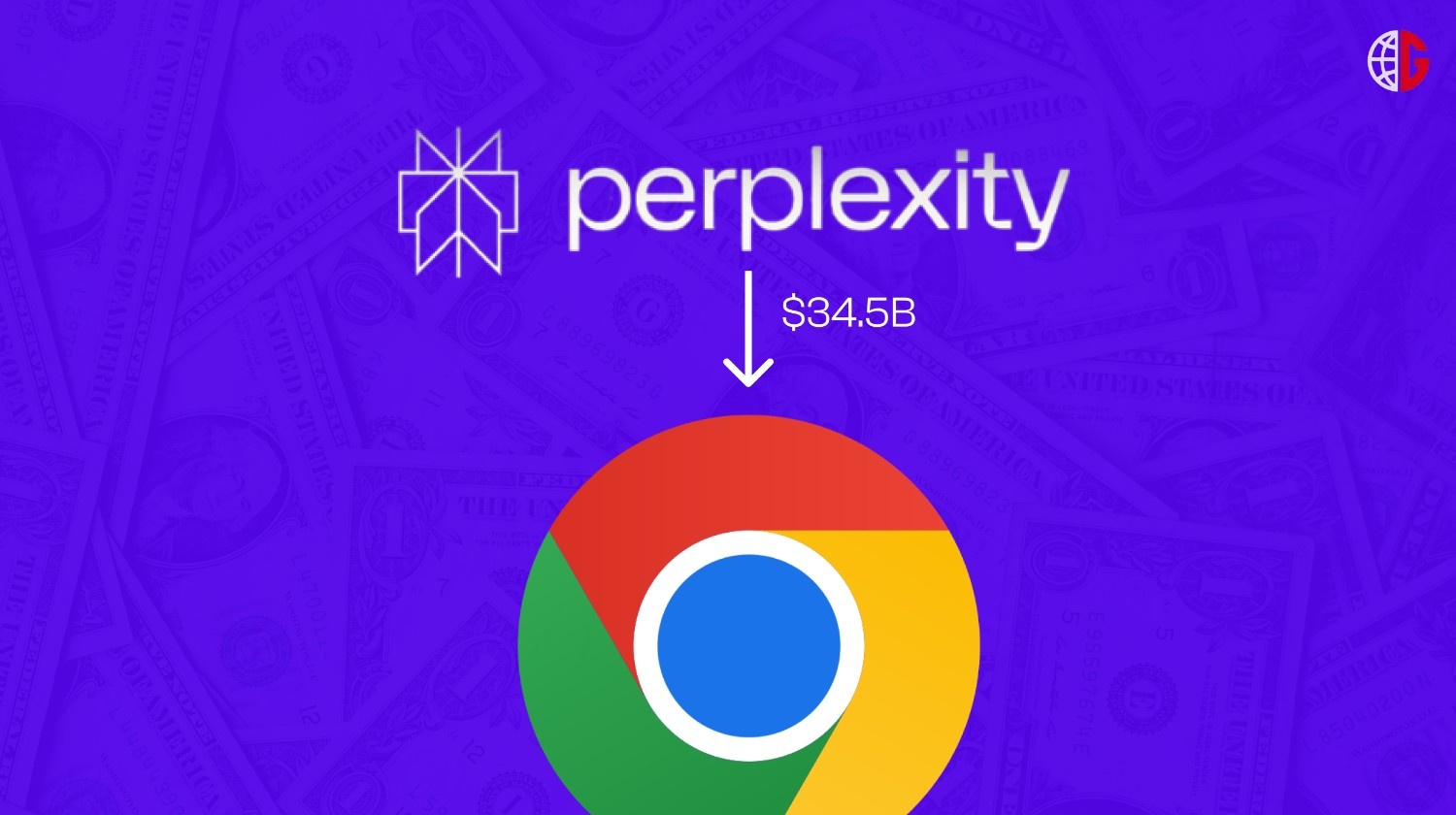
In a move that has sent shockwaves through Silicon Valley, AI startup Perplexity AI has made an unsolicited $34.5 billion all-cash offer to acquire Google’s Chrome browser. The bold bid—more than double Perplexity’s own valuation—signals the company’s ambition to become a dominant force in the global AI search race.
The offer, announced on Tuesday, comes at a time when regulatory pressures are mounting on Google and as competition in the AI-powered search market intensifies.
“Browsers are the front door to search—and search is the battlefield of the future,” said Aravind Srinivas, CEO of Perplexity AI.
A Bold Move from a Young Contender
Founded just three years ago, Perplexity AI has quickly made a name for itself with audacious business plays. Earlier this year, the company made headlines with a proposal to merge with TikTok US, aiming to address national security concerns over Chinese ownership.
Now, Srinivas is eyeing Chrome’s 3+ billion users as a gateway to accelerate Perplexity’s reach. The company already operates Comet, an AI-powered browser capable of executing tasks for users, but acquiring Chrome could catapult Perplexity into direct competition with tech giants like OpenAI, which is reportedly developing its own AI browser.
Industry Giants Circle Chrome
Perplexity isn’t alone in its interest. OpenAI, Yahoo, and Apollo Global Management have also expressed interest in acquiring Chrome, especially after the U.S. The Justice Department suggested a Chrome divestiture as a remedy in Google’s antitrust case.
Despite the growing list of suitors, Google has made no indication it plans to sell Chrome. In fact, the tech giant is appealing a court ruling from last year that found it held an unlawful monopoly in online search.
“Google will likely fight tooth and nail to keep Chrome, as it’s integral to their AI-driven search ambitions,” said Herbert Hovenkamp, a law professor at the University of Pennsylvania.
The Regulatory Backdrop
A ruling on potential remedies in Google’s search antitrust case is expected this month from federal judge Amit Mehta. However, experts predict a long legal battle.
“It could take years before a forced divestiture actually happens—if it happens at all,” Hovenkamp added, noting that appeals could reach the U.S. Supreme Court.
Chrome is more than just a browser for Google—it’s a data-rich platform that fuels its AI search innovations, including the AI-generated search summaries it has recently introduced to defend market share.
How Perplexity Plans to Win Over Regulators
Perplexity’s offer comes with several promises aimed at easing antitrust concerns:
- Keeping Chromium open source for developers worldwide.
- Investing $3 billion over two years to enhance browser technology.
- Maintaining Chrome’s default search engine (presumably Google Search) to preserve user choice.
“We want to preserve choice, foster competition, and create an AI-enhanced browsing experience for everyone,” Perplexity stated in its announcement.
Funding remains a big question mark. The company has raised around $1 billion to date from investors such as Nvidia and SoftBank, and it claims that multiple funds have offered to finance the deal in full, though it has not named them.
Valuation Debate
While Perplexity’s $34.5 billion offer is ambitious, some industry voices argue that Chrome’s true market value could be significantly higher.
“If Google were ever forced to sell Chrome, it could easily fetch $50 billion or more,” said Gabriel Weinberg, CEO of DuckDuckGo.
Alphabet’s shares rose 1.6% in afternoon trading following the announcement, reflecting investor intrigue over the potential shake-up in the browser market.
Why Chrome is the Prize Everyone Wants
As AI chatbots like ChatGPT and Perplexity become the go-to platforms for quick answers, browsers are regaining their importance as the primary channel for search traffic and user data. Owning Chrome would give Perplexity instant access to billions of users, along with the data and market leverage to challenge both Google and OpenAI.
“This isn’t just about a browser—it’s about controlling the gateway to the AI-driven internet,” said one industry analyst.
What Happens Next
While the odds of Google agreeing to sell Chrome remain slim, Perplexity’s bid has undeniably intensified the conversation around AI, search dominance, and the future of web browsing. Even if this deal doesn’t materialize, it signals a new era where AI startups are no longer afraid to challenge Big Tech head-on.
Whether Perplexity’s offer is a genuine acquisition attempt or a strategic PR move, it has cemented the startup’s position as a serious and fearless player in the AI race.
Read more at From Coders to Curators – Why Developers No Longer Just Write Code