
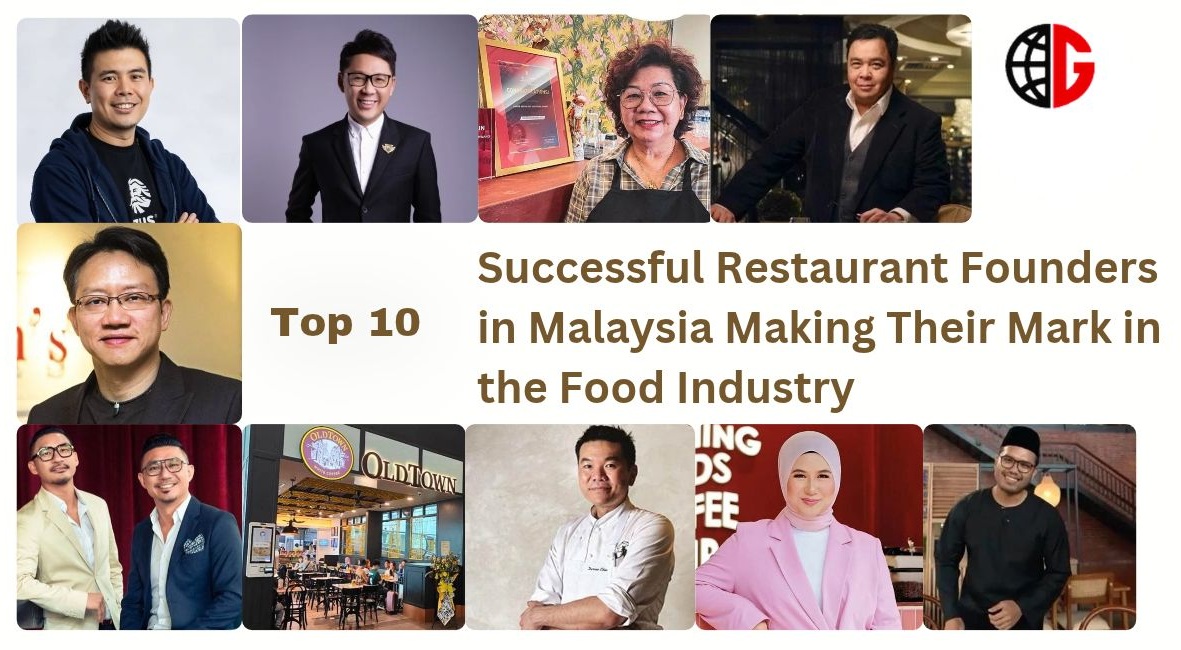
Malaysia’s food industry is built on a rich blend of culinary traditions, multicultural influences, and a growing appetite for new dining experiences. From traditional kopitiams and heritage-inspired restaurants to technology-driven coffee chains and Michelin-recognised fine dining, the country’s food and beverage sector continues to evolve through the vision of entrepreneurs who understand that great food is only part of a successful business.
Behind many of these growing brands are founders who have identified changing consumer preferences, transformed familiar food experiences, and developed businesses that connect with customers across different generations. Some have built their reputations around local flavours and cultural heritage, while others have introduced technology, accessible pricing, digital influence, and contemporary hospitality concepts.
The rise of these restaurant founders reflects a broader transformation in Malaysia’s food industry. Success increasingly depends on combining culinary identity with operational excellence, brand recognition, customer experience, and the ability to scale without losing what makes a business distinctive.
Here are ten prominent Malaysian and Malaysia-connected restaurant and F&B entrepreneurs whose ventures illustrate different paths to building an influential presence in the food industry.
1. Dato’ Calvin Chan — Bringing Malaysian Kopitiam Culture to a New Generation
Brand: Oriental Kopi

The story of Dato’ Calvin Chan demonstrates how a familiar culinary tradition can become a scalable modern business. Founded in 2020, Oriental Kopi was built around a straightforward yet compelling idea: bring the warmth, flavours, and atmosphere of the traditional Malaysian kopitiam into a contemporary dining environment.
Traditional kopitiams have long served as gathering places where people enjoy coffee, breakfast, and conversations over familiar local dishes. Chan’s approach builds on that cultural foundation while appealing to consumers who expect consistent food quality, comfortable surroundings, and a recognisable brand experience.
Oriental Kopi has become known for its local comfort food, traditional coffee, and oversized egg tarts that have attracted considerable customer attention. Its combination of heritage flavours and modern presentation has helped the brand appeal to younger diners as well as customers who value traditional Malaysian cuisine.
The business reached another significant milestone when Oriental Kopi Holdings Berhad listed on Bursa Malaysia in January 2025. The listing represented an important step in the company’s development from a homegrown dining concept into a publicly listed business.
Chan’s entrepreneurial journey highlights an important lesson for restaurant founders: tradition does not have to remain confined to the past. With thoughtful branding, consistent execution, and a clear understanding of customer expectations, familiar culinary experiences can become the foundation for substantial business growth.
2. Ian Chua and Venon Tian — Making Specialty Coffee More Accessible
Brand: ZUS Coffee

In a market where coffee has become part of everyday life, Ian Chua and Venon Tian recognised an opportunity to make specialty coffee more accessible. They co-founded ZUS Coffee in 2019, combining a focus on affordability with digital ordering and convenient pickup and delivery services.
Rather than positioning specialty coffee exclusively as a premium purchase, the founders developed a model intended to make a quality coffee experience part of consumers’ everyday routines. Its mobile application and digitally integrated operations became central to the brand, helping customers order conveniently while supporting a more efficient service model.
The company’s growth has been remarkable. ZUS Coffee reported reaching 1,000 outlets in 2025, demonstrating how quickly a locally founded coffee business can expand when its product, pricing, and operating model align with consumer demand.
Its regional ambitions also reflect a broader vision for Malaysian food and beverage brands. Expansion into markets including the Philippines, Singapore, Brunei, Thailand, and Indonesia has taken the brand beyond its original home market.
The founders’ success illustrates how technology can strengthen, rather than replace, the hospitality experience. A well-designed digital platform can improve convenience, but the lasting relationship with customers still depends on the quality of the coffee, dependable service, and an experience worth repeating.
For aspiring restaurant entrepreneurs, ZUS Coffee offers a useful example of building a business around an everyday consumer need and then using technology and operational discipline to scale it.
3. Ian Ong — Building an Accessible Casual-Dining Experience
Brand: Uncle Don’s

Not every successful restaurant business needs an elaborate fine-dining concept. Sometimes, the opportunity lies in creating a welcoming place where customers can enjoy familiar food, meet friends, and spend time with family without making the occasion feel expensive or formal.
Ian Ong built his food and beverage career around this accessible approach. After working as a law lecturer, he entered the F&B industry and launched Uncle Don’s in 2015 alongside a broader hospitality vision. The business promotes a casual Western restaurant and bar concept under the slogan “Dine like a Don every day.”
The concept combines a relaxed atmosphere with a broad menu, aiming to appeal to groups of friends, families, and customers seeking an informal dining experience. Its expansion demonstrates the commercial potential of a clearly positioned restaurant brand that serves an identifiable customer segment.
Scaling a casual-dining chain requires more than attracting customers to its first location. Each new outlet must maintain consistent food quality, service standards, and atmosphere while adapting to the practical demands of different locations. The operating model must work repeatedly, not just when the founder is present.
Uncle Don’s illustrates the importance of translating a straightforward dining proposition into a repeatable business. For aspiring F&B entrepreneurs, Ong’s journey underscores the value of identifying a clear market position and building the operational foundations needed to expand it.
4. Nor Arieni Adriena — Turning a Home-Baking Passion into a Growing F&B Group
Brand: Gula Cakery Group

Some food businesses begin with significant capital and an established commercial kitchen. Others start with a home oven, a few trusted recipes, and a willingness to learn through experience. The journey of Nor Arieni Adriena belongs to the latter category.
Inspired by childhood memories and her grandmother’s handwritten recipe book, Adriena began baking as a teenager. What started as a personal interest developed into a home-based bakery and eventually became Gula Cakery, which she founded in 2015.
Her entrepreneurial journey shows how a small, personal venture can evolve into a more diversified food business. Gula Cakery grew beyond its original bakery concept into a wider group of cafes, restaurants, and dessert-related brands, with outlets across the Klang Valley and Melaka.
The business is built around the emotional appeal of food. Cakes and desserts are often associated with birthdays, family celebrations, personal milestones, and everyday moments of happiness. By combining that emotional connection with product quality and a recognisable identity, the brand has created opportunities to reach customers through multiple dining and retail formats.
However, moving from home baking to a multi-outlet business brings a different set of responsibilities. Production standards, ingredient sourcing, staff development, customer service, and financial management become increasingly important as the organisation grows.
Adriena’s experience offers an encouraging lesson for aspiring women entrepreneurs: a business does not need to begin on a grand scale to develop a significant presence. A strong product, a willingness to learn, and the ability to turn a personal passion into a structured business can provide the foundations for long-term growth.
5. Khairul Aming — Turning Digital Influence into a Food Business
Brands: Sambal Nyet and Rembayung

The digital economy has opened new opportunities for entrepreneurs to build food businesses by developing a loyal audience before launching products. Few Malaysian examples illustrate this transition as clearly as Khairul Aming.
Initially recognised for his engaging cooking videos and approachable food content, Khairul Aming developed a strong online following before moving into commercial food production. His Sambal Nyet Berapi condiment became a major part of his entrepreneurial identity, showing how digital visibility can translate into demand for a tangible food product.
His approach combines content creation, product development, online marketing, and direct engagement with customers. Rather than relying entirely on conventional advertising, he uses his established relationship with his audience to introduce products, communicate their value, and generate interest around new ventures.
In January 2026, he expanded into physical dining with the opening of Rembayung, a restaurant focused on traditional Malay dishes in Kampung Baru, Kuala Lumpur. The venture represented a substantial move from digital entrepreneurship into hospitality, with a reported investment of RM4 million.
Rembayung also reflects an ambition to bring traditional Malay food to a broader audience through a welcoming dining environment. Its launch attracted considerable attention, and the restaurant reported serving more than 16,000 customers during its first month of operations.
Khairul Aming’s journey highlights the commercial potential of building trust before scaling a business. However, a popular online brand and a successful restaurant require different capabilities. Food production, kitchen management, staffing, service delivery, and customer experience must all work together.
His expansion offers a valuable lesson for modern food entrepreneurs: an engaged audience can provide a powerful starting point, but sustained success depends on delivering quality beyond the screen.
6. Gaik Lean Beh — Preserving Peranakan Cuisine Through Culinary Excellence
Restaurant: Auntie Gaik Lean’s Old School Eatery
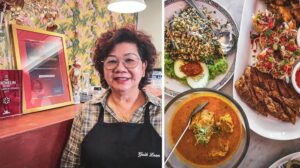
Malaysia’s food industry is not shaped by commercial scale alone. It is also influenced by people who preserve culinary traditions and ensure that regional dishes remain relevant to new generations. Gaik Lean Beh has built her reputation around that commitment.
Through Auntie Gaik Lean’s Old School Eatery, she celebrates Peranakan cuisine, a culinary tradition shaped by the interaction of Chinese and Malay influences. Its character lies in the careful use of spices, layered flavours, distinctive cooking techniques, and recipes rooted in family and community histories.
Preserving this cuisine involves more than reproducing old recipes. It requires understanding how ingredients work together, respecting traditional preparation methods, and maintaining the balance that gives each dish its identity. For a chef-restaurateur, that knowledge must also be translated into a consistent dining experience.
Beh’s recognition through the Michelin Guide brought greater attention to her restaurant and the culinary heritage it represents. Her achievement illustrates how a deeply local food tradition can gain wider recognition when it is presented with skill, authenticity, and confidence.
Her story is particularly significant in a market where contemporary dining concepts and international cuisines compete for customer attention. Heritage restaurants can stand apart by offering something that cannot easily be replicated through a passing trend: a genuine connection to place, culture, and culinary memory.
For restaurant entrepreneurs, Beh’s journey demonstrates that innovation does not always require reinvention. Sometimes, the most meaningful contribution is to protect a culinary tradition, communicate its value, and create an experience that encourages people to appreciate it.
7. Darren Chin — Raising the Standard of Contemporary Fine Dining
Restaurant group: Horizon Hospitality

At the premium end of Malaysia’s food industry, Darren Chin has established a reputation for combining French culinary techniques with contemporary influences and a distinctly personal approach to cooking.
After training at Le Cordon Bleu in Paris, Chin returned to Malaysia and opened DC. by Darren Chin in 2014. The restaurant became the foundation for a wider hospitality business that includes Bref by Darren Chin and Gai by Darren Chin.
Chin’s philosophy centres on technique, ingredient quality, consistency, and the belief that good food should have a clear purpose. Rather than relying on elaborate presentation alone, his approach emphasises the relationship between ingredients, flavour, and execution.
His work has earned significant recognition. DC. by Darren Chin received a Michelin star in the inaugural Michelin Guide Kuala Lumpur and Penang selection and retained its one-star status in the 2025 edition. The group’s other restaurants have also received Michelin Guide recognition.
Yet building a fine-dining business involves far more than developing an impressive menu. Premium restaurants depend on highly trained teams, carefully designed service, reliable sourcing, and an atmosphere in which every detail supports the guest experience. Maintaining standards across multiple concepts adds another layer of complexity.
Chin has also emphasised the importance of mentorship and team development, allowing talented chefs to take responsibility for individual restaurant kitchens while working within shared quality standards.
His career demonstrates that a restaurant can develop a distinctive identity through discipline and craftsmanship. For aspiring chefs and hospitality entrepreneurs, his example reinforces the value of mastering fundamentals before pursuing innovation.
8. Bernard Yeoh — Taking Malaysian-Inspired Chinese Dining to London
Restaurant: Kai, London
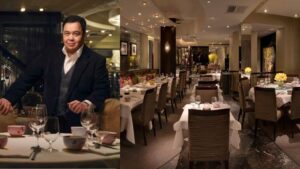
A Malaysian-born entrepreneur who built a distinguished restaurant business in London, Bernard Yeoh demonstrates how cultural heritage can become a competitive advantage in international hospitality.
Yeoh founded Kai in 1993 with a vision to challenge conventional perceptions of Chinese dining. He wanted to demonstrate that Chinese cuisine could be presented with the same attention to design, service, creativity, and sophistication associated with other forms of fine dining.
His approach extends beyond the food itself. Restaurant interiors, menu presentation, hospitality, and the overall atmosphere contribute to how guests perceive a dining experience. At Kai, traditional Chinese influences meet imaginative presentation, while flavours and ingredients draw inspiration from a broader Asian culinary heritage.
The restaurant achieved a Michelin star in 2009, becoming the first Chinese restaurant in London to receive the distinction, according to the Michelin Guide’s profile of Yeoh. Its sustained recognition demonstrated the potential for a Chinese restaurant to establish a respected position within London’s competitive fine-dining landscape.
Yeoh’s entrepreneurial journey also illustrates the importance of understanding the market a business intends to serve. A restaurant seeking international recognition must retain a distinctive identity while communicating its appeal to customers with different culinary expectations.
For Malaysian entrepreneurs looking beyond their domestic market, his story offers a compelling lesson: cultural authenticity and creative thinking can work together. A restaurant can honour its roots without limiting its ambitions to the audience most familiar with them.
9. Alex Cheah and Kelvin Cheah — Creating Distinctive Dining Concepts
Business group: Karls Group

Malaysia’s contemporary dining scene increasingly rewards restaurants that offer more than a meal. Customers are also drawn to atmosphere, visual identity, storytelling, and concepts that make an outing feel different from an ordinary dining occasion.
Hospitality entrepreneurs Alex Cheah and Kelvin Cheah are associated with Karls Group, a name included among the businesses shaping the country’s contemporary dining landscape.
The group’s concept-driven approach, as described in the supplied profile information, combines modern restaurant experiences with heritage-inspired influences. This direction reflects a broader shift in hospitality, where customers increasingly value the complete experience surrounding a dish, including the setting, presentation, service, and story behind the concept.
For restaurant operators, concept development is only the beginning. A distinctive restaurant must also establish a clear customer proposition, maintain dependable service, manage costs, and build a reputation that encourages repeat visits. Expanding a portfolio of dining concepts introduces additional challenges because each brand needs its own identity without losing operational discipline.
Cheah and Cheah’s inclusion in this list highlights the role of hospitality groups in creating variety within Malaysia’s restaurant market.
Editorial note: The founders’ individual roles, specific restaurant brands, and recent business milestones should be independently verified before publication to ensure the profile accurately reflects their contributions.
10. Loh Chin Soon and the Evolution of Malaysia’s White Coffee Heritage
Brand reference: OldTown White Coffee and the kopitiam industry
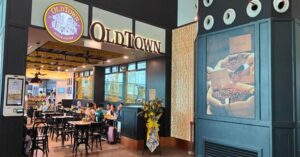
Malaysia’s restaurant industry would be incomplete without recognising the kopitiam tradition and the businesses that helped bring its familiar flavours to a wider market.
Ipoh white coffee, in particular, has become an important part of the country’s culinary identity. Known for its distinctive roasting tradition and rich coffee flavour, it has moved from local coffee shops into packaged products, branded cafes, and broader regional markets.
OldTown White Coffee is one of the best-known names associated with the commercialisation of this heritage. The brand helped bring the traditional coffee-shop experience to a broader customer base through standardised menus, branded outlets, and retail coffee products.
The larger lesson is about transforming a regional speciality into a recognisable commercial proposition. Heritage food and drink can travel beyond their original communities when businesses make them accessible while preserving the characteristics that distinguish them.
This evolution also demonstrates why consistency matters. Customers expect a familiar flavour and experience whether they encounter a brand in its original market or at a location farther away. Establishing that consistency requires attention to sourcing, preparation, product standards, and customer expectations.
An important attribution clarification: The supplied list identifies Loh Chin Soon as a key figure associated with OldTown White Coffee and the early kopitiam industry. However, his specific founding role in OldTown White Coffee could not be established from the sources reviewed. The company’s founding attribution should therefore be verified before this section is published as an individual founder profile.
What These Malaysian Restaurant Founders Teach Us About Building a Successful F&B Business
The journeys of these entrepreneurs reveal that there is no single formula for success in Malaysia’s competitive food and beverage industry. Their businesses differ in scale, positioning, customer base, and culinary direction, but several common themes emerge.
- Build around a clear identity. Oriental Kopi draws on kopitiam heritage, while Gula Cakery developed from a passion for baking. A distinctive identity gives customers a reason to recognise and remember a business.
- Understand the modern customer. ZUS Coffee demonstrates how digital ordering, convenience, and accessible pricing can influence purchasing habits. Restaurant operators must understand how customers want to discover, order, and enjoy food.
- Protect quality while expanding. Growing from one location to multiple outlets requires repeatable systems, reliable suppliers, trained employees, and consistent service. Growth is most valuable when the customer experience remains dependable.
- Use storytelling to strengthen a brand. Khairul Aming’s transition from digital content to food products and restaurant ownership illustrates the potential of building a relationship with customers before introducing new ventures.
- Respect culinary heritage while embracing innovation. Gaik Lean Beh and Bernard Yeoh demonstrate different ways of bringing cultural traditions to contemporary audiences. Heritage can be a source of differentiation rather than a limitation.
- Invest in people and execution. Whether operating a neighbourhood cafe or a Michelin-recognised restaurant, a business ultimately depends on the people who prepare the food, serve customers, and maintain standards every day.
The Future of Malaysia’s Food and Beverage Industry
Malaysia’s food and beverage sector is positioned at the intersection of tradition, technology, entrepreneurship, and changing consumer expectations. From modern kopitiam chains to specialty coffee businesses, homegrown bakery groups, digital-first food ventures, and internationally recognised restaurants, entrepreneurs are demonstrating the many ways a culinary idea can become a lasting business.
The next phase of growth will require more than opening additional outlets. Restaurant founders will need to strengthen their supply chains, develop talented teams, use digital tools intelligently, manage rising operating costs, and build brands that can adapt to changing preferences without losing their identity.
For emerging entrepreneurs, these ten profiles offer different sources of inspiration. Some show how to scale a familiar local experience. Others demonstrate how personal passion, culinary craftsmanship, or an engaged digital audience can become the foundation for a commercial venture.
Ultimately, the most enduring restaurant businesses are built on a simple principle: give people a compelling reason to come, a memorable experience while they are there, and a reason to return. In Malaysia’s diverse and competitive dining market, that combination remains one of the strongest foundations for sustainable success.
Read more: Crediflow AI Raises €1.8M to Bring AI Automation to Commercial Lending