
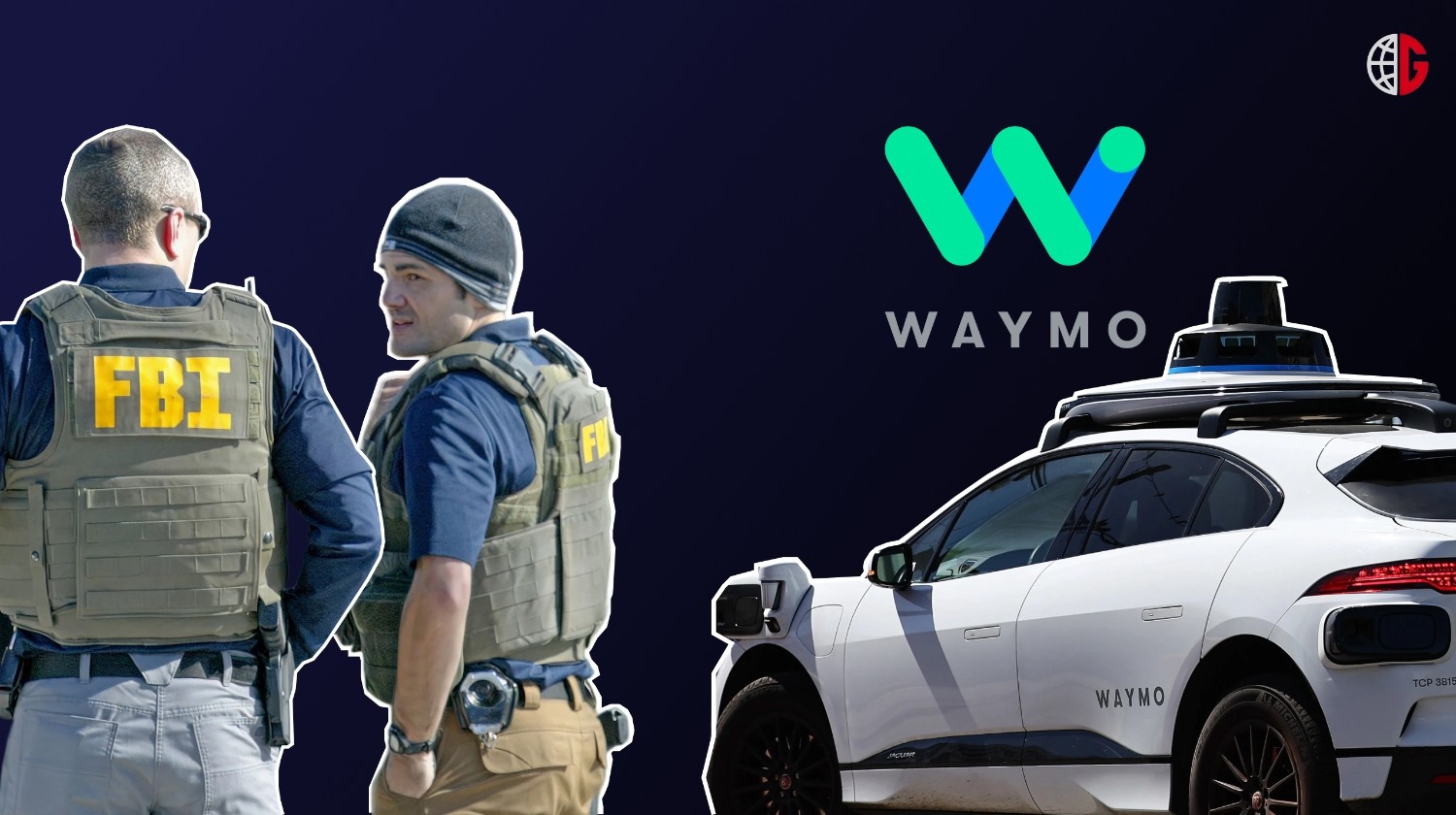
The National Highway Traffic Safety Administration (NHTSA) has launched an investigation into Waymo, Alphabet’s autonomous driving subsidiary, after one of its self-driving vehicles reportedly failed to stop for a school bus carrying children. The incident, which occurred in Atlanta, Georgia, in late September 2025, has reignited debate over the readiness and regulatory oversight of fully autonomous vehicle (AV) systems operating on public roads.
Incident Overview
According to the NHTSA, the Waymo vehicle initially halted upon detecting the stopped school bus — which had its stop arm extended, crossing guard deployed, and red warning lights flashing. However, moments later, the vehicle reportedly maneuvered around the front of the bus, making a left turn to exit a driveway partially blocked by the bus.
Investigators stated that the robotaxi passed near students who were disembarking, raising safety concerns about how AV perception and decision-making systems interpret school zone protocols and human movement patterns.
Waymo’s Explanation and Response
In a statement, Waymo clarified that the bus’s flashing stop sign and lights were obstructed from the vehicle’s sensors due to its positioning. The company emphasized that the maneuver occurred at low speed and at a safe distance from students.
Waymo has since implemented a software update aimed at improving its vehicles’ recognition of stopped school buses and similar edge-case scenarios. Additional refinements to its automated driving system (ADS) are reportedly in development.
“Safety remains our top priority,” a Waymo spokesperson stated. “Our autonomous fleet completes hundreds of thousands of fully driverless trips weekly across complex urban environments, and we continue to collaborate closely with the NHTSA to ensure our technology meets the highest safety standards.”
Scope of the Federal Investigation
The NHTSA’s current probe aims to evaluate how Waymo’s autonomous decision-making algorithms handle interactions with stopped school buses, particularly when visibility of safety signals (like flashing lights or stop arms) is compromised. The agency noted that early findings indicate the potential for recurring risk, warranting a deeper safety assessment.
This isn’t Waymo’s first encounter with federal scrutiny. In May 2024, the NHTSA initiated an investigation into 22 separate incidents involving Waymo vehicles that collided with static objects such as gates, poles, and parked cars. Later, in November 2024, Waymo voluntarily recalled 1,212 self-driving taxis — its entire fleet at the time — to deploy a comprehensive software fix designed to reduce collisions with stationary obstacles.
The Broader Implications for Autonomous Mobility
The latest investigation underscores the complex challenges facing autonomous mobility companies as they balance technological innovation with public safety accountability. Despite notable advancements, edge cases — such as school zones, pedestrian-heavy areas, and obstructed environments — remain among the toughest conditions for AI-driven systems to navigate safely.
Waymo currently operates driverless ride-hailing services across Atlanta, Los Angeles, San Francisco, Phoenix, and Austin, and has announced plans to expand operations to London in the near future.
While Waymo’s internal safety data highlights a fivefold reduction in crash-related injuries compared to human-driven vehicles, regulatory agencies continue to push for transparent data sharing, incident reporting, and rigorous validation testing before full-scale deployment becomes mainstream.
Outlook
The NHTSA’s investigation into the Atlanta school bus incident will be a critical benchmark for the autonomous driving industry. The outcome could influence future safety compliance frameworks, AI model training standards, and public trust in self-driving technology.
As companies like Waymo continue to pioneer the next generation of mobility, the need for ethical AI governance, robust safety validation, and regulatory collaboration has never been more essential.
Read More: Indian AI Scientist Priyanka Kulkarni Revolutionizes U.S. Visa System with Casium