
Most Wealth Plans Fail for the Same Reason: They Were Never Designed as Operating Systems
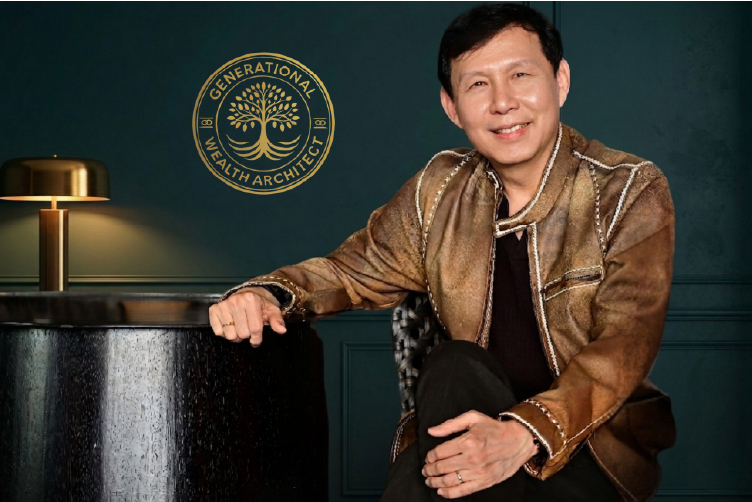
By Sofan Tan, GWA™ | Generational Wealth Architect™ CEP | AEPP® | AWP | BBA
The Illusion of Completion
The offshore trusts are structured. The holding companies are sealed. The advisers are credentialed and well-paid. The wealth creator steps back, believing the fortress is complete. But the fortress was never the problem.
Across Asia and beyond, some of the most carefully constructed wealth architectures have collapsed, not because the structures failed, but because the families inside them did. Documents do not make decisions. Trusts do not resolve conflict. Holding companies do not carry values from one generation to the next.
“The question that ultimately breaks a founder’s sleep is never ‘Is my structure correct?’ It is: ‘Will my family hold together when I am no longer here to hold them?'” — Sofan Tan, Generational Wealth Architect™
Failures Begin Long Before Financial Decline Appears
The conventional wealth management industry has built its entire value proposition around technical complexity: more sophisticated structures, more jurisdictions, more asset classes, more instruments. The implicit promise is that complexity equals protection. It does not.
Governance is the logic. Structures are the plumbing. Plumbing dictates where assets reside. It cannot manage how decisions are made, how conflict is governed, or how authority transfers when the founder steps away.
Consider Credit Suisse and the Archegos Capital collapse in 2021. The failure was not primarily financial. It was a governance failure driven by inadequate oversight, misaligned risk-based decision-making, and institutional structures that could not contain the behaviour of key decision-makers under pressure. When governance fails at the institutional level, billions are lost. When it fails at the family level, generations are lost.
Over-Structured, Under-Governed
Singapore’s Hin Leong Trading collapsed in 2020 under approximately USD 3.5 billion in liabilities. Investigations revealed decades of undisclosed losses and falsified documents. The structures were in place. The governance was not.
Similarly, the Vanderbilt family built one of America’s greatest fortunes in the 19th century. Yet, at a family reunion in 1973, less than a century after Cornelius died as the world’s richest man, not a single member of the family was a millionaire.
By contrast, the Tata Group has sustained institutional continuity for over 150 years across multiple generations, leadership transitions, and geopolitical shifts. Their architecture is not merely structural. It is governance-driven, purpose-anchored, and values-aligned at every layer, even when individual governance episodes were contested.
The pattern is consistent: families and institutions that endure do not merely structure well. They govern well.
Governance First, Structures Second
Total Wealth Governance (TWG™) is a response to this gap. It is not a more sophisticated version of wealth planning. It is a different category entirely, one where traditional wealth management begins with assets but TWG™ begins with purpose.
It coordinates four interconnected capitals across generations:
Financial Capital — the assets, structures, and instruments; Human Capital — the people, relationships, and leadership development; Social Capital — the reputation, trust, and community legacy; and Decision Capital™ — the family’s structured capacity to make unified, values-aligned decisions across generations.
Most wealth plans address the first capital in detail, touch the second occasionally, and leave the third and fourth almost entirely unaddressed. This is where continuity breaks down.
The defining question for every founder: what happens to your governance architecture when you are no longer in the room? For HNW families, the question extends further: does your operating system coordinate structures across generations, jurisdictions, and competing interests? The ultimate lesson is clear: governance creates the continuity that structures alone cannot provide.
The New Paradigm of Scarcity
Artificial intelligence is rapidly commoditising technical financial intelligence. Portfolio construction, risk modelling, and tax optimisation are increasingly accessible to anyone with a device. In this environment, technical advice alone becomes a commodity.
What cannot be commoditised is governance wisdom — the capacity to align families around shared purpose, steward decision-making across generations, manage continuity through conflict and transition, and preserve institutional trust when markets and relationships are simultaneously tested.
Decision Capital™ is a family’s structured capacity to make unified, purpose-driven decisions across generations. It is the most undervalued asset on any family balance sheet and the controlling layer that governs all the others. A family that governs well will consistently outperform one that merely structures well.
Wealth does not fail because markets turn or structures are poorly drafted. It fails when there is no coherent governance system coordinating a family’s financial, human, social, and decision resources across generations. True governance architecture places shared purpose at the foundation of everything, managing every decision that comes after.
We build cathedrals, not just pews. A plan helps you build. An operating system ensures your wealth stands — across generations, across markets, and beyond any single founder. — Sofan Tan, Generational Wealth Architect™.
Read more at: linkedin.com/in/sofantan-cep
Footnotes
- Reuters / UBS Group AG. (2021–2023). Institutional Disclosures and Financial Risk Governance Review on the Archegos Capital Collapse.
- PricewaterhouseCoopers (PwC) Singapore. (2020). Judicial Management Report: Hin Leong Trading (Pte) Ltd.
- Reuters. (2021). Regulatory and Judicial Investigations into Asset Disclosure and Commodity Trading Failures.
- Vanderbilt, A. T. II. (1989). Fortune’s Children: The Fall of the House of Vanderbilt. New York: William Morrow & Co.
- Social Science Research Network (SSRN). (2011). Trust Ownership, Philanthropy, and Corporate Governance of the Tata Group.
- National Herald India. (May 2026). Institutional Continuity and Generational Leadership Governance Transitions in the Tata Ecosystem.
About the Author
Sofan Tan is a Singapore-based Consultant and Generational Wealth Architect with over 20 years of experience in wealth management. He is the creator of the Total Wealth Governance (TWG™) Operating System, Decision Capital™, the CARES™ Wealth Blueprint, the PASS™ Investment Framework, and the FAST™ Asset Allocation Framework. Credentials: CEP, AEPP®.
Govern your wealth with clarity. Guard your values with integrity. Grow your legacy with continuity. Guide your portfolios with agility.
Read more Leadership articles at Becoming Before Building: The Truth About the Entrepreneurial Journey