

Claude Maker Prices Shares Above Expectations as AI Investment Frenzy Drives Massive Investor Demand and a $107.3 Billion Fundraising Deal
The artificial intelligence industry has witnessed another historic milestone as Anthropic, the company behind the popular Claude AI assistant, has raised approximately $81.3 billion through its initial public offering (IPO). With shares priced higher than initially anticipated, the blockbuster listing values the company at approximately $1.5 trillion on a fully diluted basis, marking one of the most significant moments in the global technology and financial markets.
The offering highlights the extraordinary investor appetite for companies developing advanced artificial intelligence technologies. It also places Anthropic among the most valuable technology businesses to enter the public markets, as investors increasingly look beyond established technology giants for opportunities in the rapidly expanding AI economy.
A Record-Breaking Stock Market Debut
Anthropic priced its shares at $83 each, exceeding its earlier proposed price range of $70 to $78. The company also expanded the size of its offering from an initial 825 million shares to approximately 980 million shares, reflecting strong demand from investors.
The offering comprises 956.35 million shares issued by Anthropic and another 23.65 million shares sold by existing shareholders, including its seven co-founders.
The IPO generated approximately $81.34 billion in gross proceeds, surpassing SpaceX’s original $75 billion IPO offering in June 2026. However, SpaceX subsequently raised its total proceeds to approximately $85.7 billion after the full exercise of its underwriters’ additional-share option, making the comparison dependent on how the offering sizes are measured.
Anthropic’s shares are scheduled to begin trading on the Nasdaq Global Select Market on November 19, under the ticker symbol ANT.
The company’s valuation stands at approximately $1.5 trillion on a fully diluted basis, which includes stock options and restricted shares. On a non-diluted basis, its valuation is approximately $1.1 trillion.
Where Will the IPO Money Go?
While the headline figure stands at $81.3 billion, not all the proceeds will flow into Anthropic’s accounts.
According to its final IPO prospectus, the company is issuing shares worth approximately $79.38 billion, while existing shareholders are selling shares valued at approximately $1.96 billion.
The distinction is important because the founders and other existing investors are also using the public listing as an opportunity to sell a portion of their holdings.
Beyond the public offering, Anthropic has arranged an additional $26 billion private placement involving some of the world’s biggest technology companies.
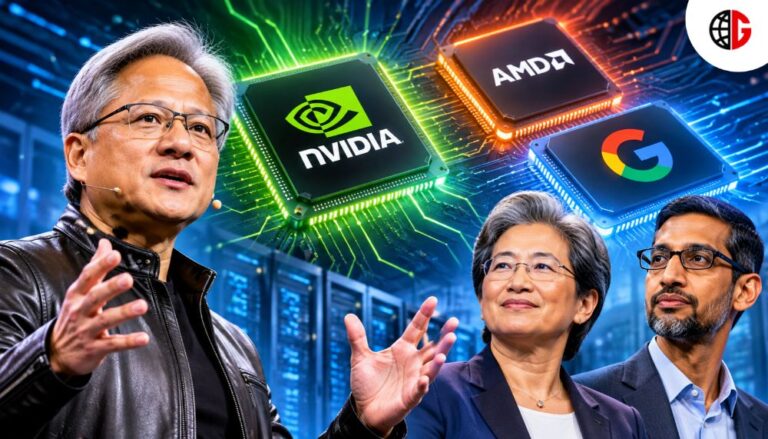
The participating companies include Google, Nvidia, AMD, Broadcom, Micron, Microsoft and Taiwan Semiconductor Manufacturing Company (TSMC). These investors will purchase Anthropic’s Class N shares at the IPO price of $83 each.
Combining the public offering and private placement brings the overall fundraising package to approximately $107.3 billion, before applicable expenses and other adjustments.
Amazon and Google also remain among Anthropic’s most significant corporate shareholders, with substantial economic interests in the company. Their positions reflect the growing relationship between AI developers and the technology infrastructure providers supporting their expansion.
Claude’s Growing Popularity Fuels Revenue Expansion
Behind Anthropic’s extraordinary market valuation is a business experiencing rapid revenue growth.
The company’s financial performance reflects increasing demand for its Claude AI models, particularly Claude Code, its AI-powered coding assistant that has gained traction among software developers and enterprise customers.
According to its IPO filing, Anthropic generated approximately $33.24 billion in revenue during the first nine months of 2026, compared with $2.55 billion during the corresponding period in 2025.
This represents a substantial year-on-year increase, highlighting how quickly demand for advanced AI services has translated into commercial growth.
Its annualised revenue run rate reached approximately $81 billion by October 31, 2026, increasing by around $10 billion in just one month.
An annualised revenue run rate estimates what a company’s revenue could look like over a full year if its latest revenue pace continues. It should not be confused with revenue already earned.
Anthropic’s enterprise customer base has expanded considerably as well. By September 30, 2026, the company had approximately 11,900 customers generating at least $100,000 in annual revenue, compared with more than 1,500 at the end of 2025.
These figures underline the growing commercial importance of Claude across businesses seeking AI-powered solutions for software development, productivity and other enterprise applications.
The Cost of Building AI at Scale
Despite its impressive revenue trajectory, Anthropic’s financial picture also reveals the enormous costs associated with developing and operating advanced AI systems.
The company reported a net loss of approximately $104 billion for the first nine months of 2026, compared with $25.1 billion during the same period last year.
However, the headline loss requires closer examination. Approximately $94.3 billion came from changes in the fair value of convertible notes, derivative liabilities and other financing instruments, primarily reflecting the increase in Anthropic’s enterprise valuation.
These accounting adjustments are not equivalent to cash operating expenditure. They significantly affect reported net income without representing an equivalent amount of money spent on day-to-day business operations.
Anthropic’s operating loss for the nine-month period was approximately $1.26 billion, providing a different perspective on its underlying business performance.
Nevertheless, its infrastructure requirements remain substantial. The company spent approximately $18.8 billion on computing and infrastructure during the first nine months of 2026, reflecting the enormous computing capacity required to train, develop and operate increasingly sophisticated AI models.
Its third-quarter revenue reached $16.96 billion, representing a 47% increase from the previous quarter. However, operating performance weakened during the same period, with the company reporting an operating loss of $567 million, compared with operating income of $974 million in the preceding quarter.
Anthropic has also disclosed commitments approaching $900 billion in future computing expenditure with infrastructure partners, including Amazon and Google. Such commitments highlight the scale of resources required to remain competitive in the AI industry.
A New Chapter in the Global AI Race
Anthropic’s IPO represents more than a remarkable fundraising achievement. It signals a new phase in the commercial evolution of artificial intelligence, where the ability to develop powerful models must increasingly translate into sustainable revenue, operational efficiency and long-term profitability.
The listing also arrives at a time when competition among leading AI developers is intensifying. Anthropic faces formidable rivals, including OpenAI, Google, Microsoft-backed AI initiatives and Meta, all competing to establish stronger positions in the enterprise AI market.
For investors, the company’s public-market debut offers an opportunity to participate directly in the growth of a business operating at the forefront of AI development. At the same time, it introduces greater scrutiny of its spending commitments, financial performance, infrastructure requirements and ability to maintain its technological advantage.
The $81.3 billion offering demonstrates how strongly financial markets are backing the future of artificial intelligence. Yet, the real measure of Anthropic’s success will not simply be the valuation it commands today, but whether it can convert its technological leadership and expanding customer base into lasting financial strength.
As Anthropic enters the public markets, its next challenge is clear: turning unprecedented investor confidence into a sustainable and profitable AI business.
Read more: The AI Chip Power Shift: How AMD and Google Are Challenging NVIDIA After Jensen Huang