
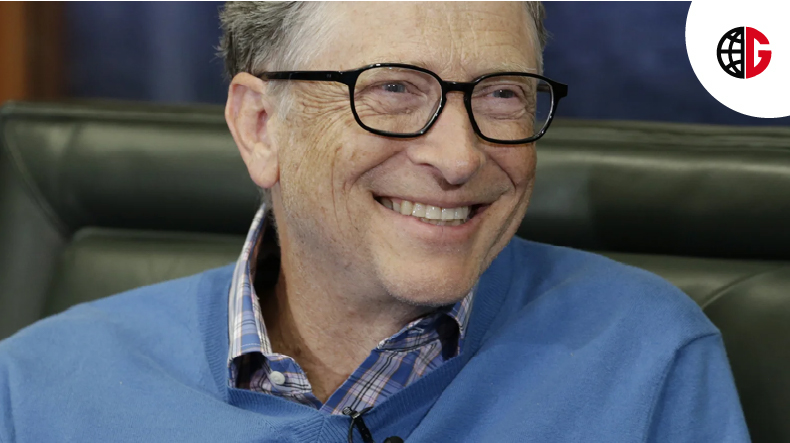
As the climate crisis intensifies in 2026, the world is no longer debating whether global warming is real—but how far we are willing to go to stop it. Among the most controversial ideas gaining attention is solar geoengineering, a radical concept backed in part by Bill Gates that aims to dim the sun to cool the Earth.
At the center of this debate is the Stratospheric Controlled Perturbation Experiment, a Harvard-led initiative exploring whether spraying fine dust particles into the upper atmosphere could reflect sunlight back into space.
It sounds like science fiction—but it’s very real. And the implications could reshape the future of humanity.
What Is Solar Geoengineering—and Why Now?
Solar geoengineering, also known as solar radiation management (SRM), is a climate intervention strategy designed to reduce global temperatures by reflecting a portion of sunlight away from Earth.
Unlike renewable energy or carbon capture, this approach does not reduce greenhouse gases. Instead, it attempts to mask the warming effect.
The urgency behind such research is clear. Despite progress in clean energy, global emissions remain high, and scientists warn of approaching climate tipping points—irreversible changes like melting ice sheets or collapsing ecosystems.
According to the Intergovernmental Panel on Climate Change, the world risks exceeding the critical 1.5°C warming threshold, which could trigger extreme weather, sea-level rise, and widespread ecological disruption.
This is where geoengineering enters the conversation—not as a replacement, but as a potential emergency brake.
Inside the SCoPEx Experiment: How It Works
The Stratospheric Controlled Perturbation Experiment is one of the most closely watched geoengineering studies globally.
Led by scientists including David Keith and Frank Keutsch, the project aims to test whether calcium carbonate (CaCO₃)—a non-toxic, chalk-like substance—can safely reflect sunlight.
The Process:
- A high-altitude balloon is launched about 20 km (12 miles) into the stratosphere.
- Small amounts of CaCO₃ particles may be released.
- Instruments then measure how these particles interact with sunlight and atmospheric chemistry.
Interestingly, early test flights—such as those planned near Kiruna, Sweden—focus only on equipment and navigation, not actual particle release.
The goal is caution, not speed.
Why Calcium Carbonate? A Safer Alternative?
Most geoengineering proposals historically focused on sulfur dioxide aerosols, inspired by volcanic eruptions. However, sulfur can heat the stratosphere and damage the ozone layer.
Calcium carbonate offers a potential advantage:
- Reflects sunlight efficiently
- Absorbs less heat
- May even help repair ozone depletion by reacting with harmful chemicals
But here’s the catch: no one truly knows what will happen at scale.
As David Keith himself admits, the risks are “very many and very real.”
Nature’s Blueprint: Volcanic Cooling
Supporters of solar geoengineering often point to natural events for validation.
Two famous examples include:
- The 1815 Mount Tambora eruption, which caused the “Year Without a Summer.”
- The 1991 Mount Pinatubo eruption, which lowered global temperatures by about 0.5°C
These eruptions released massive amounts of particles into the atmosphere, reflecting sunlight and cooling the planet.
The idea behind SCoPEx is simple:
If nature can cool the Earth accidentally, can humans do it intentionally—safely?
Why Bill Gates Is Funding This Research
Bill Gates has become one of the most prominent backers of climate innovation, investing in everything from clean energy to carbon capture—and now geoengineering.
However, his stance is nuanced:
- He supports research, not immediate deployment.
- He views geoengineering as a last-resort option.
- He warns against relying on it instead of reducing emissions.
In a 2026 context, Gates has emphasized that such interventions should only be considered if the planet reaches catastrophic tipping points.
His position reflects a growing consensus:
Understand it—but don’t rush to use it.
The Pros: Why Scientists Are Taking This Seriously
Despite controversy, solar geoengineering offers several compelling advantages.
1. Rapid Cooling Potential
Unlike emission cuts that take decades, geoengineering could lower global temperatures within years.
2. Cost-Effective Solution
The Intergovernmental Panel on Climate Change estimates such systems could cost $1–10 billion annually—relatively cheap compared to climate damages.
3. Emergency Climate Backup
If global warming accelerates beyond control, geoengineering could act as a temporary shield.
4. Potential Ozone Benefits
Some studies suggest CaCO₃ might help restore ozone balance, though this remains uncertain.
5. Reduction in Extreme Heat
It could reduce heatwaves, slowing glacier melt and protecting vulnerable ecosystems.
The Cons: What Could Go Horribly Wrong?
For every potential benefit, there are serious risks—many of them unknown.
1. Disruption of Rainfall and Monsoons
One of the biggest fears is altered precipitation patterns.
For countries like India, where agriculture depends heavily on monsoons, even slight changes could be devastating.
2. Risk of Global Inequality
Geoengineering may create winners and losers:
- Some regions could cool.
- Others could face droughts or floods.
Who decides what’s acceptable?
3. “Termination Shock”
If geoengineering stops suddenly, temperatures could skyrocket rapidly, causing catastrophic climate shocks.
4. Moral Hazard Problem
Critics argue it could:
- Reduce urgency to cut emissions.
- Encourage continued fossil fuel use.
As Gates himself noted, this would be “terrible.”
5. Unknown Chemical Reactions
We simply don’t know how aerosols will behave long-term:
- Could they damage ecosystems?
- Affect air quality?
- Harm human health?
6. Political and Ethical Chaos
There is no global governance system for geoengineering.
In fact:
- The United Nations has struggled to reach a consensus.
- Countries like the U.S., Brazil, and Saudi Arabia have previously blocked assessments.
This raises a chilling possibility:
What if one country—or even a private company—acts alone?
2026 Reality Check: Is This Already Happening?
Despite viral claims, especially in regions like Delhi-NCR, there is no evidence that geoengineering is currently influencing local weather.
Recent unusual rainfall patterns in North India have been linked to natural phenomena like Western Disturbances, not atmospheric experiments.
Solar geoengineering remains:
- In early research stages.
- Highly controlled.
- Not deployed at scale.
This distinction is critical in an age of misinformation.
The Rise of Private Geoengineering Startups
Another 2026 trend is the emergence of private players in geoengineering.
Startups like Stardust Solutions have raised millions in funding, sparking debate about who controls the climate.
This shift introduces new concerns:
- Profit-driven climate intervention
- Lack of transparency
- Unregulated experimentation
The idea that private entities could alter global weather systems is deeply unsettling for many experts.
Could This Trigger a Climate Arms Race?
Some analysts warn of a future where geoengineering becomes geopolitical:
- One country cools its region.
- Another experiences drought as a side effect.
- Tensions escalate.
This could lead to a “climate arms race”, where nations manipulate atmospheric systems for strategic advantage.
Without global governance, the risks extend beyond science into international security.
A Balanced Path Forward: Research Without Recklessness
Most experts agree on one thing:
We need to study geoengineering—but proceed with extreme caution.
A responsible path includes:
- Transparent global collaboration
- Strict regulations
- Public accountability
- Continued investment in renewable energy
Geoengineering should never replace:
- Emission reductions
- Sustainable practices
- Climate adaptation strategies
Outlook: A Necessary Risk or a Dangerous Gamble?
The idea of spraying dust into the sky to block the sun may sound extreme—but so is the climate crisis we face.
Backed by figures like Bill Gates, solar geoengineering has moved from the fringes of science into serious global discussion.
Yet, the question remains:
Are we solving the problem—or just covering it up?
In 2026, the world stands at a crossroads. Solar geoengineering could become:
- A lifesaving intervention
or - One of the most dangerous experiments in human history
The truth likely lies somewhere in between.
What’s certain is this:
Before we attempt to dim the sun, we must fully understand the shadows it could cast.
Read more: The Rise of William Ding: From China’s First Gaming Billionaire to a $37.6B Tech Visionary