

From deep learning pioneers to AI-powered drone giants, here are the companies shaping the future of artificial intelligence in China.
Artificial intelligence is no longer a futuristic concept—it’s a present-day revolution. And if one country has been rapidly rewriting the rulebook on AI innovation, it’s China. With aggressive investments, strong government backing, and a bold entrepreneurial culture, China is positioning itself as a global AI powerhouse.
In 2025, a new wave of Chinese AI companies is making headlines not just for catching up with the West, but for setting fresh benchmarks in robotics, generative AI, autonomous systems, and large language models (LLMs). Let’s explore the top 10 AI startups and companies in China that are dominating the scene—and why the world should be paying close attention.
Why China’s AI Scene Is Accelerating
China’s AI boom is no accident—it’s the result of a highly coordinated effort across academia, industry, and government.
One of the most talked-about disruptors this year is DeepSeek, a Hangzhou-based startup founded in mid-2023. Their groundbreaking R1 model, launched in early 2025, delivers GPT-4-level performance at a fraction of the cost and computing power. This cost-efficiency has opened the doors to widespread commercial applications, from smartphones and smart homes to public healthcare and governance.
DeepSeek’s open-weight model strategy, alongside seamless integrations with super-apps like WeChat and Baidu Search, reflects China’s strategic shift toward AI self-reliance and global competitiveness.
China’s Top 10 AI Startups to Watch in 2025
Here’s a curated list of China’s top 10 AI startups that are making waves globally with their innovation, scalability, and transformative technologies.
1. SenseTime
Founded: 2014, Hong Kong
Core Focus: Computer Vision, Smart Cities, Autonomous Driving

SenseTime is China’s AI pride—born in academia and matured through innovation. Co-founded by Professor Tang Xiao’ou and Xu Li, the company specializes in facial recognition, deep learning, and AI-powered surveillance systems. Their tech powers everything from urban traffic systems to smart retail.
What sets SenseTime apart is its relentless research engine—it consistently ranks among the top contributors to AI research papers and industry benchmarks.
2. MiniMax AI
Founded: 2021, Shanghai
Core Focus: Generative AI, Text-to-Video, Multimodal AI

Emerging from the labs of former SenseTime engineers, MiniMax AI has quickly become a creative AI juggernaut. Backed by tech giants like Alibaba and Tencent, the company focuses on generative media, with tools that turn text into high-quality video content.
MiniMax is China’s closest answer to OpenAI’s creative pursuits—except with more localized adaptability and industry-specific integrations.
3. Manus
Founded: 2022, Beijing
Core Focus: Autonomous AI Agents
Manus is pushing boundaries in agentic AI. Unlike traditional assistants that await prompts, Manus leverages cutting-edge models like Claude 3.5 and Qwen to operate autonomously—handling complex, multi-step tasks with minimal human oversight.
It’s not just a technical feat; it’s also raising crucial ethical discussions about the future of AI-driven decision-making.
4. Weibo
Founded: 2009, Beijing
Core Focus: AI in Social Media, Content Moderation, Trend Forecasting

While not a pure AI startup, Weibo’s integration of AI is both deep and influential. The platform uses machine learning for real-time content moderation, fake news filtering, and user recommendation systems—making it a powerful AI case study in managing massive-scale digital communities.
With China’s unique digital ecosystem, Weibo’s AI stack is custom-built to handle nuanced challenges like censorship compliance and cultural sentiment.
5. DJI
Founded: 2006, Shenzhen
Core Focus: AI in Drones, Smart Imaging, Robotics
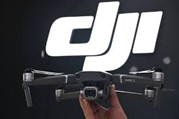
DJI needs little introduction—it owns over 90% of the consumer drone market globally. But behind its high-flying success lies an intricate AI system, from flight stabilization to intelligent object tracking.
Their drones are now used in agriculture, emergency response, logistics, and even infrastructure inspections, making DJI a true AI-and-hardware hybrid success.
6. Agibot
Founded: 2023, Shanghai
Core Focus: Robotics, AI Automation, Industrial Solutions
Agibot blends the brains of AI with the brawn of robotics. The company focuses on developing adaptive robots for logistics, manufacturing, and healthcare. These robots learn and evolve, allowing seamless integration into dynamic work environments.
Agibot’s edge? It’s practical, modular designs that suit a wide range of industries—and its ability to scale quickly.
7. Zhipu
Founded: 2019, Beijing (Tsinghua University Spin-off)
Core Focus: Large Language Models, Open-Source AI

Zhipu AI is China’s academic powerhouse-turned-industry disruptor. With its flagship GLM-4-Air model, Zhipu delivers LLMs that match top global competitors but use significantly fewer resources.
What makes Zhipu truly unique is its open-source philosophy—encouraging developers, researchers, and enterprises to build on its models. This community-first approach is rare in China’s traditionally closed tech environment.
8. Hunyuan
Founded by: Tencent
Core Focus: Natural Language Processing, Platform-wide AI
Hunyuan powers Tencent’s vast ecosystem—from WeChat to cloud services. Its NLP engines handle billions of user interactions daily, offering everything from language translation to smart replies.
By embedding AI deeply across its platforms, Tencent ensures seamless user experiences, backed by intelligent data interpretation and personalization.
9. Qwen
Developed by: Alibaba Cloud
Core Focus: LLMs, Multimodal AI, Hybrid Reasoning

First introduced in 2023, Alibaba’s Qwen series reached new heights in 2025 with Qwen 3. The latest model supports multimodal inputs (text, image, audio) and advanced hybrid reasoning, making it ideal for both consumer apps and enterprise use.
Alibaba’s cloud infrastructure gives Qwen a scalability advantage, while its open-source licensing has helped drive adoption at home and abroad.
10. Doubao
Developed by: ByteDance
Core Focus: Conversational AI, Chatbots, User Engagement

Doubao is ByteDance’s answer to generative AI. Integrated within the company’s content platforms, Doubao is more than a chatbot—it’s a personalized digital companion.
With real-time content awareness, Doubao adapts to trending topics, user preferences, and even local dialects, making it one of the most contextually intelligent AI products in China today.
The Future of AI in China
As we move deeper into the AI era, China’s strategy is clear: dominate through innovation, scale, and strategic independence. These top 10 companies reflect a diverse yet interconnected ecosystem—from academic labs to billion-dollar unicorns—where AI isn’t just an industry, but a national priority.
In 2025, as the global AI race intensifies, keep your eyes on China—not just as a participant, but as a leader shaping the next frontier of intelligence.
Read more similar article: https://globalbizoutlook.com/apacs-top-10-influential-healthcare-leaders-to-watch-in-2025/