

Fatigue and aching ebbed through both of my wrists, clouding my problem-solving clarity as I attempted my calculus homework. Eventually, I dropped my pencil and tried “practicing” the problems in my head instead.
Without the ability to map each problem visually, I would work halfway through an equation only to find that the information I needed to complete the problem was forgotten. Would memorizing each step be the only option?
I anxiously thought about the next day’s exam, when I would have to communicate my mathematical thinking to a scribe. How could I demonstrate true mastery if the way I practiced was fundamentally different from the way I was expected to perform?
The following day, I greeted my scribe, grateful that someone was available to write down my thinking. I remember thinking, I am fortunate to be a student here—but how many other students with similar physical barriers have access to this kind of support?
As I read the first question, I could not simply focus on the exam. I had to adjust to another person sitting beside me: their handwriting, facial expressions, pacing, and interpretation of what I said. It was a balance between focusing on the exam and correcting the scribe for any notational miscommunications or misunderstandings. Consequently, it was no longer a linear thinking pattern, nor an accurate representation of my academic abilities.
I thought about my peers; I was no less intelligent, hardworking, or determined. They reached their goals, whereas my wrists’ limitations held me back – an equal input, yet an unequal output.
I thought of my humanities-related classes: I excelled due to voice dictation, directly translating my thoughts into text on a screen. With math and science classes, I tried everything: learning to write ambidextrously, periodically switching hands to give each wrist a break; learning to write with my feet; searching for voice dictation software understanding scientific notation. During university, the pain in both wrists, alongside a lack of tools, forced me to withdraw from 3 STEM courses.
Why should physical limitations translate into academic difficulties? This is the question that brought our team together.
Alongside our stealth cofounder (CTO) and cofounder Ryan Paul (CPO), we built Phoenix, a voice-powered equation workspace that enables users to dictate and edit equations up to the PhD level. Our company, Assistivity LLC, builds accessible software reducing physical barriers in STEM.
However, building Phoenix taught me something much broader than how to solve one accessibility problem.
It taught me that friction is information.
Businesses often treat constraints as exceptions. Accessibility needs, unusual workflows, physical limitations, and so-called edge cases may appear to affect only a small group of people. When one person encounters a barrier severe enough they cannot continue, that barrier becomes impossible to ignore. However, other users may already experience a milder version of the same problem: unnecessary clicking, interrupted concentration, or inefficient workflows.
The initial question could have been, “How do we accommodate someone who cannot comfortably write equations?”
A more powerful question became: Why does entering an equation require so much physical and cognitive overhead in the first place?
Once we framed the problem that way, the potential application expanded.
Consider the employee performing repetitive tasks that everyone accepts as unavoidable. The older adult who struggles with instructions that younger users technically can follow. The
employee who develops an elaborate workaround for a cumbersome internal process. Although it is easy to label these situations as isolated problems, what if we asked: what are these problems
revealing?
Our experience with Phoenix demonstrated how my personal struggle had broader applications.\
We recently completed a 24-participant study in which each participant performed the same
quadratic-formula workflow in three ways: handwriting, using Microsoft Word’s equation editor, and dictating using Phoenix. The results? Phoenix was 42.9% faster than handwriting and 76.1% faster than Microsoft Word. All 24 participants completed the task faster with Phoenix than with Microsoft Word.
The most striking takeaway? Twenty of twenty-four participants did not identify as having a fine-motor disability; yet, these participants expressed frustration with time spent clicking, searching, and scrolling to input equations, and Phoenix still demonstrated an increase in
workflow efficiency.
Furthermore, the deeper problem was not simply my wrist pain; the mechanisms required to communicate mathematical thinking were interfering with the thinking itself.
Sometimes the person experiencing the greatest difficulty is simply the first person who makes an existing design flaw visible.
No, this concept does not indicate every inconvenience should become a product. Although personal experience may reveal a problem, it does not prove a solution will work for others. So, evidence is necessary validation to fill this gap.
Our personal experience initiated the development of Phoenix, but we continued by studying the problem, testing the technology, gathering feedback, and evaluating whether the underlying need extended beyond my own circumstances.
Our work on Phoenix eventually contributed to a peer-reviewed publication at ACM ASSETS 2025, an international conference focused on computing and accessibility. As we presented our research alongside researchers from around the world, we saw how often meaningful research begins with lived experience. We observed a similar pattern in conversations with university
technology leaders: equation entry can create unnecessary friction, and that friction is not limited to users with disabilities. Our work has received support through grants from Villanova University and Carnegie Mellon University, while our advisory board brings together
perspectives from CEOs in successful technology startup companies in the education and data sector, in addition to engineers, global business business executives, and a PhD candidate with cerebral palsy.
For our team, our progression reinforced another important lesson: Although lived experience
identifies a problem, evidence determines whether the insight travels beyond oneself. When both lived experience and evidence are compounded, useful innovations can emerge.
Accessibility, therefore, should not be viewed only as a compliance requirement or an added
feature added after a product has already been designed. Instead, accessibility can be a source of product insight, revealing insufficiency and assumptions that may affect a much broader population.
So, the friction you encounter at work, home, or even during an ordinary routine? It may be worth examining instead of immediately dismissing.
Sometimes, innovation begins simply by noticing what everyone else has learned to ignore.
About the Author
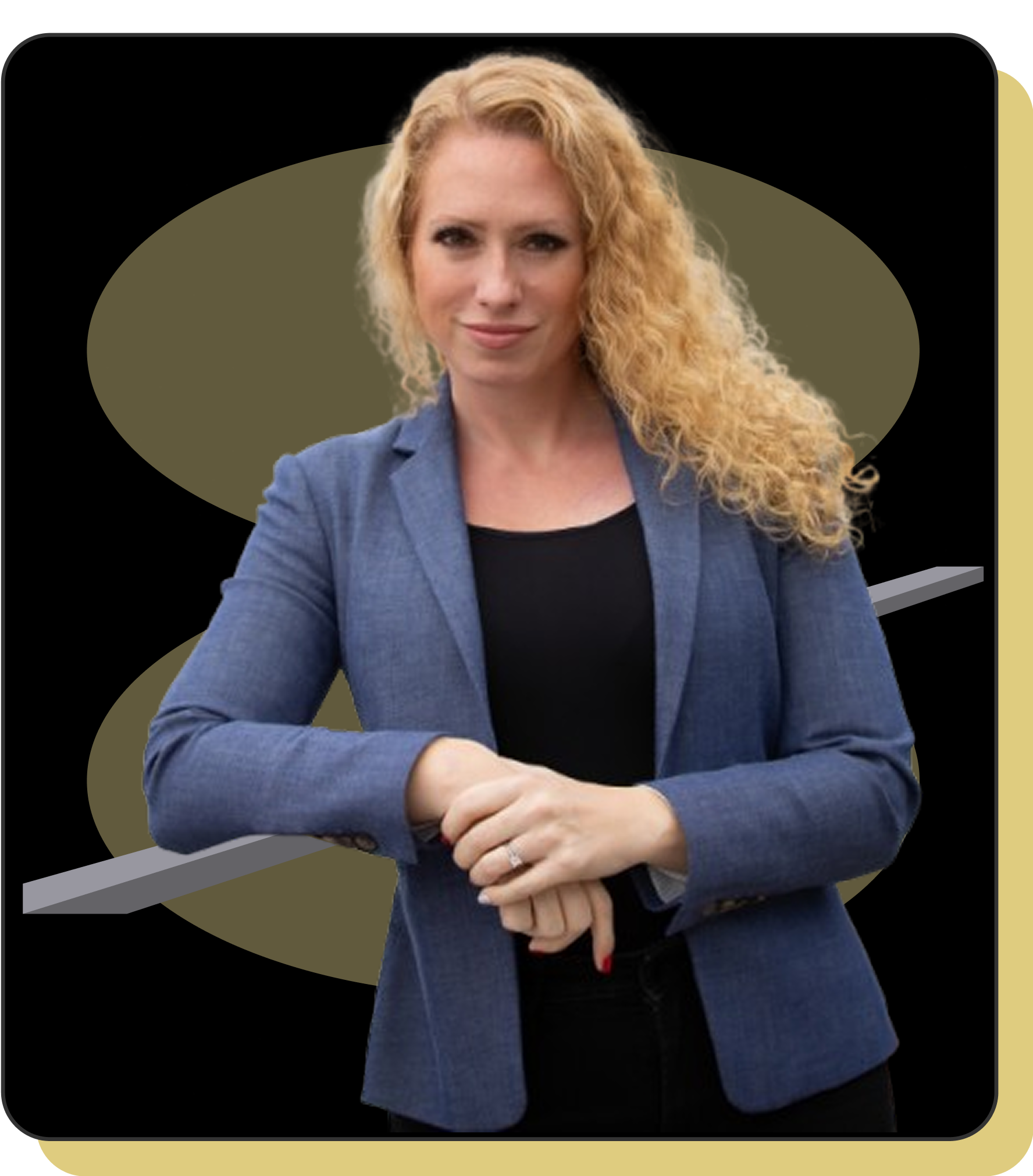
Priscilla Zhang is an innovator, speaker, and advocate for disability and assistive technology. She is a prospective Doctor of Optometry at Pennsylvania College of Optometry and a graduate of Villanova University. She co-founded Assisitivity LLC and co-designed Phoenix, a voice-to-equation tool that helps students solve math and physics problems. Her work focuses on creating accessible and practical solutions through technology, empathy, and innovation.
Read more: You Have a Personal Brand. But What About Your Reputation?