
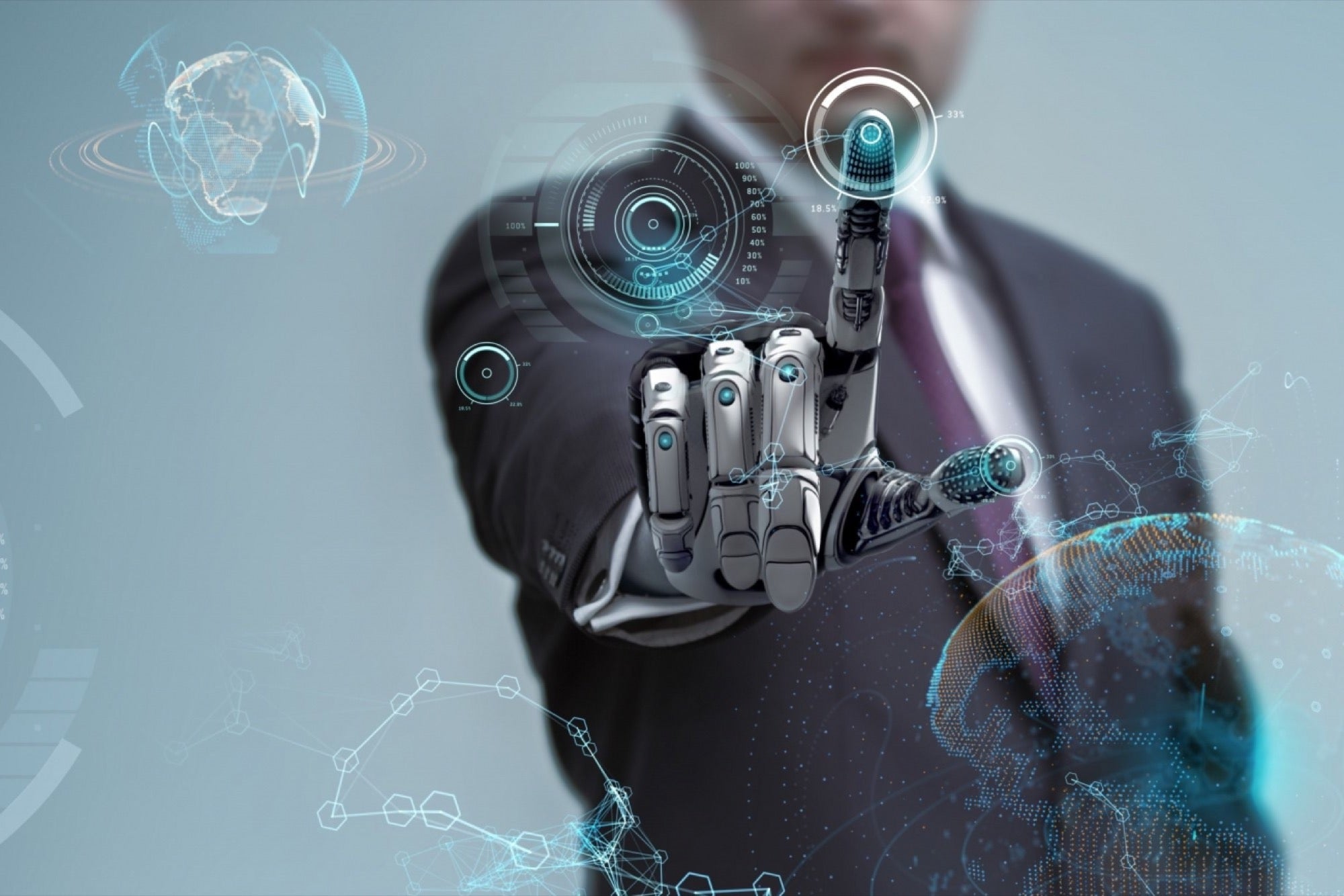
Businesses are being transformed by automation and artificial intelligence (AI), which will also increase productivity and hence contribute to economic growth.
Additionally, they will support efforts to address “moonshot” societal issues ranging from climate change to health.
These technologies will simultaneously change the nature of employment and the workplace. More human duties will be completed by machines, who will also be able to undertake some tasks that are beyond the capabilities of humans. As a result, many professions will alter and thrive, while others will perish.
The nature of labor also continues to change in the high-tech, rapidly changing environment. Computers, robotics, and automation have altered the nature and responsibilities of nearly every job in the previous few decades. A new revolution is being sparked by automation and artificial intelligence, changing occupations across all sectors, from manufacturing to IT.
Millions of already existing occupations are likely to be eliminated by artificial intelligence, while millions of new ones, some of which have not yet been imagined, will be created. Approximately one-fourth of all occupations worldwide face the threat of automation, according to some surveys. Sometimes, this trend causes people to worry about their job security.
What Reports Says
Robotics, automation, and artificial intelligence might eliminate 85 million jobs globally by 2025, according to a recent World Economic Forum analysis. But it will also result in the creation of 97 million additional employment in the future.
Regarding the drawbacks of AI, there have been numerous instances of data breaches in the past, such as the time that Zoom allegedly transmitted data to China and had users’ video calls posted online. The infamous Facebook/Cambridge Analytica data scandal should also not be forgotten.
Even after thoroughly examining all the material, it is still unclear how we will go forward with data security. What is certain, though, is that while artificial intelligence will eliminate some occupations, it will also generate a large number of new ones, and some jobs will be performed jointly by people and robots.
Contrary to popular belief, automation is predicted to alter employment rather than completely replace them by taking on routine, easy activities. This will enable them to advance into jobs requiring stronger interpersonal skills.
The following skills and professions cannot be easily replaced by automation.
Automation won’t take the role of jobs that require a lot of interpersonal connection, strategic interpretation, critical thinking, specialized skills, or subject-matter knowledge any time soon. For instance, professionals in law, leadership, medicine, healthcare, IT, and human resources. We will still rely on human interaction to offer arguments, develop social relationships during the negotiation phase, and uncover nuances in the data, rather than solely relying on data and algorithms. We can automate practically every step of the contract workflow process.
Automation will never take the role of jobs that require establishing relationships with clients, consumers, or patients.
Alexa or Siri is excellent at going along with your every request, but they are unable to comprehend your emotions. Even the most cutting-edge technology will never be able to understand our emotions and react as effectively as a human. You need empathy to complete those tasks, whether you’re a team leader guiding colleagues through a trying moment, an account manager engaging with clients, or a hiring manager searching for the ideal applicant.
For instance, over the past few years, automation has improved the work of HR experts, but it cannot completely replace them or eliminate the necessity for human interaction.
More administrative tasks, including payroll and the screening of employment applications, will be automated.
But when it comes to HR, the human touch will always be present. Similarly, technology and automation are becoming increasingly crucial in the healthcare industry.
But for diagnosis and treatment, these must collaborate with people – physicians, surgeons, nurses, and healthcare professionals.
In addition, there are several professions that AI will not be able to take over shortly, including psychologists, carers, the majority of engineers, human resource managers, marketing strategists, and lawyers.
Strategic, analytical, and creative thinking can’t be replaced
Automation can remove or streamline the implementation process, but it cannot offer a comprehensive plan that makes each action pertinent and ties into the greater vision. Even as the world migrates toward automation and digitization, the capacity to comprehend the situation and its complexities before providing answers continue to be vital. No matter the industry, humans will always do tasks that need strategic thought.
Therefore, in my opinion, there will always be a high demand for individuals with the skills to integrate systems and processes, such as solution architects, designers, hospitality service providers, and consultants. In essence, the skills of the future would be those that could deliver exceptional client experiences.
Most clever robots or computers cannot compose music or paint like Picasso. Why some people are more creative than others is a mystery to science. It is safe to conclude that computers will never be able to match the creative inspiration that has produced some of humankind’s most astounding achievements.
Creativity is spontaneous and requires imagination, dreaming, and group inspiration, which people are best at. Automation is programmed and cannot reproduce this.
Many mundane tasks are being eliminated by digital technologies like AI/ML, however, some can’t quite be replaced because of the complexity of the replacement and the reality that AI evolution is not as magical as many think it is. Only repetitive jobs that adhere to the same set of rules repeatedly can currently be completed by AI. Psychologists, carers, the majority of engineers, human resource managers, marketing strategists, and attorneys are a few professions that AI will not be capable of taking over anytime in the near future.