
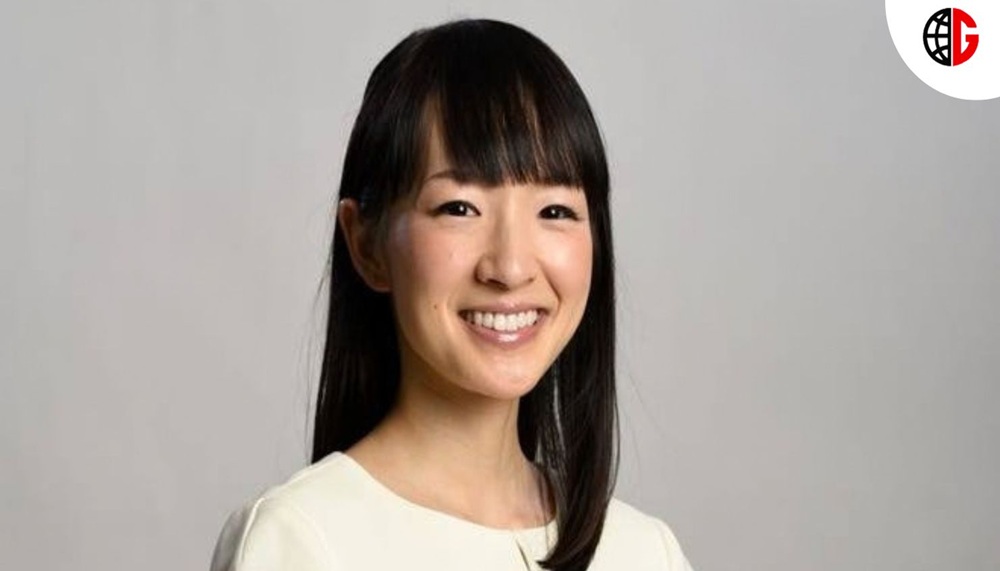
From a childhood fascination with tidying to a global lifestyle brand, Marie Kondo transformed the simple act of organizing into a cultural phenomenon. Her KonMari Method changed how millions of people think about possessions, homes, and the meaning of a clutter-free life.
There was a time when decluttering was considered little more than a household chore. Then came Marie Kondo, a Japanese organizing consultant who turned tidying into a philosophy and eventually into a global business.
Her simple question, “Does it spark joy?”, became one of the most recognizable ideas in modern lifestyle culture. Instead of asking people to organize their belongings room by room, Kondo introduced a radically different approach: organize by category, examine every possession, and keep only those things that genuinely bring value or joy.
What began as a personal passion during childhood evolved into the KonMari Method, a bestselling book, a Netflix phenomenon, an international brand, and a powerful entrepreneurial case study.
The Childhood Passion That Became a Career
Marie Kondo’s relationship with organization began long before she became a global name.
Born in Tokyo, Japan, in 1984, Kondo developed an unusual interest in tidying while she was still a child. While other children were focused on playing, she was fascinated by organizing classrooms, bookshelves, and household spaces.
Her curiosity eventually became more deliberate. As a teenager, she began experimenting with different approaches to organizing possessions and understanding why certain methods worked better than others.
Rather than treating tidying as simply putting things away, Kondo became interested in the emotional relationship people have with their possessions.
That observation would later become central to her philosophy.
Kondo understood that clutter is rarely just about objects. People keep things because of memories, aspirations, guilt, fear of wasting money, or an emotional attachment to the past. Therefore, simply telling someone to throw things away was unlikely to create lasting change.
Her method focused instead on making a conscious decision about what deserves to remain in one’s life.
From Organizer to Entrepreneur
As Kondo refined her philosophy, she began helping people organize their homes professionally.
Her approach was distinctive.
The KonMari Method encourages people to tidy by category rather than location. Instead of cleaning one room at a time, people gather similar possessions together and examine them collectively.
The traditional sequence includes categories such as:
- Clothes
- Books
- Papers
- Miscellaneous items
- Sentimental possessions
The objective is not simply to discard as much as possible. Instead, people are encouraged to hold each item and ask themselves whether it “sparks joy.”
That seemingly simple question changed the psychology of decluttering.
Rather than making the process entirely about getting rid of possessions, Kondo reframed it as a process of choosing what to keep.
This subtle shift helped make her approach more positive, personal, and emotionally engaging.
The Book That Changed Everything
Kondo’s biggest breakthrough came through publishing.
Her book, The Life-Changing Magic of Tidying Up: The Japanese Art of Decluttering and Organizing, introduced the KonMari Method to a much wider audience.
Published in Japan before reaching international markets, the book eventually became a global bestseller.
Its appeal went far beyond traditional organization advice. Readers were not simply being told how to arrange drawers or fold clothes. Kondo presented tidying as something capable of changing the way people interact with their homes and possessions.
The book’s success demonstrated an important entrepreneurial lesson: a familiar problem can become a powerful business opportunity when approached from an original perspective.
People had been organizing homes for generations. What Kondo offered was a new philosophy around why people organize.
Her method gave ordinary household decisions a deeper emotional dimension.
The “Spark Joy” Phenomenon
Few phrases became as closely associated with a lifestyle movement as “spark joy.”
The expression captured Kondo’s philosophy in just two words.
Instead of asking whether an object was expensive, useful, fashionable, or still in good condition, the KonMari approach encouraged people to consider their personal response to it.
That idea resonated strongly with audiences living in increasingly consumer-driven environments.
Homes had become filled with clothes, books, kitchenware, paperwork, electronics, souvenirs, children’s possessions, and countless objects accumulated over the years.
Kondo’s message suggested that having more was not necessarily the same as living better.
Her philosophy encouraged people to become more intentional about what they owned.
That message helped turn her from an organizing consultant into a recognizable cultural personality.
Netflix Took Marie Kondo Global
The next major chapter in Kondo’s success came through television.
In 2019, Netflix premiered Tidying Up with Marie Kondo, introducing her method to an enormous international audience.
The series followed families as they confronted clutter and emotional attachments to their possessions.
Kondo’s calm personality, distinctive organizing techniques, and emphasis on gratitude made the program different from conventional home-makeover shows.
The show also created a visual experience around a philosophy that had previously existed largely in books.
Viewers could see the KonMari Method being applied to real homes and real emotional situations.
The result was a significant expansion of the Marie Kondo brand.
Tidying became entertainment.
Folding clothes became shareable content.
And “spark joy” became part of everyday popular vocabulary.
Kondo later returned to Netflix with Sparking Joy with Marie Kondo, further extending her organizing philosophy into broader aspects of lifestyle and home.
From Book Author to Global Brand
Marie Kondo’s success is particularly interesting from a business perspective because she did not build her reputation around a complicated product.
Her original product was essentially an idea.
That idea could then be translated across multiple platforms.
Books introduced the philosophy.
Consulting services demonstrated it.
Television made it visually engaging.
Social media expanded its reach.
Speaking and media appearances strengthened her authority.
And her broader brand allowed the philosophy to move beyond books and television.
This represents a powerful modern entrepreneurship model: build intellectual property around a distinctive idea, then create multiple channels through which people can experience it.
Kondo’s name eventually became synonymous with organization itself.
Why Her Method Connected With Millions
The success of the KonMari Method was not simply about folding clothes neatly.
Its deeper appeal came from its understanding of human behavior.
Traditional decluttering often focuses on quantity: How much can I throw away?
Kondo’s approach shifts the question toward personal value: What do I actually want to keep?
That distinction matters.
People frequently struggle to discard possessions because objects can represent relationships, memories, achievements, ambitions, or earlier versions of themselves.
By encouraging people to appreciate an object before letting it go, Kondo made decluttering feel less like rejection and more like a conscious transition.
Her approach also encouraged people to treat their homes as environments that support the lives they want to live.
That emotional dimension helped separate her from conventional organizing advice.
Building a Personal Brand Around Authenticity
Another important part of Kondo’s success has been her personal brand.
She did not position herself simply as another cleaning expert.
Her Japanese background and philosophy became an integral part of the KonMari identity. She introduced an approach influenced by Japanese concepts of simplicity, respect, mindfulness, and appreciation, while adapting it for an international audience.
Her calm communication style also became part of her appeal.
In a world of increasingly loud digital personalities, Kondo’s understated presentation created a distinctive identity.
She demonstrated that personal branding does not always require being the loudest voice in the room.
Sometimes, consistency and a recognizable philosophy can be more powerful than constant reinvention.
Recognition and Cultural Influence
Kondo’s influence expanded well beyond the organizing industry.
Her work earned significant media attention, and in 2015, she was included in TIME magazine’s list of the 100 most influential people.
The recognition reflected how far the KonMari philosophy had traveled from its beginnings as a personal interest in organizing.
Her influence could be seen in conversations around minimalism, conscious consumption, home organization, productivity, and lifestyle design.
More importantly, she helped establish organizing as a mainstream lifestyle category rather than merely a domestic task.
The Entrepreneurial Lessons Behind Marie Kondo’s Success
Marie Kondo’s story offers several lessons for entrepreneurs and aspiring creators.
1. Find a New Perspective on an Old Problem
People had always struggled with clutter.
Kondo did not invent the problem. She changed the way people thought about solving it.
That is a valuable entrepreneurial lesson: innovation does not always require creating something completely new. Sometimes it means reframing something familiar.
2. Turn Expertise Into Intellectual Property
Kondo transformed personal expertise into a recognizable methodology.
The KonMari Method gave her knowledge a name, structure, language, and identity.
Once an idea has a clear framework, it becomes easier to communicate, publish, teach, license, and build a brand around.
3. Create a Memorable Idea
“Spark joy” is memorable because it is simple.
A strong business philosophy does not always need complicated terminology. A short, emotionally resonant idea can travel much further.
4. Build Beyond One Platform
Kondo’s journey demonstrates the power of a multi-platform brand.
A book created authority. Television created mass visibility. Digital platforms created continued engagement.
Each channel reinforced the same central philosophy.
5. Understand the Emotional Side of the Customer
One of Kondo’s strongest insights was recognizing that possessions have emotional value.
Successful businesses often look beyond the functional problem and understand the emotional reason customers care about it.
A Success Story Built on Less
Perhaps the most fascinating element of Marie Kondo’s journey is the paradox at its center.
She built a global business by teaching people to own less.
In an economy often driven by consumption, her message encouraged people to pause before acquiring more and reconsider what they already possessed.
Her success demonstrates that powerful entrepreneurship does not necessarily begin with a revolutionary technology, massive investment, or complicated product.
Sometimes it begins with observing an everyday problem differently.
Marie Kondo saw clutter not merely as a mess but as a decision-making problem. She developed a philosophy around that insight, gave it a memorable identity, and communicated it through books, television, media, and a global personal brand.
The result was the KonMari phenomenon.
From childhood fascination with tidy spaces to international recognition, Marie Kondo transformed organization into an experience centered on intention, gratitude, and personal meaning.
Her journey ultimately illustrates a timeless entrepreneurial principle: when an ordinary problem is understood deeply enough, solving it differently can create an extraordinary business.
Read more: Viktoria Friedrich Appointed President and CEO of Bayer Inc. in Canada