
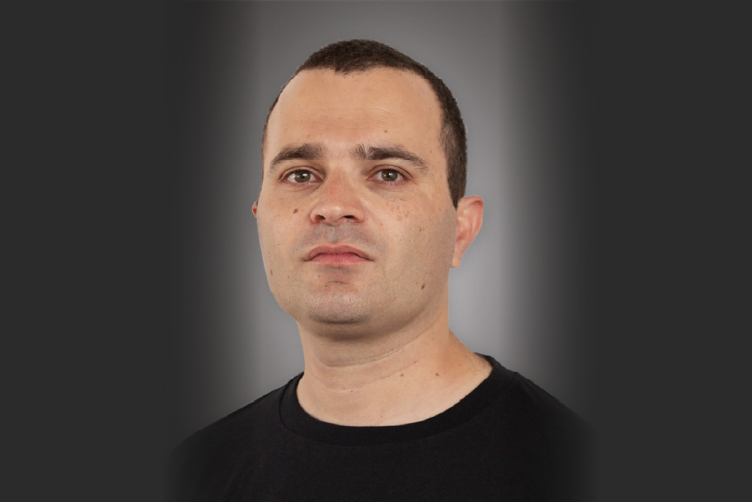
Ofer Tirosh, Founder and CEO of Tomedes, has spent nearly two decades at the intersection of human language expertise and machine-assisted translation, long before that combination had a name or an industry trend behind it. His conviction has remained consistent: that AI translation without qualified human oversight is not a finished product, and that companies unwilling to back their work with genuine accountability will eventually be exposed. In 2026, with the global language services market projected to reach $65.5 billion, the industry is proving him right.
Ofer Tirosh’s leadership journey: A builder, not a pundit
Ofer Tirosh did not enter the translation industry with a background in linguistics or technology. He entered it with a question: why was professional language expertise so difficult to access, so inconsistently priced, and so poorly accountable for quality outcomes? The answer he arrived at, that most providers were selling speed rather than a quality system, became the founding logic of Tomedes in 2007.
What distinguished Ofer’s approach from the beginning was operational specificity. Rather than building a marketplace that connected buyers with freelancers and stepped back, Tomedes was built around dedicated project managers, subject-matter expert linguists, and a quality guarantee that covered the translation after delivery, not just during it.
“The translation industry has always rewarded volume and speed. What it has consistently underinvested in is accountability. From day one, Tomedes was built to own the outcome, not just the transaction.”
The founding insight: Quality is a system, not a promise
Ofer launched Tomedes at a moment when machine translation was generating more excitement than confidence. Early tools produced output that was fast and often wrong in ways that were invisible to buyers who did not speak the target language. The gap between what automated translation promised and what it actually delivered, especially in regulated industries like legal, medical, and financial services, was significant.
Rather than positioning Tomedes against machine translation, Ofer chose to build around it. The question was not whether AI translation had a role, but how to ensure human expertise remained embedded at every quality gate. That decision, made years before hybrid workflows became industry terminology, became Tomedes’ structural advantage.
“AI did not disrupt the translation industry. It revealed which providers never had a real quality system to begin with. The companies scrambling now are the ones that were hiding mediocre work behind fast turnarounds. At Tomedes, AI forced us to make our quality system visible, and that is the best thing that ever happened to us.”
What Tomedes does: Language services built for accountability
Tomedes is a professional translation company serving clients across 270+ languages, with expertise spanning legal, medical, technology, financial, and creative verticals. The company operates 24/7/365 with dedicated project managers on every engagement, connecting clients with native-speaking, subject-matter expert linguists matched to the specific domain and language pair of each project.
As enterprises accelerate digital transformation and expand into new markets, the demand for translation that is both fast and defensibly accurate has grown sharply. Tomedes addresses this through a workflow that integrates AI translation tools at the speed and scale stage, while preserving human expert review at every quality-critical point.
Tomedes holds ISO 17100:2015 certification for translation services and ISO 18587:2017 certification for machine translation post-editing, the MTPE standard that defines what qualified human review of AI output actually requires. These certifications are not marketing claims. They are operational commitments that govern how every project is handled.
“ISO 18587 exists because AI translation requires human expertise to become production-ready. Most companies adopting AI translation workflows today have never read that standard. The ones building without it are not saving money. They are transferring risk to their clients.”
270+ languages is a quality claim, not a headcount claim
Most translation companies lead with a language count. It is the easiest number to publish and the hardest for a buyer to interrogate. Listing 200 or 270 or 300 language pairs tells a buyer nothing about whether the linguist assigned to their Swahili legal contract or their Tagalog medical device manual has domain expertise in that field, or is simply a native speaker available at a given price point.
Tomedes built its language coverage around vertical-specific translator pools rather than a generalist roster. The distinction matters most in regulated and high-stakes content: a certified medical translator working in a low-resource language is not the same as a bilingual individual with no domain training, and the gap between them is not visible in a language count. For Ofer, this is the most persistently misunderstood claim in the industry.
“Every LSP has a language list. Very few can prove quality across all of them. We built vertical-specific translation teams instead of a generalist pool because the risk of getting it wrong in a niche language pair falls entirely on the client, not on the provider who listed the language. That is the accountability gap most buyers never think to ask about.”
The human + AI model: Why the distinction matters
The phrase ‘human plus AI’ has become so common in the translation industry that it has lost its meaning. Every provider uses it. Few explain what it actually means in practice: which tasks go to AI, which go to human experts, who owns the quality gate, and what happens when AI gets it wrong.
At Tomedes, the model is explicit. AI translation tools handle high-volume, speed-sensitive output. Human linguists, native speakers with domain expertise in the relevant vertical, review, edit, and certify that output before delivery. The division is not arbitrary. It is determined by content type, industry risk profile, and the language pair’s complexity relative to what current AI models can reliably produce.
AI governance in language programs has become a pressing concern for enterprises under C-suite pressure to adopt AI broadly and quickly. Ofer’s position is that the governance gap, the space between what AI translation produces and what clients actually need, is where the real quality risk lives, and where human expertise is non-negotiable.
“The linguists who work on every Tomedes project are not a fallback layer. They are the reason AI output becomes something a client can publish, file, or act on. That is not a philosophical position. It is an operational one, built from running more than 95,000 translation projects across industries where accuracy is not optional.”
The accountability standard: The 1-Year Quality Guarantee
In an industry where most providers offer revisions only within days of delivery, Tomedes backs every translation with a 1-Year Quality Guarantee. If a translation does not meet quality standards, Tomedes owns the outcome, not the client.
For Ofer, this guarantee is less a commercial feature than a structural forcing function. When a company is financially accountable for a translation twelve months after delivery, every internal quality decision is made differently. There is no incentive to cut corners on human review, to deploy AI output without post-editing, or to assign a project to a linguist without the right domain expertise.
“A guarantee changes behavior before delivery, not after. When we introduced the 1-Year Quality Guarantee, it was not a marketing decision. It was a commitment that forced Tomedes to build the quality infrastructure to back it. Every certified workflow we have today exists because we knew we would be accountable for the outcome.”
Democratizing access: The MachineTranslation.com mission
One of the most consistent frustrations Ofer encountered over nearly two decades was the access gap. Professional-grade translation tools and services had historically been available only to enterprise buyers with the budget and vendor relationships to support them. Smaller companies, independent professionals, NGOs, and growth-stage businesses operating across languages were priced out of the quality tier.
Nimdzi’s research makes the cost of that gap measurable: nine out of ten international users will ignore a product not available in their native language. The signal is clear. The barrier has been infrastructure and cost.
Tomedes built MachineTranslation.com as a direct response, a free AI translation tool offering up to 100,000 translated words per month at no cost. The tool draws on a multi-engine approach, querying multiple AI translation models to surface the output they agree on. It is built on the same methodology Tomedes applies internally.
“Free access to professional-grade AI translation tools is not a gesture. It is an argument about what the industry should look like. The companies, NGOs, and independent professionals who cannot afford an enterprise translation contract still need to communicate globally. MachineTranslation.com exists because we believe that barrier should not exist.”
Building remote-first before it had a name
Tomedes has operated as a fully remote, globally distributed company since its founding in 2007, years before remote work became a mainstream business model and long before distributed team management had its own playbook. Coordinating translation projects across time zones, cultures, and languages from day one shaped how Ofer thinks about trust, accountability, and communication in teams.
For Ofer, the operational lessons of running a remote-first global company are now more relevant than ever for enterprises managing distributed international teams. The discipline of clear communication, documented processes, and outcome-based accountability that remote operations require is precisely the discipline that quality translation demands.
“We were managing 24/7 projects across fifty-plus countries before anyone was writing about async-first culture. What remote work taught us is that clarity of expectation and accountability of outcome are the only things that scale across time zones. That lesson runs through everything Tomedes does.”
Vision: The translation company of the next decade
Looking ahead, Ofer sees two trajectories converging. The first is the continued commoditization of raw AI translation output, faster, cheaper, and increasingly indistinguishable at the surface level. The second is the growing enterprise recognition that surface-level quality is not enough for legal contracts, medical documentation, regulated communications, or brand-defining content in new markets.
The companies that will win in that environment are the ones that can demonstrate a quality system, not just a quality claim. For Tomedes, that means continuing to develop the free AI tools suite at MachineTranslation.com, expanding subject-matter expert linguist networks in high-demand verticals, and deepening the hybrid workflow infrastructure that makes ISO-certified translation deliverable at the speed modern enterprises require.
“The next decade in translation belongs to the companies that can be both fast and accountable, not one or the other. Tomedes has been building for that combination since 2007. The market is finally catching up.”