

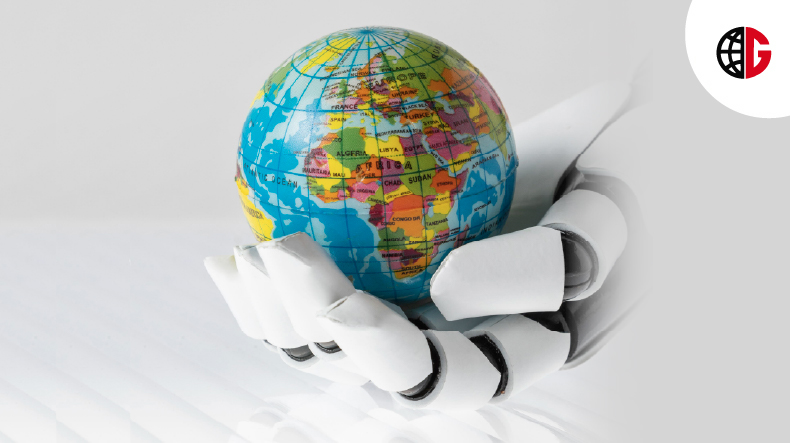
As Artificial Intelligence Accelerates, the Battle for Technological Dominance Is Reshaping the Future of Global Power
The race to dominate artificial intelligence is no longer a distant technological competition—it has become one of the most consequential geopolitical contests of the 21st century. As AI capabilities advance at an unprecedented pace, governments, technology companies, and policymakers are increasingly recognizing that the nation leading the AI revolution could gain a significant advantage in economic growth, military power, cybersecurity, scientific innovation, and global influence.
At the center of this competition stand two superpowers: the United States and China. Both countries are investing billions of dollars into AI research, semiconductor development, cloud infrastructure, and talent acquisition. Yet while the world often views this as a simple technology race, the reality is far more complex. The outcome could determine not only who controls the most advanced AI systems but also which values, regulations, and governance models shape the future of humanity.
By 2028, experts believe artificial intelligence may reach transformative levels capable of dramatically changing industries, governments, and societies. The question is no longer whether AI will transform the world—it is who will lead that transformation.
Why the AI Race Matters More Than Ever
Artificial intelligence has evolved from a niche research field into a strategic national asset. AI is now being integrated into healthcare, finance, manufacturing, education, transportation, defense, cybersecurity, and scientific research.
Unlike previous technological revolutions, AI has the potential to improve itself, accelerate innovation, and amplify human capabilities on a massive scale. Advanced AI systems can help discover new medicines, develop cutting-edge materials, optimize supply chains, and automate complex decision-making processes.
The nation that develops the most capable AI systems first could gain advantages across nearly every sector of society. This is why governments increasingly view AI not merely as a commercial opportunity but as a matter of national security and global leadership.
By 2028, AI may become as foundational to economic competitiveness as electricity, the internet, and industrial manufacturing were in previous eras.
The United States: Current Leader in Frontier AI
Today, the United States remains the dominant force in advanced AI development. Many of the world’s leading AI companies, research institutions, and semiconductor innovators are based in America.
American firms have pioneered some of the most powerful AI models ever created. They also control much of the ecosystem required to build next-generation AI systems, including advanced computing hardware, cloud infrastructure, and AI software frameworks.
Several factors contribute to America’s current advantage:
1. Semiconductor Leadership
Advanced AI systems require enormous computing power. The most powerful AI models are trained using sophisticated computer chips capable of performing trillions of calculations per second.
Companies such as NVIDIA, AMD, and other technology leaders have become critical suppliers of the hardware powering the global AI revolution. These chips form the backbone of modern AI development.
Without access to advanced semiconductors, it becomes significantly more difficult to train and deploy frontier AI systems.
2. Strong Innovation Ecosystem
The United States benefits from a unique combination of world-class universities, venture capital, research institutions, startups, and technology giants. This ecosystem continuously attracts global talent and fosters rapid innovation.
Silicon Valley and other technology hubs continue to serve as magnets for AI researchers, engineers, and entrepreneurs from around the world.
3. Massive Investment Capacity
Building frontier AI systems requires billions of dollars in infrastructure spending. American technology firms have demonstrated an unmatched ability to raise capital and invest heavily in AI data centers, cloud computing, and next-generation models.
This financial advantage enables rapid scaling and experimentation.
China’s Ambitious Push for AI Leadership
While the United States currently leads, China is far from a passive observer. The country has made AI a national strategic priority and has invested heavily in becoming a global AI powerhouse.
Chinese technology companies have produced increasingly capable AI models and continue to close the performance gap with Western competitors.
China’s strengths include:
Large Talent Pool
Chinese universities graduate hundreds of thousands of engineers and computer scientists each year. This growing talent base has become a major driver of the country’s AI ambitions.
Government Support
Unlike many nations, China has adopted a coordinated national strategy for AI development. Government agencies, state-backed funds, and technology companies often work toward shared objectives.
Billions of dollars have been allocated to AI research, semiconductor manufacturing, and intelligent infrastructure projects.
Rapid Adoption
China’s ability to deploy technology at scale provides a unique advantage. AI applications are increasingly integrated into transportation, manufacturing, healthcare, e-commerce, and public services.
This rapid adoption helps generate valuable data and real-world experience that can accelerate future AI development.
The Critical Role of Compute Power
If AI is the engine of the future, compute power is the fuel.
Advanced AI systems depend on enormous quantities of computational resources. The ability to access powerful chips, data centers, and cloud infrastructure has become one of the defining factors in determining AI leadership.
Many analysts argue that the competition for AI dominance is increasingly a competition for compute dominance.
The nation with greater access to advanced chips can train larger models, conduct more experiments, and accelerate innovation faster than competitors.
This reality has elevated semiconductors from a commercial product to a strategic geopolitical asset.
Export Controls and the Technology Divide
One of the most significant developments in recent years has been the introduction of export controls restricting access to advanced semiconductor technologies.
These measures aim to limit China’s ability to obtain the highest-end chips and manufacturing equipment needed for frontier AI development.
Supporters argue that such controls help preserve a technological advantage for democratic nations. Critics warn that restrictions could intensify global competition and encourage technological decoupling.
Regardless of perspective, export controls have become a central element of the global AI landscape and will likely play a major role in determining who leads by 2028.
AI and National Security
Artificial intelligence is no longer solely an economic tool—it is increasingly viewed as a strategic military capability.
Modern AI systems can enhance cybersecurity, intelligence analysis, autonomous systems, logistics, and battlefield decision-making.
Future AI breakthroughs could significantly impact military competitiveness. Nations capable of deploying advanced AI may gain advantages in cyber defense, threat detection, surveillance, and autonomous operations.
This dual-use nature of AI—serving both civilian and military purposes—raises the stakes of global competition considerably.
The Growing Concern Over AI Governance
The race for AI leadership is not only about capability but also responsibility.
As AI systems become more powerful, questions surrounding safety, ethics, transparency, and governance become increasingly urgent.
Many experts worry that intense competition could encourage organizations to prioritize speed over safety. A close race between major powers may reduce incentives for careful testing and responsible deployment.
The challenge facing policymakers is balancing innovation with safeguards that protect society from unintended consequences.
Whoever leads AI development will likely play a major role in establishing the rules and norms governing its use worldwide.
Two Possible Futures for 2028
Scenario One: Democracies Maintain a Clear Lead
In this future, democratic nations successfully maintain their technological advantage through continued innovation, strategic investments, and effective policies.
Advanced AI systems developed in the United States and allied nations remain significantly ahead of competitors. AI adoption drives economic growth, scientific breakthroughs, and improved cybersecurity.
Global markets increasingly rely on AI technologies built within democratic ecosystems, helping shape international standards based on transparency, accountability, and individual freedoms.
Under this scenario, AI becomes a powerful force for innovation while remaining aligned with democratic values.
Scenario Two: A Neck-and-Neck Competition
In another possible future, China closes much of the technological gap through aggressive investment, rapid adoption, and continued innovation.
AI capabilities become nearly equal between the two powers. Competition intensifies across economics, cybersecurity, defense, and global influence.
In this environment, governments and companies may face increased pressure to release increasingly capable systems faster, potentially creating new safety and governance challenges.
A closely contested AI landscape could result in competing standards, fragmented ecosystems, and heightened geopolitical tensions.
The Four Fronts of AI Competition
Experts increasingly view the global AI race as unfolding across four critical dimensions:
Intelligence
Who develops the most capable AI systems?
Adoption
Who integrates AI most effectively throughout society and industry?
Global Distribution
Whose AI platforms, infrastructure, and technologies become dominant worldwide?
Resilience
Which societies can successfully adapt to the economic and social changes created by AI?
Winning in AI requires success across all four fronts—not merely building the smartest model.
Why 2026–2028 Could Be the Decisive Window
Many researchers believe the next two years could represent a pivotal moment in AI history.
Advances in computing power, algorithmic efficiency, and AI-assisted research are accelerating progress faster than many predicted just a few years ago.
The emergence of increasingly capable systems suggests that transformative AI may arrive sooner than expected. Decisions made by governments, businesses, and technology leaders today could determine the balance of power for decades.
Whether through strategic investments, semiconductor leadership, responsible governance, or global partnerships, the actions taken before 2028 may ultimately define who leads the next technological era.
Outlook: The Future of AI Leadership Is Still Being Written
The global AI race is about far more than technology. It is a contest over economic prosperity, national security, scientific progress, and the values that will guide the world’s most powerful technologies.
The United States currently holds significant advantages in frontier AI development, semiconductor innovation, and investment capacity. However, China’s rapid progress, government-backed initiatives, and growing AI ecosystem ensure that the competition remains intense.
By 2028, the world could witness either a clear leader shaping the future of artificial intelligence or a fiercely competitive landscape where multiple powers vie for influence.
One thing is certain: artificial intelligence will become one of the defining forces of the century. The nations that successfully balance innovation, security, and responsible governance will be best positioned to lead the AI-powered future—and potentially shape the future of humanity itself.
Read more: How to Manage International Teams Across Time Zones and Cultures