
Cancer care does not fail because medicine stands still. It falters when access does.
Across Asia Pacific, radiation therapy has evolved at remarkable speed. Treatments that once stretched across weeks can now be completed in a handful of precisely calibrated sessions. Non invasive options are replacing procedures that once required surgery. The science has advanced; the engineering has matured; the possibilities are real.
And yet, in many countries across the region, there are still fewer than one radiotherapy unit per million people, while international guidance suggests closer to four. The technology exists. The expertise exists. The patients are waiting.
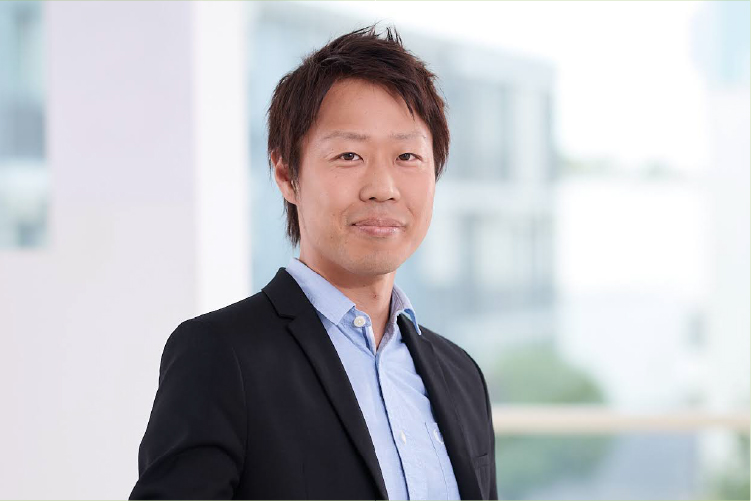
That gap, between what is clinically possible and what is practically available, is where Yohei Watanabe has chosen to build his career.
As Head of Commercialization, Asia Pacific & Japan at Elekta Pty Ltd, Yohei does not describe himself as a disruptor or a visionary. He uses a simpler word.
“Bridge.”
It is not a metaphor for him. It is a mandate.
Building the Bridge Between Possibility and Access
“My work has always centered on improving the patient experience,” he says. “It has never been about my story—it has been about whether we can make cancer care better in a way that lasts.”
That clarity of purpose runs through every chapter of his journey. Radiation therapy is one of the fastest advancing fields in oncology. The science alone is compelling. But what moved him early in his career was not the pace of innovation; it was the uneven distribution of it.
In Asia Pacific, many countries still operate with less than one radiotherapy unit per million people. The disparity is visible in wait times, in travel distances, and in outcomes. “Technology was progressing rapidly, but access was not keeping pace,” he reflects. “I wanted to be in a field where I could help bridge the gap between what is possible and what patients actually receive.”
The ambition was never about selling equipment. It was about closing the distance; between innovation and infrastructure, between capability and capacity.
Lessons from the Frontlines of Care
If there is one group that has shaped his leadership philosophy most profoundly, it is healthcare professionals.
Working closely with clinicians across the region exposed him to stark contrasts in patient experience. In some hospitals, cutting edge systems and deep subspecialty expertise define the standard of care. In others, teams operate with older equipment, limited staff, and immense pressure. The difference, he observed, is rarely about commitment. It is about systems, training pathways, reimbursement frameworks, and staffing realities.
“Seeing these gaps taught me that leadership is not about pushing ideas forward. It is about bridging perspectives, listening across contexts, and helping people connect their challenges to shared solutions.”
An early turning point came during his time as a global application specialist. Supporting clinicians across diverse environments, from advanced academic centers to resource constrained hospitals, reshaped his understanding of impact.
“I learned that technology alone is not enough. Progress happens when we support the people delivering care.”
That realization became foundational. His leadership would revolve around enablement. Build bridges between sophisticated systems and everyday clinical practice. Ensure that innovation translates into confident use at the bedside.
Translating Purpose into Capacity
Founded in 1972 and headquartered in Stockholm, Elekta has long positioned itself around a clear purpose: expanding access to high quality cancer care. In Asia Pacific and Japan, that purpose has been translated into a measurable ambition.
The regional goal is to help develop the capacity to treat at least 300,000 patients a year by 2030 with Elekta’s solutions.
For Yohei, capacity is an ecosystem.
“Achieving this requires more than installing equipment,” he explains. “It requires bridging systems—training, evidence generation, policy support, and long-term partnerships—to help countries scale sustainably.”
One of the most persistent challenges in the region is that workforce training and clinical education often lag behind technological progress. Advanced platforms may be available, but the pathway to mastering them is uneven.
To address this, Elekta invests heavily in professional education and collaborative initiatives with radiation therapy industry societies such as the Federal Association of Radiation Oncology. In some cases, that means connecting professionals across borders. In others, it involves working alongside governments, including German government supported activities, to create structured momentum.
These partnerships reflect his philosophy. No single organization can transform access alone. But when stakeholders are aligned, clinicians, policymakers, educators, and industry partners, scale becomes possible.
What Sets Elekta Apart
In a sector crowded with sophisticated hardware and ambitious roadmaps, Yohei believes differentiation comes down to posture.
“What sets Elekta apart is our commitment to putting customer at the center,” he says.
He frames it in three dimensions:
- Customer driven; enabling patient centric treatments while helping teams stay productive.
- Customer advocate; integrating Adaptive RT and personalization into everyday practice.
- Customer responsive; being a lifetime partner, instead of just a vendor.
The distinction is subtle but important. Equipment can be purchased. Partnership must be built. In regions where infrastructure varies widely, long term engagement matters as much as initial deployment.
Project ACTIVE 2.0 and the Power of Staying
Among the initiatives shaping Elekta’s regional footprint is Project ACTIVE 2.0, a capacity building effort focused on cervical cancer care in South East Asia.
The project brings together governments, hospitals, and professional societies to strengthen training pathways, introduce advanced techniques, and gradually expand access.
“It’s only one project among many,” Yohei notes, “but it represents why Elekta is valued as a partner: we stay engaged long after installation. We help build the systems and skills needed for long term success.”
The emphasis is deliberate. Sustainable progress requires continuity. It requires showing up after the ribbon cutting.
Leadership in a Complex Region
As Head of Commercialization for Asia Pacific and Japan, Yohei’s responsibilities extend beyond strategy documents and revenue targets. His role is to shape regional direction and ensure teams have what they need to succeed.
“A big part of that is bringing people together—clinicians, policy makers, engineers, and partners—so we can move with clarity and purpose.”
The regional landscape is complex. Healthcare infrastructure varies dramatically from one country to the next. Cultural expectations differ. Policy frameworks evolve. Navigating this terrain demands more than operational discipline; it demands perspective.
“Leaders today must navigate complexity across cultures, systems, and expectations,” he observes. “The greatest challenge is staying connected—to patients, to teams, and to long term purpose—while resisting the pull of constant urgency.”
His answer remains consistent with the word he chose to describe himself.
Modern leaders must act as bridges.
Looking Ahead: Measured Ambition, Human Impact
Over the next two years, Elekta will continue expanding capacity across Asia Pacific through advanced technology, education initiatives, and programs like Project ACTIVE 2.0. The 2030 target of treating 300,000 patients annually remains the north star.
For Yohei, the corporate and the personal are closely aligned.
“Reducing the gap between what is possible in cancer care and what patients actually receive” is the thread that runs through his career.
When regional strategy advances that mission, he says, “it feels less like corporate planning and more like meaningful progress.”
In a field defined by precision and protocol, his leadership stands out for its connective tissue. He does not claim to invent the technology. He does not claim to solve every systemic challenge.
He builds bridges.
And across a region where access remains uneven and need remains urgent, that may be the most consequential role of all.
Quote:
“Leaders today must navigate complexity across cultures, systems, and expectations.”
Discover more exclusive interviews at Jeannie Tan: A Clinician’s Lens on Global Strategy