
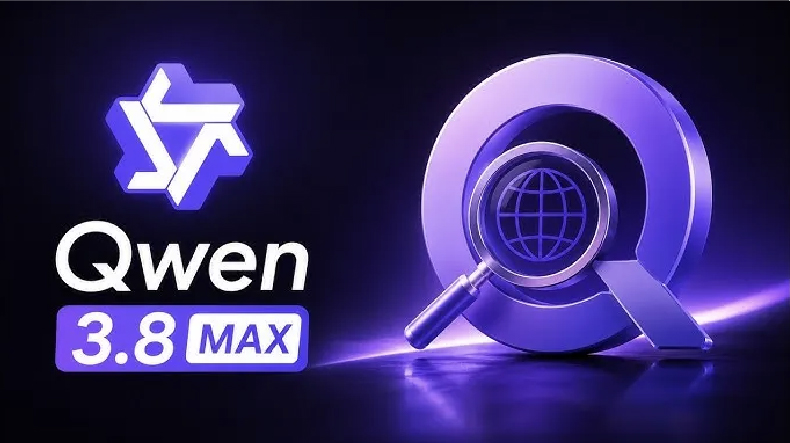
Alibaba has intensified the global artificial intelligence race with the unveiling of Qwen3.8 Max Preview, its latest flagship large language model, which the company says ranks second only to Anthropic’s Fable 5 among the world’s frontier AI systems. The announcement marks another significant step in China’s push to compete with leading U.S. AI developers and underscores the rapid pace of innovation in the global generative AI landscape.
The Chinese technology giant described Qwen3.8 Max as one of the most advanced AI models currently available. According to Alibaba, the model is built with 2.4 trillion parameters, enabling it to process and understand complex information across multiple formats, including text, images, videos, and documents. While parameter count alone does not determine overall intelligence, larger models generally possess greater capacity to recognize patterns, perform sophisticated reasoning, and support more demanding enterprise applications.
Alibaba Targets the Frontier AI Market
The preview version of Qwen3.8 Max has been introduced through Alibaba’s AI ecosystem, including its Token Plan subscription service and its AI coding and agentic development platforms. The company also indicated that the model will eventually be released as an open-weight model, allowing developers and enterprises to customize and deploy it for a wide range of AI applications.
This approach reflects Alibaba’s broader strategy of promoting open AI development while expanding adoption among businesses, software developers, and research organizations. Open-weight models have become increasingly attractive because they provide organizations with greater flexibility than fully closed commercial systems.
Competition in China’s AI Sector Continues to Accelerate
Alibaba’s latest announcement arrives amid fierce competition within China’s AI industry. Only recently, Chinese startup Moonshot AI introduced Kimi K3, a massive open-source language model containing 2.8 trillion parameters, intensifying the race among Chinese AI developers to challenge industry leaders such as Anthropic and OpenAI.
The growing rivalry is producing increasingly capable models while also driving rapid improvements in reasoning, coding, multimodal understanding, and AI agent capabilities. Industry analysts believe the pace of releases suggests that China’s leading AI companies are narrowing the performance gap with their Western counterparts faster than previously expected.
Investors Respond Positively
The market reacted favorably to Alibaba’s announcement. Shares of the company gained after investors welcomed the launch of another frontier-scale AI model, viewing it as evidence that Alibaba remains one of China’s strongest competitors in artificial intelligence.
Analysts note that AI leadership is becoming less dependent on a single dominant model. Instead, businesses are increasingly adopting multiple AI systems based on performance, pricing, and specialized capabilities, creating what some describe as a more “model-agnostic” enterprise environment. This trend could benefit companies such as Alibaba, which combine AI research with extensive cloud infrastructure and enterprise services.
What the Launch Means for the AI Industry
Although Alibaba’s performance claims will ultimately need to be validated through independent benchmarking, the introduction of Qwen3.8 Max highlights how rapidly frontier AI development is evolving beyond a handful of U.S. technology firms.
The company positions the model as capable of supporting advanced enterprise workflows, software development, intelligent agents, and multimodal applications. If independent evaluations confirm its capabilities, Qwen3.8 Max could strengthen Alibaba’s position in enterprise AI while expanding the availability of high-performance open-weight models worldwide.
As competition between global AI developers intensifies, organizations are likely to benefit from faster innovation, broader model availability, and a growing selection of advanced AI platforms designed for both commercial and research use.
Read more: Google required to open up to AI, search engine rivals under EU-mandated changes