
New UN System Data Commons connects statistics from across UN agencies, enabling natural-language search, direct AI access, and source-level data tracing
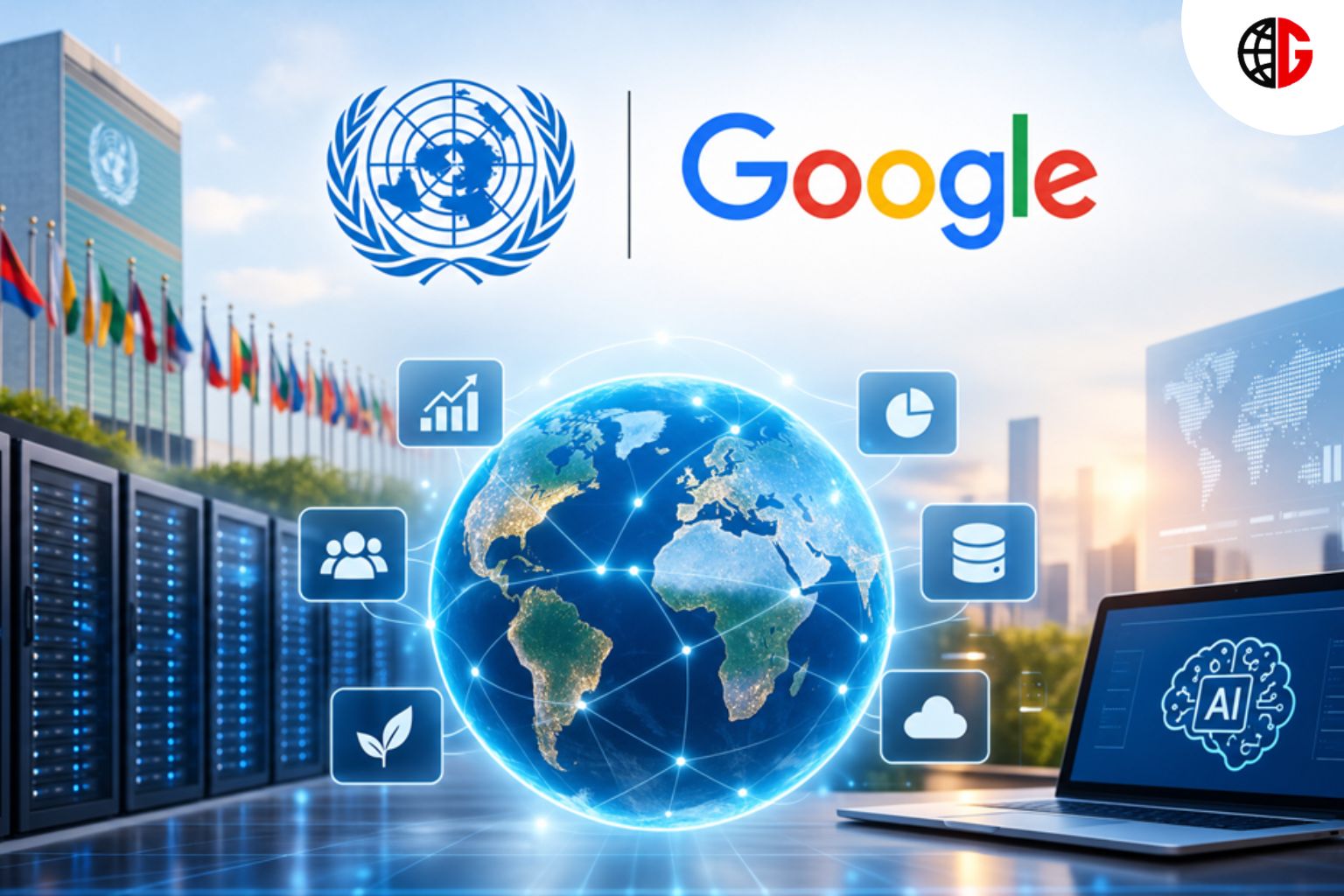
September 18, 2026: The United Nations is taking a major step toward making global public data more accessible to artificial intelligence by partnering with Google to develop the UN System Data Commons, a centralized platform designed to bring statistics from multiple UN entities into a connected, machine-readable environment.
The initiative addresses a growing challenge in the AI era: while people increasingly rely on AI tools to find information, large language models can still struggle to accurately retrieve and interpret detailed statistical data. A UNICEF benchmark involving more than 133,000 responses to questions about global development indicators found an average accuracy of 21.2% across six large language models. The findings have been cited as evidence of the need for AI systems to connect directly with authoritative data sources rather than depending solely on information learned during model training.
Turning Fragmented UN Statistics Into One AI-Ready Resource
The UN System Data Commons is built using Google’s open-source Data Commons platform and is intended to replace the traditional UNData experience with a more interconnected approach to accessing statistics.
Instead of navigating separate databases maintained by different UN organizations, users can search across participating datasets through natural-language queries. The platform connects metrics, geographic information and timelines, helping users identify relationships between datasets that may previously have required significant manual research.
The UN says 26 participating UN entities have joined the initiative, with almost 44 million data points already available through the new platform. The organization plans to continue expanding the system, with a target of bringing 80% of UN system statistical datasets onto the platform by 2027.
Making Global Data Directly Accessible to AI Agents
One of the most significant aspects of the project is its focus on making official statistics AI-ready.
The platform supports the Model Context Protocol (MCP), allowing AI systems and agents to connect with external data sources and retrieve information directly. Instead of relying on a model’s stored knowledge, an AI agent can access current statistics from the UN System Data Commons and use the underlying information as part of its analysis.
This architecture could change how researchers, developers and organizations interact with international development data. AI agents can potentially combine information from multiple UN datasets, identify connections between indicators, and generate charts, reports, or other outputs based on retrieved data.
Google describes the platform as an AI-ready knowledge graph, designed to connect data that previously existed across separate organizational and technical silos.
Data Provenance Becomes Critical for AI-Generated Answers
Accuracy is only one part of the challenge. The ability to determine where an AI-generated number came from is equally important when the information is being used for research, reporting, or decision-making.
The UN System Data Commons is therefore designed with data provenance at its core. Statistics can be traced back to their underlying UN sources, giving users a way to verify the origin of information used in an AI-generated response.
This source-tracing capability is particularly important as AI increasingly becomes an interface between people and public information. Rather than asking an AI model to recall a statistic from its training data, users can increasingly expect the system to retrieve information from an authoritative source and show where the figure originated.
The UN itself has emphasized that the platform is intended to make trusted public data easier to find, compare and use across institutions.
Why AI Accuracy Still Requires Human Oversight
The new infrastructure does not eliminate the possibility of errors in AI-generated analysis.
Google’s Prem Ramaswami, Head of Data Commons, has stressed that even when AI systems are connected to authoritative datasets, human review remains important because models can misunderstand context or nuance. Google advises users to review underlying sources before citing critical figures or publishing AI-generated analysis.
The caution is significant given the UNICEF benchmark. The evaluation of six AI models found an average accuracy of 21.2% across more than 133,000 responses involving global development indicators. The study also found that roughly three in five responses did not produce a usable number, according to reporting on the benchmark. The work is a UNICEF working paper being prepared for journal submission and has not yet been peer-reviewed.
A New Infrastructure Layer for the AI Era
The UN System Data Commons forms part of the broader UN80 Initiative, which includes efforts to modernize technology, data and shared services across the UN system. Earlier UN planning documents identified the Data Commons as a way to make public statistics from different UN entities accessible through a single platform and more usable with AI tools.
For researchers and analysts, the project could reduce the time spent locating, cleaning, and comparing information across multiple UN databases. For developers, its machine-readable architecture and MCP support create a pathway for building applications and AI agents that can work directly with official statistics.
For the wider AI ecosystem, however, the project highlights a broader shift: the future of reliable AI may depend not only on building more capable models, but also on creating better infrastructure for connecting those models to trusted, structured and traceable information.
As more users turn to AI for answers about economies, populations, health, climate, development and other global issues, the UN’s partnership with Google puts authoritative public data closer to the center of that emerging information ecosystem.
The goal is not simply to make UN statistics easier to search. It is to create a common data layer through which humans and AI systems can access, connect, and verify some of the world’s most important public information.
Read more: Dhruva Space Partners with Thales Alenia Space to Expand India-Europe Satellite Cooperation