
A New Era of Apple Intelligence Begins While One of Silicon Valley’s Most Influential Leaders Prepares to Exit
Apple has officially ushered in a new chapter for its artificial intelligence ambitions. At its Worldwide Developers Conference (WWDC) 2026, the tech giant unveiled a major transformation of Siri, introducing a significantly more intelligent, conversational, and context-aware AI assistant designed to compete with the rapidly evolving offerings from rivals such as OpenAI, Google, and Anthropic.
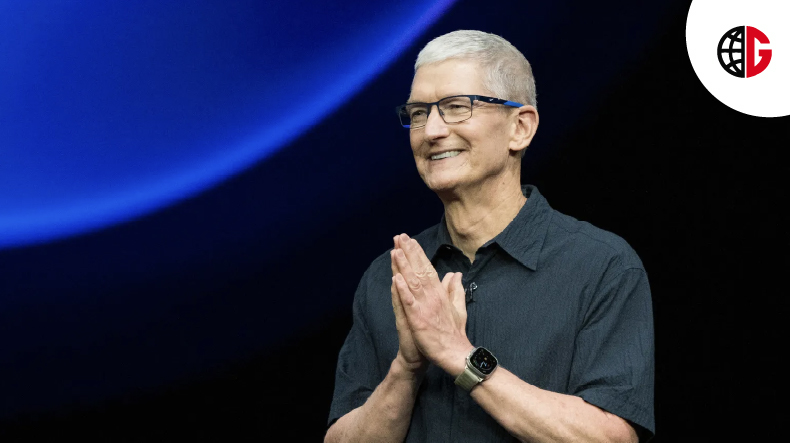
The highly anticipated announcement came during what was also a historic moment for Apple. The conference marked the final WWDC keynote led by CEO Tim Cook, who will step down in September after leading the company for 15 years.
The event combined a glimpse into Apple’s AI-driven future with an emotional farewell to one of the company’s most successful leaders.
Siri AI Takes Center Stage
For years, Apple has faced criticism that it was lagging behind competitors in the artificial intelligence race. While companies across the industry rapidly introduced generative AI assistants and advanced conversational tools, Apple’s Siri remained relatively unchanged.
WWDC 2026 signaled Apple’s answer to those concerns.
The newly introduced Siri AI is designed to function across Apple’s ecosystem, connecting seamlessly with apps, devices, and services. Apple also revealed a dedicated Siri AI application, positioning the assistant more directly against AI platforms such as ChatGPT and Claude.
Unlike earlier versions, Siri AI will be capable of understanding users on a deeper level by drawing from previous interactions, analyzing visual information, and combining that knowledge with broader contextual intelligence. Apple says the result will be a more natural, personalized, and capable digital assistant that can better understand user intent and provide meaningful assistance in everyday tasks.
The upgraded assistant builds upon the company’s broader Apple Intelligence initiative, which already includes AI-powered writing tools, image-generation features, and advanced editing capabilities.
Apple’s Privacy-First AI Strategy
During the keynote, Apple’s Senior Vice President of Software Engineering, Craig Federighi, emphasized that Apple is taking a different approach to AI development than many competitors.
Federighi criticized what he described as “AI for the sake of AI,” arguing that technology should focus on solving real user needs rather than simply showcasing technical capabilities.
According to Apple, privacy remains a core pillar of the new Siri AI experience. The company stressed that user data protection has been integrated into the system’s design from the ground up, reinforcing Apple’s long-standing strategy of differentiating itself through privacy-focused technology.
Industry analysts view this as a crucial test for Apple.
Ben Wood, Chief Analyst at CCS Insight, noted that while Apple successfully addressed concerns surrounding its AI roadmap, the company must now demonstrate that its privacy-first and integration-focused strategy can translate into a genuinely superior user experience rather than merely matching competitors.
Siri AI Beta Launch Planned for Later This Year
Apple confirmed that a beta version of Siri AI will be released later this year for supported devices configured in English.
However, users in the European Union will have to wait longer.
The company revealed that ongoing regulatory challenges have prevented an immediate rollout in the EU. Apple stated that discussions with European regulators have not yet produced an acceptable framework that would allow Siri AI to operate while safely supporting alternative virtual assistants within the region.
The delay highlights the growing tension between major technology companies and regulators over AI deployment, competition policies, and data governance.
Apple and Google Strengthen AI Collaboration
Another noteworthy development is Apple’s expanding AI partnership with Google.
Earlier this year, Apple announced plans to utilize Apple Foundation Models powered by Google’s Gemini technology and cloud infrastructure. The collaboration reflects Apple’s strategy of accelerating AI innovation while leveraging trusted external technologies where appropriate.
The partnership could play a significant role in helping Apple scale advanced AI services more rapidly across its ecosystem.
New Child Safety Features Arrive with iOS 27
Beyond artificial intelligence, Apple also introduced significant updates to its trust and safety initiatives as part of the upcoming iOS 27 release.
Among the most notable enhancements is the expansion of Apple’s “Ask” feature, which gives parents greater control over their children’s digital interactions.
Under the updated system, children will need parental approval before communicating with unknown contacts. Apple is also introducing automated image protection capabilities that will blur or censor content identified as potentially sexual or violent before it reaches a child’s device.
Federighi described the new tools as powerful yet simple safeguards that allow families to better manage what children can see, who they communicate with, and when they can access certain content.
The announcements come amid growing global pressure on technology companies to strengthen online child protection measures.
Child Safety Debate Continues
Despite the new features, Apple continues to face criticism from some child safety advocates.
A group of demonstrators gathered outside Apple Park before the keynote presentation, urging the company to take stronger action against AI-generated deepfake applications and child exploitation content.
Among the protesters was Sarah Gardner of the HEAT Initiative, who called for the removal of so-called “nudification” applications from Apple’s App Store and stronger action against child sexual abuse material stored in cloud services.
Apple has maintained that nudification applications violate company policies and stated that it has proactively removed numerous offending apps from its platform.
The debate gained further momentum after British Prime Minister Keir Starmer publicly called on major technology companies, including Apple and Google, to restrict minors’ access to explicit images across digital devices.
Tim Cook’s Emotional Goodbye
While Siri AI dominated headlines, many attendees were equally focused on the emotional significance of the event.
WWDC 2026 represented Tim Cook’s final keynote as Apple CEO.
Cook assumed leadership of Apple in 2011 following the resignation of Apple co-founder Steve Jobs. Over the past decade and a half, he has overseen tremendous growth, transforming Apple into one of the world’s most valuable companies while expanding its services, wearables, silicon, and AI businesses.
Thousands of Apple employees and developers greeted Cook with a standing ovation as he took the stage.
Displaying his trademark humor, Cook joked about the sea of smartphones in the audience before delivering a heartfelt farewell message.
Reflecting on his tenure, he thanked developers and Apple employees for their creativity and innovation, describing his time leading the company as “the honour of a lifetime.”
The emotional moment marked the end of an era for Apple and one of the longest-serving leadership tenures in modern technology history.
John Ternus Set to Lead Apple’s Next Chapter
Cook’s successor, John Ternus, maintained a relatively low profile during the main keynote but was prominently positioned alongside Cook throughout WWDC events.
Ternus, who has become an increasingly influential figure within Apple in recent years, greeted attendees during the conference’s opening events and is expected to play a central role in shaping Apple’s AI-driven future.
Industry experts believe the leadership transition arrives at a pivotal moment.
With Apple investing heavily in contextual AI, intelligent services, custom silicon, and deeper ecosystem integration, Ternus will inherit a company entering one of the most transformative periods in its history.
The Road Ahead for Apple Intelligence
WWDC 2026 may ultimately be remembered for two defining moments: the unveiling of Apple’s most ambitious AI strategy yet and Tim Cook’s farewell to the company he helped guide through a period of extraordinary growth.
The success of Siri AI will now depend on whether Apple can deliver an assistant that feels genuinely smarter, more useful, and more trustworthy than existing alternatives. If it succeeds, Apple Intelligence could move from being a supporting feature to becoming the centerpiece of Apple’s future ecosystem strategy.
Read more: Top 10 Ways AI Is Reshaping Decision-Making in Modern Enterprises