

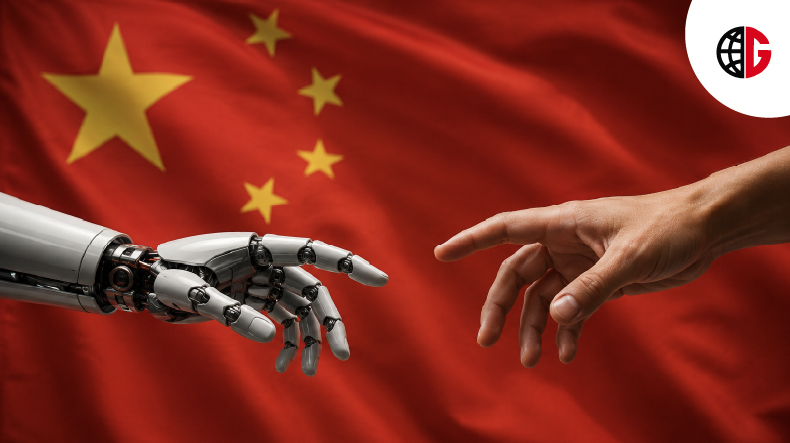
For decades, humanoid robots have fascinated the world with promises of a future where machines assist humans in everyday life. Yet despite remarkable advances in artificial intelligence, robotics has continued to struggle with one critical challenge: creating hands that can move, feel, and manipulate objects with the precision of a human hand. Today, China is emerging as the global leader in solving this complex problem, positioning itself at the forefront of the next generation of robotics innovation.
Why Robotic Hands Are the Ultimate Challenge
Walking, running, and even dancing robots have become increasingly common. However, performing simple human tasks such as buttoning a shirt, tying shoelaces, cracking an egg, or folding laundry remains extraordinarily difficult for machines.
The reason lies in the complexity of the human hand. With dozens of joints, muscles, tendons, and sensory receptors working together seamlessly, the hand is arguably the most sophisticated tool evolution has ever created. Reproducing this level of dexterity in a machine requires solving both intricate mechanical engineering problems and advanced AI-driven control systems.
Industry experts often describe robotic hands as the final frontier of humanoid robotics. Even leaders in the field have acknowledged the challenge. The ability to manipulate objects accurately and safely is what separates a truly useful robot from a machine that simply performs pre-programmed movements.
China’s Growing Focus on Embodied AI
China has identified robotics and embodied AI as strategic technologies that will help address future economic and demographic challenges. With an aging population and a shrinking workforce, the country is investing heavily in intelligent machines capable of assisting in manufacturing, healthcare, logistics, and household tasks.
Government initiatives increasingly highlight embodied AI—the combination of artificial intelligence with physical robotic systems—as a major growth sector. Policymakers believe intelligent robots could create entirely new industries worth trillions of yuan while enhancing productivity across multiple sectors.
The excitement surrounding robotics has grown rapidly in China. Humanoid robots have become a symbol of technological advancement, capturing public imagination and attracting significant venture capital investment.
From Dancing Robots to Real-World Utility
Recent demonstrations of humanoid robots have showcased impressive capabilities, from dancing and performing coordinated movements to basic warehouse operations. Yet experts agree that practical, multipurpose humanoids remain a work in progress.
The missing piece is manipulation.
A robot may be able to navigate a room, but without the ability to grasp tools, handle fragile objects, or perform detailed manual tasks, its usefulness remains limited. This is why many robotics companies are shifting their attention from locomotion to dexterous robotic hands.
The race is no longer about building robots that can walk—it is about building robots that can work.
Chinese Startups Leading the Dexterous Hand Revolution
A new generation of Chinese startups is dedicating itself to solving hand dexterity challenges.
One of the most notable players is LinkerBot, a company founded with a singular mission: developing advanced robotic hands capable of replicating human-like manipulation.
Rather than building complete humanoids, the company chose to focus exclusively on hand technology. This specialized approach reflects a growing belief within the industry that mastering dexterous manipulation could unlock countless applications across robotics.
The company has rapidly scaled production and aims to make sophisticated robotic hands affordable enough for mass-market adoption.
Transforming Prosthetics Through Robotics
Beyond humanoid robots, dexterous hand technology has the potential to revolutionize prosthetics.
Advanced prosthetic hands often cost tens of thousands of dollars, making them inaccessible to many people worldwide. Chinese innovators believe large-scale manufacturing and robotics expertise could dramatically reduce costs while improving functionality.
Affordable, AI-powered prosthetic hands capable of performing natural movements could improve quality of life for millions of amputees and expand access to life-changing medical technology.
This represents one of the most socially impactful applications of robotic hand innovation.
China’s Manufacturing Advantage
One reason China has emerged as a robotics powerhouse is its unparalleled manufacturing ecosystem.
The country’s success in electric vehicles, consumer electronics, and advanced manufacturing has created a robust supply chain for robotics components. Essential technologies such as:
- Miniature electric motors
- Precision sensors
- Lithium-ion batteries
- Actuators
- Control systems
can be sourced quickly and cost-effectively within China.
This manufacturing efficiency allows robotics startups to prototype, test, and scale products much faster than competitors in many other countries.
Entrepreneurs frequently cite supply-chain accessibility as a major factor behind China’s growing dominance in robotics hardware development.
The Real Challenge: Teaching Robots to Use Their Hands
While hardware is improving rapidly, software remains the industry’s greatest obstacle.
Building a robotic hand is one challenge; teaching it how to interact intelligently with the physical world is another entirely.
Humans develop manipulation skills through years of experience and sensory feedback. Every movement involves subtle judgments about pressure, texture, weight, and balance.
For robots, these skills must be learned through enormous amounts of training data.
Researchers are creating sophisticated systems to collect real-world movement information. Some approaches involve remotely controlling robotic hands, while others use wearable sensor technologies that capture natural human actions.
This data helps train AI models capable of understanding how objects behave and how hands should respond in different situations.
Wearable Technology Accelerating Robot Learning
Another emerging innovation involves sensor-equipped gloves that record human hand movements and tactile information.
These wearable devices capture not only motion but also force, pressure, and touch sensitivity. Such information is critical for tasks requiring delicate handling.
Consider the difference between gripping a hammer and holding an egg. Humans instinctively adjust their grip strength. Robots, however, must learn these distinctions through data-driven training.
Wearable technologies provide valuable insights that help AI systems understand these nuanced interactions, bringing robots closer to human-level dexterity.
A Multi-Billion-Dollar Industry on the Rise
China’s dexterous robotics sector is expanding at an extraordinary pace.
Industry analysts estimate that the robotic hand market has grown into a multi-billion-dollar industry, fueled by increasing demand for automation, AI integration, and intelligent machines.
At the same time, China has witnessed a surge in robotics-related entrepreneurship, with thousands of companies entering the field and investment levels continuing to climb.
As AI models become more sophisticated and hardware costs decline, robotic hands could become a cornerstone technology across industries ranging from healthcare and manufacturing to retail and home automation.
The Future of Humanoid Robots
The dream of truly useful humanoid robots depends heavily on solving the hand problem.
Future robots will need to perform countless tasks that humans take for granted—preparing meals, assisting elderly individuals, organizing household items, repairing equipment, and collaborating safely with workers.
Achieving these capabilities requires machines that can see, understand, and physically interact with their environment using hands that rival human dexterity.
China’s growing ecosystem of AI researchers, robotics engineers, manufacturers, and startups is betting that it can solve this challenge first.
Outlook
The next major breakthrough in robotics may not come from faster processors or more advanced language models. Instead, it could come from something remarkably familiar: a hand.
By combining cutting-edge AI, advanced manufacturing, and ambitious entrepreneurship, China is leading a global effort to create robotic hands capable of performing the delicate, complex tasks that define human skill. If successful, these innovations could transform humanoid robots from technological curiosities into practical assistants that reshape industries and everyday life.
The race to build smarter robots is no longer just about making machines think—it is about teaching them how to touch, grasp, and interact with the world like humans. And in that race, China is rapidly setting the pace.
Read more Denise Moreno Appointed Chief Marketing Officer at Meta