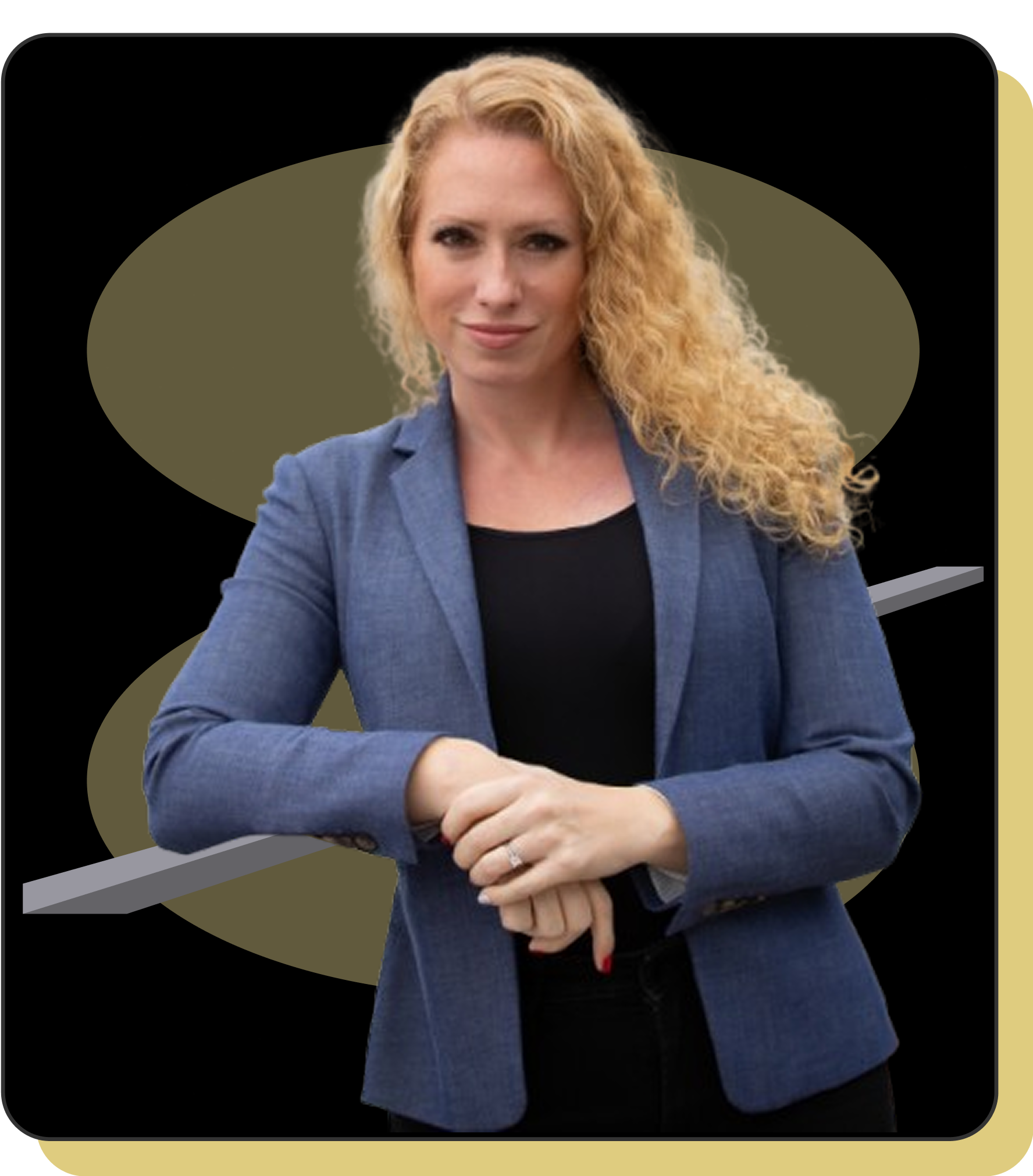


It took fifteen minutes to register AMENA Strategies LLC. It took 24 years, and one abrupt ending, to be ready to do it.
In early 2025, a presidential executive order moved to shutter regional and topical programs across the Wilson Center, and Merissa Khurma, then Director of the Middle East Program, found herself without the job she’d built years around. She’d circled the idea of starting her own company long before that, always finding a reason to talk herself out of it. Too risky. Too scary. Both true, and neither mattered once the choice was made for her. What turned the moment into a decision was her eldest daughter, Mila, asking a question that cut straight through all the hedging: “Why don’t you have your own business, like dad?” Khurma went online that same day. What she built afterward, a Washington, DC firm focused on strategic communications and policy research across the Middle East and the US, drew on every year she’d spent inside diplomacy, development and government work before this became her own.
Diplomacy Was the Family Business
She was born and raised in a family of diplomats from Jordan. Her maternal grandfather, her father, her mother, all three served in the country’s foreign service, and her mother Sirene was among the first five women to do it. That’s not a small detail to grow up around. It means the dinner table conversation was crises and negotiations and the slow, careful communication that holds a fragile situation together long enough for it not to fall apart. “I was exposed to so many stories about global affairs, history and the world of diplomacy and always felt a pull towards it,” is how Merissa puts it now, and she means the pull toward what sits underneath a conflict, not the version that makes the evening news.
That pull is what carried her through more than two decades in diplomacy, development and policy work, most of it centered on the Middle East, before she decided the next chapter had to be hers alone.
An Education Built With Intention
Nothing about Merissa’s path here was accidental. She wanted to be an ambassador and a writer, she’d tell her family, and she built her education around exactly that. Political Science and French at McGill in Montreal first. Then Georgetown’s School of Foreign Service for a Master of Science in global affairs. Seven years after that, a Master of Public Administration from the Harvard Kennedy School, to get a firmer grip on public policy and leadership frameworks.
But ask her what actually prepared her to run a company, and the degrees aren’t the first thing she reaches for. It’s the years on the ground, moving through government offices and boardrooms across the Middle East and Africa. She calls herself someone who learns by doing. That’s not a throwaway line either; it’s the exact instinct she leaned on when AMENA Strategies was still nothing but an idea she kept talking herself out of.
The Mentor Who Redefined Composure
Every leader has someone who resets their sense of scale. For Merissa, that’s Haleh Esfandiari, an Iranian American scholar and writer she calls her guiding light for the past eight years. The two ran the Middle East Program at the Wilson Center as Directors at different times. One moment from their weekly interactions has stayed lodged in Merissa’s memory since.
They got stuck in an elevator. Merissa panicked, just for a second, then turned to check on Esfandiari, who had once spent over 100 days held by the Islamic Republic, essentially as a hostage. Esfandiari didn’t panic at all. “Of course I’m fine, this elevator is bigger than my cell in Evin prison,” she said. Merissa texted the team to call for help and found herself smiling despite the situation, struck all over again by how much she still had to learn from a woman whose calm simply doesn’t crack.
The Grind Nobody Sees
Registering the company was the easy part. What came after was slower and a lot less cinematic: pitching clients from across her network, marketing a service from a standing start, learning to treat rejection as data instead of a verdict, and dragging herself back to the desk on the days momentum disappeared, which she’ll tell you happens more often than anyone admits early on.
Her founding mission grew straight out of her own story. As a Jordanian American who’d spent her career translating what was happening in the Middle East for American audiences, and the reverse, she built AMENA to make that translation formal: sharp insights, strategic communications and policy research that help partners navigate landscapes most outsiders find impossible to read, with every strategy built around the political, cultural and economic realities the client is actually facing, not the ones on paper.
What AMENA Delivers
The firm works across four areas. Strategic communications handles messaging, brand development, media strategy, editorial guidance and audience engagement, the full stack of building credibility and shaping how a client is perceived. Research and analysis produce policy briefs, regional reports and intelligence products built for people who have to make decisions with real consequences attached. Advisory work covers thought leadership, positioning and partnership strategy for organizations trying to build actual authority rather than just visibility. And then there’s conferences and events, strategic design through speaker curation through post-event publication, turning a single gathering into something that keeps working long after the room empties out.
There’s also something new on the way. This fall AMENA is launching a publication and newsletter, AMENA Insights: Beyond the Headlines, landing in September 2026 and taking the firm’s analysis public for the first time.
Leading by Handing Over the Wheel
Ask Merissa what her actual job looks like day to day and the answer has less to do with control than most people expect. Her focus is empowering the team, pulling on the different expertise each person brings, and shaping the roadmap around that. She still closes deals herself. But she’s actively pushing her team to do the same, treating deal-making as something to be shared across the company rather than kept close to the founder’s chest.
Two years out, she wants AMENA to be a leading, trusted consulting firm shaping policy through insight-driven strategy across America and the MENA region. And she sees herself leading that strategy alongside the people already in the room with her: Alex Farley, Faria Nasruddin, Seda Gunes and Yusuf Can, a team she talks about like it’s central to wherever the company goes from here, not incidental to it.
Balance on Her Own Terms
Merissa isn’t going to pretend she’s cracked work-life balance, because she hasn’t, and she says as much. Some days it’s there, some days it isn’t, and she’s made her peace with the unevenness. She calls herself her own harshest critic and gives credit to her husband and her mother for the regular reminder to slow down and breathe. Running outdoors is what keeps her steady, physically and otherwise. Weekends belong mostly to her daughters, Mila and Sophia, and her husband, museums, sports, friends, the occasional trip when the schedule allows it. She’s also picked piano back up after years away from it, relearning how to read musical notes, which she says has done something unexpected for her focus and creativity at work.
The Advice She Wishes She’d Heard Sooner
When the conversation turns to what women leaders need most, Merissa keeps coming back to one thing: a growth mindset, the ability to take a mistake, absorb it, and carry the lesson forward instead of getting stuck replaying it. She’s quick to point out this isn’t something you’re handed at birth. “You’re not born with a growth mindset, rather it is a muscle you have to strengthen,” she says, and she admits she’s landed in that trap herself, the one where you start believing something will never work simply because it hasn’t yet. Persistence, she adds, matters just as much as the mindset itself.
Her advice for anyone coming up behind her comes down to three things. Trust that you already know more than you think you do. Build a team, because none of this gets done solo and collective effort carries more weight than any one person pushing alone. And stay adaptable without ever losing the thread of your own purpose.
Two decades spent reading the Middle East for the West and the West for the Middle East, and now Merissa’s pointing that same instinct at her own path, turning risk into a company, mentorship into method, and one fifteen-minute decision into a firm she’s building to last.
Quotes:
My primary goal is to empower the team, capitalize on the diverse expertise and skill sets they bring to AMENA Strategies and chart out our roadmap accordingly.
It’s easy to fall back into the narrative that “this won’t work” or “why does this keep happening.” I’ve been there myself but it’s critical that you keep going.
Remind yourself that you know more than you think you do. Believe in yourself and your skills.
Be adaptive and flexible while staying true to your purpose.
Read more latest Exclusive Interviews at Vicheka Chourp: Opening Doors, Changing Lives, and Leading Cambodia’s Fight Against Poverty