
You know that irritation when you notice autocorrect has switched the word you typed, for the word it assumed you meant to use… after you’ve already hit send.
Then there’s predictive text.
Type two words, and the third’s waiting for you. Sometimes the tone is perfect. Sometimes it gets the whole phrase right. Sometimes it feels less like suggestion, and more like validation.
Clever. Efficient. Useful.
Your ‘digital twin’ has already reached the conclusion you are only just beginning to form.
But it does not stop there.
You pause over a post, linger in a location, or mention a brand in passing, and before long, the digital world starts pitching it back to you.
As though some all-seeing eye has been… quietly watching.
It has learnt your habits…
Your rhythm…
Your patterns…
Even your vices.
And promises that the more it learns, the better it gets at serving you. Though, if we are honest, it does feel more than slightly unsettling.
Many call this the imminent danger. Some seem to have been harping on it forever.
While much of tech innovation is undeniably the manifestation of science fiction; brought to reality by the hyperactive imaginations of fans.
It inadvertently feeds paranoia too.
The machines are watching, learning, and deciding if and when they should take over – for the greater good!
That old AI-apocalypse anxiety has travelled well — moving beyond fiction and what was once dismissed as fringe conspiracy — to now sit uncomfortably close to reality, policy, governance, and valid public concern.
The paradoxical scales go into further spin when high-profile accelerationists like Elon Musk warn of the “existential threat”, even as he develops xAI – adding his blocks to construction of the very future he cautions against.
It feels like the coming of Skynet. Or perhaps… the eventual reality will be closer to the Borg collective.
I am not sure that is the only danger though.
The science-fiction dread returning in updated packaging; colder, smarter, closer to home. Not with some ominous AI construct descending from the sky.
For all the excitement and fears, modern AI is less a story of recent invention and more a story of recent realisation. While the last decade provided the data and computing capabilities to make AI ubiquitous, the core neural network theories and algorithmic frameworks are legacies that have been stewing in much anticipation since the 1950s.
This origin story is often forgotten.
What changed was the scale, the speed, the access, and the way ChatGPT sparked an unprecedented surge in artificial intelligence adoption in our daily lives today.
For all the promise and anticipation over decades, it was a watershed moment – that was hardly expected.
I remember suggesting that our agency experiment with JASPER to standardise the tone of the copywriting for our social content, but all I was hearing was the flaws with it. Then just a few weeks later ChatGPT was released… and everyone was making excuses for the flaws that were showing up!
Since then, we have seen an escalation to over 500 foundational models and a broader ecosystem of 2.4 million specialised AI variants, and felt the fear that at least one of them was going to make our roles obsolete.
But, as the cries grow louder on our imminent replacement, a quieter truth seems to be going unnoticed.
What if the real danger is not that the machine becomes too intelligent? What if it’s that we are politely becoming more predictable?
Don’t blame it on some ominous AI construct — not entirely — I feel it goes deeper…
Have you found yourself choosing the algorithm-friendly structure over more layered craft? Neat phrase over the more nuanced thought. Shorter sentence over the more human emotion-charged thought, all because that is what performs; what lands… only cause that’s what the machine prefers.
Can “same same, but different” be anything other than – more of the same?
It’s as if ‘tokenisation’ isn’t just how large language models process prompts, but how we have increasingly allowed ourselves to be defined too.
The exponential explosion of modern non-conformism is increasingly becoming an ironic paradox. It has not dismantled the box of societal compliance, merely atomised it.
Worse… we seem oblivious to it!
We have just transitioned from the broad, top-down institutional conformity to a fragmented landscape of subcultural tribalism, where the ‘niche’ functions as a new, even more rigid uniformity.
While we champion hyper-individualism, in reality we ‘opt-in’ to tribes that demand identical aesthetics, language, and behaviour as the cost of entry. In this digital panopticon, we have traded the forced mould of the past for a thousand voluntary cages, performing a curated sameness to signal a belonging that claims liberation.
That is what makes this deeper than “AI’s going to replace us”.
Beyond algorithms, machines, LLMs, and digital systems, something else has been happening to us.
AI did not cause it.
All the algorithmic echo chamber really did was learn the patterns, feed them, group them, and make them profitable.
From there it was ‘tribeism’ that took over.
A new tribeism of sameness; where belonging quietly asks us to surrender whatever does not fit the brief, until we sacrifice what is left of our individuality simply because… that is how we are now supposed to be.
That is the quieter danger slowly making us easier to replace.
Yet, even in a tribe, there’s still a need for difference.
A community still needs people who think differently, notice differently, solve differently, speak differently, and bring something distinct to the table.
Imagine if every tool in the box were just a hammer. The box may feel full. But it’s only good for one thing.
The same is true of us.
If every one of us becomes easier to predict, easier to flatten, easier to group, easier to complete, then the machine may serve us more efficiently… but at the cost of making us less useful to one another.
AI may complete our sentences. It still does not necessarily understand what is being felt, feared, withheld, sacrificed, or truly meant. That part remains ours, but only if we are wise enough not to surrender it.
That is what makes us obsolete. Not the machines.
That means protecting the parts of ourselves that do not fit neatly into how tribes and systems like us to be. Instinct.
Ambiguity. Emotional texture. Contradiction. The ability to hear what was not said. The courage to remain difficult to flatten.
We must ensure that human imperfection is not treated as inefficiency.
If AI is truly predictive, let it serve that world. It is meant to be our tool… not become our master!
And perhaps that is the real task now; not merely to stay relevant in the age of AI, but to resist the quiet bargain of becoming easier to sort, easier to serve, and easier to complete.
Because once a whole generation starts mistaking sameness for belonging, the question is no longer only what the machine may do to us.
It slowly becomes… what have we surrendered ever so silently without asking?
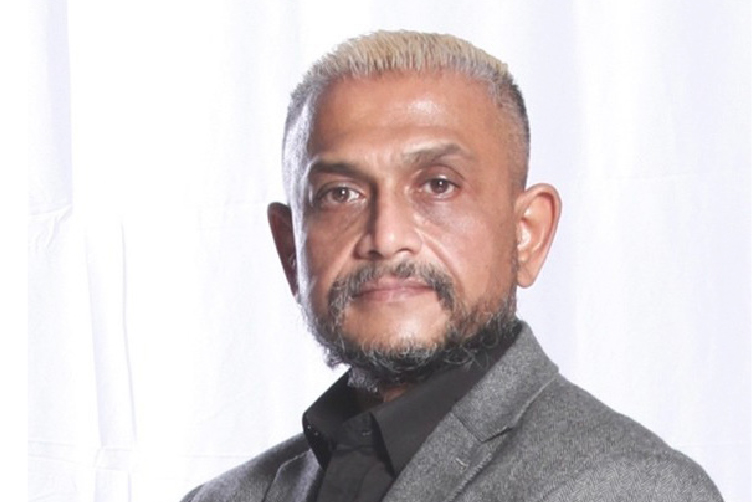
About Author:
Claudian Navin Stanislaus or as he is more familiarly know; Navin, has vast expertise having worked in a myriad of sectors, which has served him well in understanding, developing and managing concepts, strategies and campaigns that do not merely meet KPIs, but are more goal oriented, innovative and bottom-line driven.
His ability to transform “nerd-speak” into consumer-friendly content, may have seen him leave his roots in Computer Science for advertising, but undoubtedly it was with BABA’S, where he perfected a knack for adapting strategy with his ability to understand and assimilate with consumers.
As their Head of Communication & Consumer Marketing for 20 years, Navin is credited with transforming this once ethically skewed SME brand into a Malaysian household name and market leader, capturing over 60% of the market share on brand focused strategies alone!
Orchestrating everything to do with the brand, its products and the customers’ experiences, he was the chief strategist and creative director behind the in-house marketing cum creative team that he set up.
Deciding to follow a calling to make his experience and expertise available to more in the gig, startup and SME sector, Navin is current the Group Strategic Director at 11trees Kitchen, a startup brand owner in the F&B sector.
Outside of his roles with the brands he serves, Navin has over the years established himself as an industry leader amongst the marketing fraternity in the region, championing ethical practices, consumer rights, and initiatives to create a more conducive ecosystem for brands to thrive.
He is the former President of the Malaysian Advertisers Association and Vice Chairman of Content Forum Malaysia.
Navin is a regular commentator on a wide range of topics from brand building to regulatory, media measurement to marketing innovation and has always been known for his willingness to share his knowledge readily.
Navin may be a specialist at brand evangelism, marketing strategy and consumer engagement, but takes more pride as a perpetual student of consumer behavior.
Read more on thought leadership at The Authenticity Algorithm: Why AI Is Reshaping Personal Branding — And Why Humans Still Win