


The Asia-Pacific region is emerging as one of the most dynamic arenas for enterprise artificial intelligence, with ambitious startups transforming how businesses manage data, serve customers, detect fraud, automate workflows, and develop next-generation products. From China’s cost-efficient large language models and India’s multilingual AI systems to Japan’s experimental AI research and Singapore’s enterprise intelligence platforms, a new generation of companies is challenging established technology providers.
Enterprise AI is moving beyond experimentation. Businesses increasingly want solutions that can deliver measurable productivity gains, improve decision-making, strengthen cybersecurity, and reduce operating costs. This shift is creating opportunities for startups that combine advanced AI capabilities with practical applications across industries such as healthcare, banking, manufacturing, logistics, retail, and customer service.
The Asia-Pacific ecosystem is particularly distinctive because it encompasses diverse languages, regulatory environments, consumer behaviors, and levels of digital maturity. As a result, the region’s AI innovators are pursuing different approaches: some are developing powerful foundational models, while others are focusing on specialized software that addresses specific business challenges.
Among the companies attracting attention are DeepSeek, Sarvam AI, Sakana AI, Upstage, Moonshot AI, Baichuan AI, Qure.ai, Yellow.ai, ADVANCE.AI, and NextBillion AI. Their technologies span enterprise AI, from intelligent document processing and medical diagnostics to conversational agents, financial risk management, and location intelligence.
Here is a closer look at 10 enterprise AI startups disrupting the Asia-Pacific region and the technologies shaping their growth.
1. DeepSeek (China): Making Enterprise AI More Cost-Efficient

China-based DeepSeek has become a prominent name in the global AI conversation by challenging conventional assumptions about the cost of developing and deploying advanced language models. Its emphasis on model efficiency and accessible AI capabilities has made it an important company to watch in the enterprise technology market.
For businesses, the appeal of DeepSeek lies in the possibility of achieving sophisticated AI-powered outcomes without relying exclusively on the most expensive proprietary systems. Organizations exploring large language models can investigate applications such as software development assistance, document summarization, internal knowledge search, research automation, and customer support.
DeepSeek’s open-weight model approach can also give technically capable organizations greater flexibility in how they evaluate, adapt, and deploy AI. Depending on the model licence, infrastructure requirements, and deployment configuration, businesses may be able to exercise more control over their AI environments than they would with a closed, hosted service.
This is particularly relevant for startups, technology companies, and enterprises operating under pressure to improve productivity while managing AI infrastructure expenses.
However, lower model costs do not automatically translate into lower total operating costs. Companies must also account for computing infrastructure, integration, security reviews, monitoring, and ongoing maintenance. They must assess data-handling practices and verify whether a particular model meets their regulatory and contractual requirements.
Why DeepSeek matters: It intensifies competition in the enterprise AI market by encouraging businesses to reconsider the relationship between model performance, accessibility, and cost. Its wider significance extends beyond one product: it adds pressure on AI providers to deliver more capability for every unit of computing expenditure.
2. Sarvam AI (India): Building Enterprise AI for India’s Languages

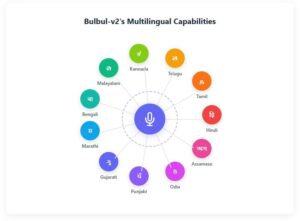
India’s linguistic diversity presents a significant challenge for enterprise AI. A system designed primarily around English-language data may struggle to serve customers who communicate in Hindi, Bengali, Tamil, Marathi, Telugu, and other Indian languages. Sarvam AI is addressing this challenge by developing AI models and application infrastructure tailored to India’s languages, accents, and real-world communication patterns.
The company offers capabilities spanning speech recognition, translation, text generation, voice synthesis, and document intelligence. Its model portfolio includes Sarvam-105B, Saaras speech-recognition models, Bulbul text-to-speech technology, and document-processing tools. Sarvam’s official documentation describes support across numerous Indian languages and English, with coverage varying by model.
Sarvam
These capabilities have practical implications for banks, insurers, retailers, government service providers, and telecommunications companies. A bank, for example, could use multilingual voice agents to help customers navigate routine services, while a retailer could automate customer enquiries across regional markets. Enterprises could also use speech-to-text technology to analyze service calls, translate information, and make digital services more accessible.
Sarvam’s sovereign AI strategy adds another important dimension. In April 2025, the Indian government selected the company to develop an indigenous foundational model under the IndiaAI Mission, with dedicated computing resources intended to support its development.
For enterprise customers, locally developed models may offer opportunities to align language performance, infrastructure choices, and deployment arrangements with Indian requirements. Yet production deployments still need careful evaluation of accuracy, latency, security, and performance across different dialects and operating conditions.
Why Sarvam AI matters: It is helping make enterprise AI more relevant to India’s multilingual economy. By focusing on local languages and voice-first interactions, the company is targeting a market that conventional, English-centric systems may not adequately serve.
3. Sakana AI (Japan): Taking Inspiration From Nature

Sakana AI is pursuing a distinctive approach to artificial intelligence by drawing inspiration from natural systems, evolution, and collective intelligence. Founded in Tokyo in 2023, the company explores ways to combine models and develop AI systems through evolutionary processes rather than relying exclusively on conventional approaches to scaling individual models.
Sakana AI
The underlying idea is compelling: instead of assuming that every AI application requires one enormous model, researchers can investigate whether multiple smaller models can be combined, adapted, or coordinated to accomplish complex tasks.
This research direction could have implications for enterprises seeking AI systems that are more adaptable, efficient, or specialized. Different models might contribute distinct strengths to a workflow, while an orchestration layer coordinates their outputs. In theory, such approaches could support research, decision assistance, software development, and other knowledge-intensive activities.
Sakana AI’s work also extends beyond model architecture. Its research portfolio includes projects such as AI Scientist, which explores automated scientific research, and Darwin Gödel Machine, which investigates self-improving coding systems. Its applied activities include developing AI solutions for areas such as finance and Japan’s wider social infrastructure.
For enterprises, the important distinction is between promising research and proven commercial value. Businesses considering emerging AI architectures must establish whether these systems deliver reliable results, whether their decisions can be audited, and whether the cost of coordinating multiple models is justified.
Japan’s established strengths in industrial technology and its demand for productivity-enhancing innovation provide a relevant environment for this experimentation.
Why Sakana AI matters: The company challenges the assumption that the future of enterprise AI depends solely on ever-larger models. Its nature-inspired research could contribute to a more diverse AI ecosystem in which specialized systems work together to solve complex business problems.
4. Upstage (South Korea): Turning Business Documents Into Actionable Intelligence

Businesses generate enormous volumes of documents, including invoices, insurance claims, contracts, loan applications, reports, and compliance records. Much of this information remains difficult to use because it is stored in PDFs, scanned images, emails, or unstructured files. South Korea’s Upstage is developing enterprise AI tools to address this problem.
The company combines its Solar large language model family with document-processing technology designed to extract, interpret, and structure information from business records. Its products include document parsing and information extraction capabilities aimed at sectors such as finance, insurance, healthcare, and manufacturing.

Consider an insurance company processing thousands of claims. Traditional workflows may require employees to open individual files, identify relevant details, check supporting documents, and transfer information into internal systems. Document AI can automate portions of this process, allowing staff to focus on exceptions, complex decisions, and customer needs.
Similar opportunities exist in banking, where AI can help extract information from financial statements and loan applications, and in manufacturing, where it can assist with technical documentation and supplier records.
Upstage is also investing in enterprise-grade generative AI. In August 2025, the company announced a $45 million Series B bridge funding round, bringing its reported total funding to $157 million. It said the investment would support its Solar models, document intelligence products, and expansion into international markets.
Accuracy is especially important in these applications. A misplaced figure in a financial document or an incorrect interpretation of a contractual clause can have serious consequences. Businesses therefore need confidence scoring, human review, audit trails, and testing against real documents.
Why Upstage matters: It connects generative AI with everyday enterprise processes. Rather than limiting AI to conversations and content creation, the company focuses on making existing business information searchable, structured, and usable.
5. Moonshot AI (China): Bringing Long-Context AI to Complex Business Tasks

Enterprise knowledge is rarely contained in a single document. Important information may be spread across lengthy contracts, financial reports, technical manuals, research papers, product specifications, and thousands of lines of code. Moonshot AI, the Chinese company behind the Kimi AI assistant, is targeting this challenge through language models designed for demanding information-processing tasks.
Kimi has attracted attention for its long-context capabilities, which allow supported models to process substantial amounts of text within a single interaction. This can be valuable for professionals who need to analyze large collections of documents, compare information across reports, or understand complicated codebases.
For a legal team, long-context AI could help review extensive agreements and identify clauses that require closer examination. Financial analysts could use it to compare company disclosures, while software engineers could investigate unfamiliar repositories and trace dependencies across multiple files.
Research and consulting businesses could also benefit from tools that help synthesize large volumes of material into structured findings. However, long context alone does not guarantee accurate reasoning. Enterprises still need to test whether models retrieve the right details, distinguish conflicting information, and provide reliable supporting references.
Moonshot AI’s wider significance lies in the growing demand for AI systems that can work with the scale and complexity of real business knowledge. As enterprise adoption expands, the ability to process large information sets may become an important differentiator among AI platforms.
Businesses should also evaluate data-retention policies, access controls, and deployment options before submitting confidential information to any hosted model.
Why Moonshot AI matters: Its Kimi models reflect a shift from simple question-and-answer systems towards AI assistants capable of examining extensive bodies of enterprise information and supporting more sophisticated knowledge work.
6. Baichuan AI (China): Developing Specialized AI for High-Stakes Industries

While general-purpose AI models are designed to handle a wide variety of tasks, many enterprises require more specialized capabilities. Healthcare providers, legal professionals, and industrial organizations operate in environments where domain knowledge, terminology, accuracy, and risk management are essential.
Beijing-based Baichuan AI is part of China’s competitive foundational-model ecosystem, with an emphasis on language models and applications that can serve specialized knowledge-intensive sectors.
The opportunity is particularly visible in healthcare. Medical organizations manage clinical records, research publications, diagnostic information, and complex administrative processes. AI systems adapted to medical terminology could help clinicians search literature, organize records, summarize information, and support administrative work.
In the legal sector, specialized language models could assist with document analysis, contract review, regulatory research, and the identification of relevant provisions. Industrial enterprises may similarly explore AI tools for technical documentation, operational knowledge, and employee assistance.
However, domain specialization must not be confused with guaranteed professional accuracy. A model that performs well on general language benchmarks may still make mistakes in clinical reasoning, legal interpretation, or technical calculations. High-stakes use cases require independent evaluation, appropriate human oversight, and clearly defined accountability.
For businesses, the central question is whether a model can perform reliably on the tasks that matter to their operations, rather than whether it achieves an impressive score on a general benchmark.
Why Baichuan AI matters: Its focus on foundational models and specialized applications highlights the importance of domain-specific AI. As adoption matures, enterprises may increasingly prioritize systems designed around the demands of particular industries rather than relying on general-purpose chatbots alone.
7. Qure.ai (India): Bringing AI Into Medical Diagnostics

Healthcare is among the sectors where AI has the potential to deliver meaningful benefits beyond productivity improvements. Faster analysis of medical images, better clinical workflows, and earlier identification of concerning findings could help healthcare providers manage growing patient volumes and resource constraints.
India-founded Qure.ai specializes in medical imaging AI, developing tools that analyse radiology images and support clinicians in identifying potentially significant findings. Its technology has applications in areas including chest X-rays and head CT scans, with products intended to assist healthcare professionals in clinical workflows.
The company operates in an environment where radiology services face increasing demand, while access to specialists can vary substantially between large urban hospitals and smaller healthcare facilities. AI-assisted image analysis can help prioritize cases, support consistent workflows, and flag findings that warrant further assessment.
For example, an AI system analysing a chest X-ray may identify abnormalities for a radiologist to review. In an emergency department, automated analysis of a head CT scan could help draw attention to findings that require urgent clinical assessment.
These systems are intended to support medical professionals, not replace clinical judgment. Their performance must be assessed across patient populations, imaging equipment, clinical settings, and relevant regulatory requirements.
Qure.ai has developed an international footprint, and its diagnostic products include regulatory-cleared tools. Healthcare organizations considering adoption should verify the specific authorization, intended use, and deployment status of each product in their jurisdiction.
The wider opportunity extends to hospital networks, public health programmes, diagnostic providers, and healthcare technology companies seeking to integrate AI into established clinical systems.
Why Qure.ai matters: It demonstrates how enterprise AI can move into real-world clinical environments, where the objective is not simply automation but helping healthcare teams manage diagnostic workloads and make better-informed decisions.
8. Yellow.ai (India / Global): Transforming Customer Service With AI Agents

Customer experience has become a major area of enterprise AI investment. Businesses need to respond to customer enquiries across messaging applications, websites, telephone calls, and email, often while supporting multiple languages and operating around the clock.
Yellow.ai develops conversational AI and AI-agent technology to automate customer and employee interactions across these channels. Its platform supports use cases spanning customer service, sales, onboarding, and internal workflows, with integrations into business systems and customer-support platforms.
yellow.ai
The difference between a conventional chatbot and a more capable AI agent is the range of tasks it can potentially perform. A basic chatbot might answer a frequently asked question. An AI agent, when connected to the appropriate systems and permissions, may be able to retrieve an order status, initiate a service request, update a customer record, or guide a user through a multi-step process.
For large retailers, banks, travel companies, and telecommunications providers, such automation could reduce repetitive workloads while improving response times. Employees could then devote more attention to sensitive complaints, complex requests, and situations requiring human judgment.
Yellow.ai’s omnichannel approach is also important because customers rarely interact through just one platform. A well-designed system should preserve relevant context when conversations move between messaging, voice, and human support.
Yet successful deployment requires careful planning. Enterprises must monitor incorrect responses, prevent unauthorized actions, protect personal data, and establish clear routes for human escalation.
Why Yellow.ai matters: It illustrates how AI is evolving from a tool that generates answers into technology that can participate in customer-facing workflows. For enterprises, the opportunity is to combine automation with more consistent and accessible service.
9. ADVANCE.AI (Singapore): Strengthening Digital Trust With AI
As digital banking, e-commerce, online lending, and financial technology expand across Asia, businesses face a growing challenge: how to verify legitimate customers without creating unnecessary friction during onboarding.
ADVANCE.AI addresses this problem through AI-powered identity verification, digital onboarding, risk management, and fraud prevention solutions. Its platform includes identity checks, document verification, facial authentication, and risk intelligence designed to help businesses establish trust in digital transactions.
For financial institutions, customer verification is a critical part of regulatory compliance and fraud prevention. Manual checks can be time-consuming, particularly when organizations need to process large volumes of applications across different countries and identity-document formats.
AI-powered systems can help automate parts of this process by extracting information from identification documents, detecting suspicious alterations, comparing facial images, and supporting identity verification workflows.
The technology also has applications in e-commerce. Online marketplaces need to verify sellers, identify potentially fraudulent accounts, and reduce risks associated with suspicious transactions. Digital lenders can use identity and risk signals to support their onboarding procedures, subject to applicable laws and responsible lending practices.
ADVANCE.AI’s emphasis on supporting multiple identity-document formats is particularly relevant in Asia-Pacific, where businesses often operate across markets with different national identification systems and regulatory requirements.
Nevertheless, automated verification must be implemented carefully. False rejections can prevent legitimate customers from accessing services, while false approvals can expose businesses to fraud. Organizations must consider privacy, bias, data security, explainability, and appropriate human review.
Why ADVANCE.AI matters: It addresses a foundational requirement of digital business: establishing trust. By automating elements of identity verification and risk assessment, the company helps financial and commercial organizations explore faster, more scalable digital operations.
10. NextBillion.ai (Singapore / India): Making Location Intelligence Smarter

Location intelligence is an essential but sometimes overlooked part of enterprise AI. Every day, logistics companies, delivery platforms, transportation providers, and field-service businesses make decisions involving routes, travel times, delivery schedules, fleet utilization, and geographic coverage.
NextBillion.ai develops mapping, routing, and location-intelligence technology designed for enterprise applications. Its platform provides capabilities such as route optimization, estimated travel times, map data, location management, and tools for fleet and logistics operations.
These technologies can help businesses make operational decisions based on geographic information rather than relying solely on static maps or manual planning.
For a delivery company, route optimization can help dispatchers plan more efficient journeys across multiple destinations. A field-service organization could use location intelligence to assign technicians based on distance, travel conditions, and appointment schedules. Fleet operators may use routing and traffic information to improve planning and monitor operational performance.
The opportunity is especially relevant in Asia-Pacific, where companies often operate across dense metropolitan areas, expanding suburbs, and regions with very different road networks and transportation conditions.
Location intelligence can also support on-demand services, transportation planning, and applications that depend on accurate address data. By integrating mapping and routing APIs into existing software, businesses can develop customized operational workflows without building an entire geospatial platform from scratch.
However, the value of these systems depends on data quality, local map coverage, integration with business systems, and the ability to adapt to changing road conditions. Companies should also evaluate location-data privacy and the reliability of estimated travel times.
Why NextBillion.ai matters: It brings AI-enabled intelligence to the physical movement of people, goods, and services. Its technology shows how enterprise AI can improve not only digital workflows but also real-world operational efficiency.
What Is Driving Enterprise AI Innovation Across Asia-Pacific?
The 10 companies above represent different segments of a rapidly evolving market. Their approaches reveal several important trends shaping enterprise AI adoption across Asia-Pacific.

1. The race for cost-efficient AI
Enterprises want powerful AI capabilities without uncontrolled infrastructure spending. Companies such as DeepSeek are intensifying competition around model efficiency, while specialized providers are helping organizations choose technology that fits particular workloads.
2. Local languages and regional relevance
Asia-Pacific’s linguistic diversity creates demand for AI that understands local languages, accents, and business contexts. Sarvam AI’s focus on Indian languages demonstrates how localization can become a competitive advantage rather than an afterthought.

3. AI moving into everyday workflows
Enterprise adoption increasingly involves automating specific tasks rather than merely providing chat interfaces. Document processing, customer service, identity verification, and logistics optimization offer practical opportunities to measure business outcomes.

4. Industry-specific intelligence
Healthcare, finance, insurance, and manufacturing require specialized knowledge and dependable results. Companies such as Qure.ai and Upstage illustrate how AI solutions can be designed around the needs of particular industries.

5. Security, sovereignty, and control
Organizations increasingly evaluate where their data is processed, who can access it, and how AI systems fit their regulatory obligations. These considerations are particularly important in financial services, healthcare, and public-sector applications.
How Enterprises Can Choose the Right AI Startup
Selecting an AI partner requires more than comparing model benchmarks or looking at funding announcements. Businesses should evaluate each provider against their operational priorities.
- Define the business problem: Identify whether the goal is to reduce document-processing time, improve customer support, strengthen fraud detection, or optimize logistics.
- Measure real-world performance: Test the solution using representative company data and realistic workflows rather than relying exclusively on demonstrations.
- Evaluate integration requirements: Check whether the platform works with existing databases, enterprise resource planning systems, customer relationship management tools, and other essential applications.
- Assess security and compliance: Review data-retention policies, access controls, deployment options, auditability, and relevant regulatory obligations.
- Calculate total cost of ownership: Include model usage, infrastructure, integration, monitoring, maintenance, and employee training.
- Plan for human oversight: Establish review procedures for high-impact decisions, uncertain outputs, and situations where automated systems should escalate work to employees.
The best enterprise AI solution is not necessarily the largest model or the most widely discussed startup. It is the one that solves a clearly defined problem reliably, securely, and economically.
The Future of Enterprise AI in Asia-Pacific
The next phase of enterprise AI adoption in Asia-Pacific will likely be shaped by a combination of foundational models, specialized applications, autonomous agents, and industry-focused intelligence systems.
China’s model developers are contributing to competition around advanced language models and cost efficiency. India’s ecosystem is exploring multilingual AI and solutions for large, diverse populations. Japan is supporting distinctive research approaches, while South Korean and Singapore-linked technology companies are developing tools for document intelligence, digital trust, mapping, and enterprise automation.
These developments do not mean that every startup will become a market leader. Enterprise AI remains a competitive field in which technical performance, commercial execution, regulatory compliance, and customer trust will determine long-term success.
For businesses, the central opportunity is to move from isolated AI experiments to carefully governed systems that deliver measurable improvements. For startups, success will depend on translating technological innovation into dependable products that solve real customer problems.
The 10 companies featured in this article illustrate the breadth of that opportunity. Together, they show that the future of AI in Asia-Pacific will not be defined by one model or one country, but by a diverse ecosystem of innovators tackling different challenges across the digital economy.
As enterprises continue to rethink how work gets done, these AI startups are worth watching for the technologies, business models, and industry applications they bring to the market.
Frequently Asked Questions (FAQs)
1. What are the top enterprise AI startups in Asia-Pacific?
Notable companies include DeepSeek, Sarvam AI, Sakana AI, Upstage, Moonshot AI, Baichuan AI, Qure.ai, Yellow.ai, ADVANCE.AI, and NextBillion.ai. They operate across foundational models, multilingual AI, healthcare, document processing, customer service, fraud prevention, and location intelligence. This is a curated selection, not a definitive ranking.
2. Which Asia-Pacific AI startups focus on enterprise automation?
Upstage specializes in document intelligence, Yellow.ai develops conversational AI agents, ADVANCE.AI focuses on digital identity and fraud prevention, and NextBillion.ai provides mapping and routing technology for operational workflows.
3. Which Indian AI startups are featured in this list?
Sarvam AI focuses on multilingual and sovereign AI technology, while Qure.ai develops AI-assisted medical imaging solutions. Yellow.ai, which has Indian origins and a global presence, provides enterprise conversational and agentic AI solutions.
4. Why is Asia-Pacific becoming an important enterprise AI market?
The region combines large digital economies, diverse languages, expanding technology infrastructure, and demand for automation across sectors such as finance, healthcare, retail, and logistics. These conditions create opportunities for AI products tailored to local and industry-specific requirements.
5. What should businesses consider before adopting enterprise AI?
Businesses should assess accuracy, integration, security, regulatory compliance, data governance, scalability, and total cost of ownership. Pilot projects with measurable success criteria can help organizations evaluate whether an AI solution is suitable for wider deployment.
Read more similar article: Norway’s Top 10 Women Entrepreneurs to Watch in 2026